






Prasarana and Chongqing Rail Transit Partner to Strengthen KL Monorail Reliability and Predictive Maintenance
Malaysia’s Prasarana is expanding its focus on rail reliability, predictive maintenance and data-driven asset management through a new collaboration with Chongqing Rail Transit. Malaysia’s Prasarana...

Quick Skim
Malaysia’s Prasarana is expanding its focus on rail reliability, predictive maintenance and data-driven asset management through a new collaboration with Chongqing Rail Transit.
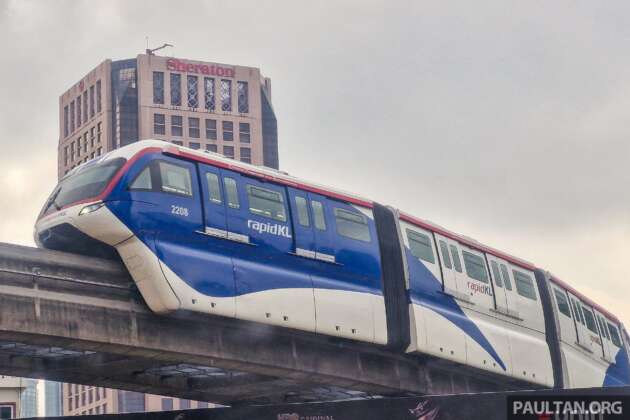
Malaysia’s Prasarana Malaysia Berhad has entered into a strategic partnership with China’s Chongqing Rail Transit (CRT) aimed at strengthening the operational reliability and long-term performance of the KL Monorail.
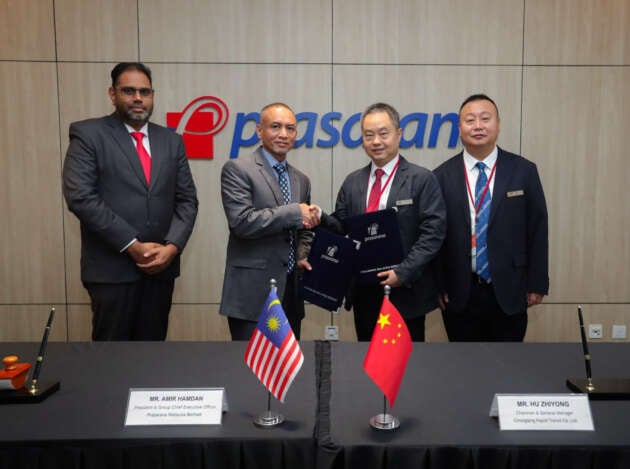
The two rail operators signed a Memorandum of Understanding (MoU) on 9 July 2026 at Menara Prasarana, establishing a framework for knowledge sharing across monorail operations, maintenance, digitalisation and workforce development.
While the agreement spans several areas of rail operations, a significant part of the collaboration centres on how operators can manage ageing and mission-critical assets more effectively.
Prasarana said the partnership will cover system reliability, asset management, operational digitalisation, data analytics and predictive maintenance, alongside the exchange of operational and safety practices. Joint training programmes, technical visits and expertise sharing are also expected to support workforce capability development.
Reliability Moves Higher on the Rail Agenda
For urban rail operators, reliability is closely tied to the condition of thousands of interconnected mechanical, electrical and control-system assets.
Components such as rolling stock systems, traction equipment, doors, braking systems, guideway equipment, switches, power systems and supporting infrastructure must operate consistently while dealing with demanding utilisation cycles.
As networks mature, maintenance strategies increasingly need to move beyond fixed inspection intervals and reactive repairs.
This is where the inclusion of data analytics and predictive maintenance within the Prasarana–CRT collaboration becomes particularly relevant.
Instead of relying solely on scheduled servicing, predictive maintenance uses operational and equipment-condition data to identify developing abnormalities before they become service-impacting failures.
For operators, that can mean gaining earlier visibility into equipment deterioration, prioritising inspections around actual asset condition and giving maintenance teams more time to intervene before a fault escalates.

Digitalisation Becomes Part of Asset Management
The agreement also reflects a broader shift in infrastructure operations: digitalisation is increasingly being connected directly with asset-management and maintenance decisions.
Collecting operational data alone provides limited value if maintenance teams cannot translate it into actionable information.
More advanced rail maintenance environments increasingly bring together historical maintenance records, equipment-condition information, operational data and analytics to understand how individual assets behave over time.
The objective is not simply to generate more data, but to answer operational questions such as:
- Which asset is beginning to behave differently?
- Is the change significant enough to require inspection?
- How quickly is its condition deteriorating?
- Which equipment should maintenance teams prioritise?
- Can intervention be scheduled before reliability is affected?
For high-utilisation public transport networks, improving these decisions can have a direct impact on asset availability and passenger service reliability.
Learning From Large-Scale Monorail Operations
Chongqing Rail Transit brings extensive experience operating a complex urban rail network that includes monorail systems.
Prasarana President and Group CEO Amir Hamdan said the collaboration would give the Malaysian operator greater access to international practices in rail reliability, maintenance strategies and operational efficiency.
For the KL Monorail, which has been operating for more than two decades, that knowledge exchange could become increasingly important as the network balances ongoing service requirements with the challenges associated with maintaining mature infrastructure.
The collaboration is therefore not limited to technology adoption.
Developing maintenance capabilities also requires engineers and technicians who understand how to interpret equipment behaviour, validate diagnostic information and translate insights into appropriate maintenance actions.
Joint training, technical visits and expertise exchanges included in the agreement are intended to strengthen these capabilities across Prasarana’s workforce.
A Wider Shift Towards Condition-Based Rail Maintenance
The Prasarana–CRT partnership highlights a wider direction for critical infrastructure operators across Asia-Pacific.
As transport networks become more connected and asset-intensive, maintenance is increasingly moving from a primarily schedule-driven activity towards a condition- and risk-driven function.
Predictive maintenance does not eliminate inspections or preventive maintenance. Instead, it adds another layer of visibility—helping engineering teams understand what is changing inside an asset between inspections.
When properly integrated into maintenance workflows, this approach can help operators prioritise resources, reduce unnecessary intervention and identify emerging equipment problems earlier.
For rail networks, where a single equipment problem can disrupt thousands of passenger journeys, that additional warning time can be particularly valuable.
Prasarana’s partnership with Chongqing Rail Transit indicates that asset reliability, digitalisation and predictive maintenance are becoming increasingly interconnected parts of modern rail operations.
The next challenge will be translating knowledge exchange into measurable improvements in asset availability, maintenance efficiency and ultimately, service reliability for commuters.