

Korea to Invest Over US$1 Billion in AI Across Shipbuilding Supply Chain by 2030
South Korea plans to invest more than US$1 billion to integrate AI technologies in shipbuilding and equipment supply chains by 2030.

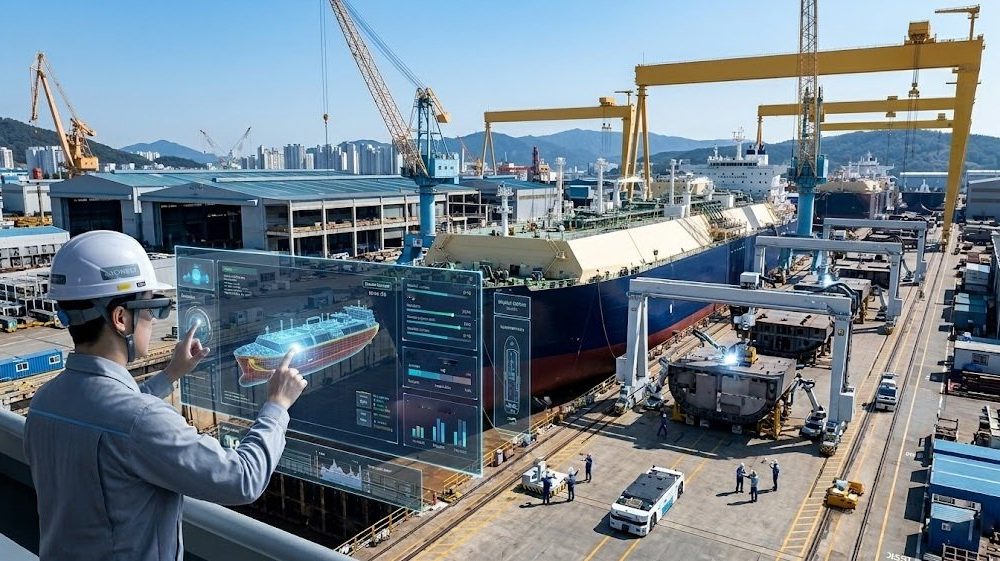
South Korea’s government and shipbuilding sector will invest approximately US$1.05 billion by 2030 to promote artificial intelligence adoption throughout the shipbuilding supply chain, aiming to improve productivity beyond major shipyards.
Alliance Formed to Coordinate AI Adoption
The Ministry of Trade, Industry and Energy alongside the Ministry of Oceans and Fisheries has established the Shipbuilding M.AX Alliance, a public-private organisation overseeing the AI transition in ship production. This alliance extends the scope of a previous consultative body focused on autonomous navigation to include AI application in shipbuilding processes.
Regional Projects for AI-Based Production
Investment initiatives are divided across three regions with targeted focuses:
- In Mokpo and Yeongam, a combined investment of 596 billion won (approx. US$445 million) will support HD Hyundai Samho and Daeah Industries in developing AI-assisted assembly for curved hull blocks. The technology is planned for deployment among nine regional partner firms.
- Samsung Heavy Industries and Hanwha Ocean will lead a 500 billion won (approx. US$374 million) project in Geoje and Busan concentrating on automating ship equipment production, covering piping and power distribution. The programme includes standardising design data to interface directly with supplier automation systems for cutting, bending, and welding.
- A further 310 billion won (approx. US$232 million) in Gunsan will be allocated to introducing AI in small hull block assembly. J Ocean Heavy Industries, which has acquired the Gunsan Shipyard, plans to enhance the factory and distribute tested technologies to local smaller firms.
According to the alliance, this coordinated effort to develop and disseminate AI-based production technologies is intended to enhance efficiency and standardisation across the entire supply chain rather than concentrating improvements solely within major shipbuilders.
These developments are expected to influence manufacturing workflows, digital integration between design and production, and supplier capabilities, indicating a gradual shift toward more automated and data-driven shipbuilding processes in the Asia-Pacific region.
Going forward, monitoring the rollout of AI technologies within partner companies and the impact on supply chain productivity will be critical to assessing the broader transformation of South Korea’s shipbuilding industry.