




What Buyers Ask For vs. What the Floor Needs: 5 Lessons from Automation SolutionGO! x RINC
16 Oct 2026 · Stories from Automation SolutionGO! x RINC Heading into a vendor meeting this quarter? Five exhibitors at Automation SolutionGO! x RINC share practical guidance on how to get to a...

16 Oct 2026 · Stories from Automation SolutionGO! x RINC
Quick Skim
- The Pitch that Works
- The Screen that Sells is Rarely the Screen that Gets Used
- 5 Common Buyer Requests, and the Plant-Floor Reality
- They ask for “AI”. They need to know how many samples it takes.
- They ask for the software. They forget the hardware it runs on.
- They ask for training. It doesn’t always turn into results.
- The Monday Action Checklist
- Benchmark Your Plant Floor Across APAC
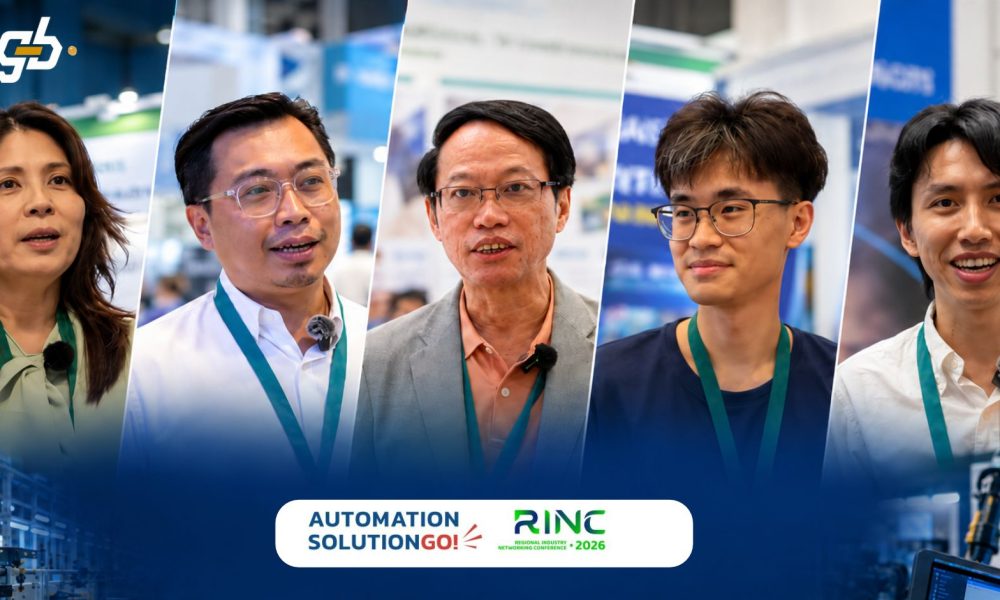
Heading into a vendor meeting this quarter? Five exhibitors at Automation SolutionGO! x RINC share practical guidance on how to get to a high-ROI conversation faster.
The floor at Singapore Polytechnic was active: 1,641 attendees and 35 exhibitors and sponsors across semiconductor, precision engineering, food manufacturing and facilities. Amid the bustle, exhibitors were candid about which conversations actually turn into successful deployments.
The Pitch that Works
None of the experienced vendors lead with a product feature tour. Every effective opener centers on the buyer’s operational pain:
- Tsoi Chee Chung, Customer Success Manager (Groundup.ai): Opens with a direct operational trigger: “When was the last time you burned your weekend on emergency downtime?”
- Grace Koh, Singapore Country Manager (DFE-Tech): Navigates brush-offs (“We have everything covered”) by asking buyers to walk through their exact process step-by-step to uncover hidden bottlenecks.
- Alvin Law, Application Engineer (CADVision): Asks directly for the single biggest bottleneck in their current design software stack.
- Reduwan Abu Bakar, Marketing Communications (JM VisTec System): Clarifies capability upfront. Distinguishing component distribution from custom automation system building so buyers know the stand can solve a complete line issue.
Gemba Takeaway: Real discovery opens with questions. A vendor who opens with questions about your downtime or process is doing real discovery. One who immediately starts a feature tour is asking you to do their job for them.
The Screen that Sells is Rarely the Screen that Gets Used
Vendors routinely demo eye-catching features that end-users seldom touch post-implementation:
- Raw Vibration Analytics (Groundup.ai): Chee Chung notes they demo detailed FFT transforms and velocity plots, but day-to-day users rely on simplified high-level health dashboards. The design succeeds precisely because non-technical operators can read it instantly.
- 3D Model Visualization (CADVision): Alvin demos complex model visualizations at every show, though core operational users rarely access them after go-live.
Gemba Takeaway: Evaluate systems on the screen a technician will rely on, not the showpiece screen built to pull crowds at a trade show stand.
5 Common Buyer Requests, and the Plant-Floor Reality
They ask for “AI”. They need to know how many samples it takes.
Reduwan hears it most. “They say something like, I need AI, but they actually don’t know what it is. They think AI is as simple as image generation, like ChatGPT.”
On an inspection line, it isn’t. “It is a lot more like how many samples you need to actually train it.” And for some jobs AI is the wrong tool: “If you want a 100% kind of solution, it is not AI, it’s more on rule-based software.” AI earns its place because it can be trained and “in the long run it gets more accurate.”
That is a vendor telling buyers that AI is sometimes the wrong tool, which makes it worth hearing. The trade-off for a quality engineer: a rule-based check behaves the same on day one and day 500. A trained model needs good and bad samples, and time, before it catches up.
They ask for the software. They forget the hardware it runs on.
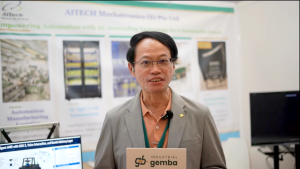
Adrian, Manager at AiTech Mechatronics, says buyers “are interested in the fancy software, but they forget that in order to work, hardware is one portion that they need to remember.” Asked which fails first, he refused to split them: gaps in the software are often what bring the hardware down.
They ask for a longer feature list. Often they want a lower price.
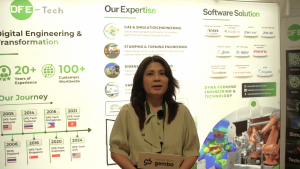
Grace reads the feature checklist as a negotiating move. “Do you have this? Do you have that? The purpose is to get a better price.”
DFE-Tech answers with customised training or a workshop for the buyer’s engineers instead of a discount. Weigh that offer on its merits: a workshop costs a vendor less than a price cut. It is worth more to the buyer only if their engineers would otherwise be left to learn the system on their own.
They ask for training. It doesn’t always turn into results.
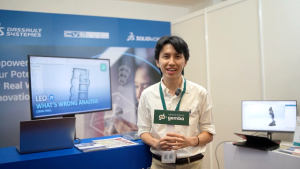
Alvin says training on the software modules is his most common request, and that it often does not lead to results.
They ask for references. A trial on their own assets would tell them more.
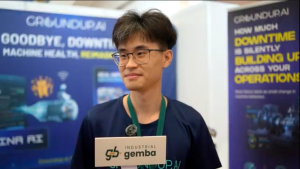
Chee Chung says analytics buyers “don’t have the trust or the faith upfront” that the software will work on their site. So they ask for success stories and “sister deployments.”
Groundup.ai’s answer is a proof-of-concept trial on the buyer’s own equipment. “Within three to six months, the very clear value that our solution provides is understood by our customers,” Chee Chung said.
The Monday Action Checklist
Before your next vendor meeting, turn your wishlist into these four floor-level questions:
- Beyond the “AI” label: How many training samples does the model require, and would a deterministic rule-based tool solve this faster?
- Beyond the feature list: What structured training comes with implementation, and who on our floor will own day-to-day operation?
- Beyond reference calls: Can we run a time-boxed pilot on one of our own assets with pre-agreed KPIs?
- Beyond the demo unit: Which specific screens do your active plant customers open during a standard shift?
Benchmark Your Plant Floor Across APAC
Those four questions land harder when you walk in already knowing the field. That is what Industrial Gemba’s APAC intelligence report is for.
Use it to see which failure modes are worth catching, and what technology catches them. Then map who makes the equipment, what they’re shipping this year, who can execute the work in your market by technique, and roughly what it costs.
It covers Singapore, Malaysia, Indonesia, Thailand, Vietnam, the Philippines, India, Japan, Korea, Taiwan, China, Australia and New Zealand.
For APAC, from APAC. All of it free: 👉 Access the Report & Directory
This interview is part of Industrial Gemba’s coverage from Automation SolutionGO! x RINC. Responses have been edited for length and clarity. Watch other Automation SolutionGO! x RINC interviews on YouTube.