




The Grid says 2030. Aggreko may be What Runs the Site Until Then
19 Oct 2026 · Stories from Data Centre World Asia Aggreko’s Head of Sales Asia Chandran Jayabalan on bridging power, the hundreds-of-megawatts allocation queue, and the 11th-hour call that makes his...

19 Oct 2026 · Stories from Data Centre World Asia
Quick Skim
Aggreko’s Head of Sales Asia Chandran Jayabalan on bridging power, the hundreds-of-megawatts allocation queue, and the 11th-hour call that makes his job hard.
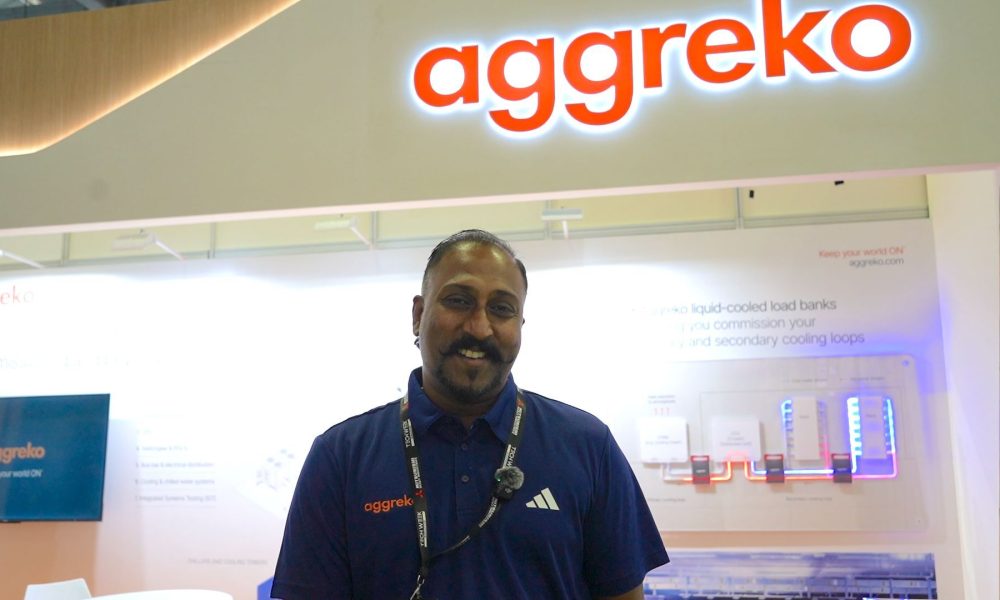
“You’ve seen phenomenal growth in the data-centre market, much faster than we’ve ever seen before,” says Chandran Jayabalan, Aggreko’s Head of Sales for Asia. AI has made the chips, and the cooling around them, far more intense, and governments across the region have thrown the doors open to investors.
That growth is exactly where the bottleneck starts, and it is not the servers.
The Wait Behind the Wait
The traditional long-lead items are still long, switchgear and transformers, pushed out further by sheer demand. But the wait Chandran flags hardest sits behind them: power allocation from national grids. “You’re not talking about a little bit of power. We’re talking about hundreds of megawatts, which needs to be allocated in a very short duration,” he says, with regulators weighing the draw against other industries and the country as a whole.
What Bridging Power Actually Is
That gap is what Aggreko fills, temporary power and cooling as a service, bridging a site for “18 months to two years” until permanent infrastructure or a grid connection lands. He is quick to correct the idea that it’s a stopgap generator on a trailer: it is grid-quality, often high-voltage power that still has to be engineered, approved and deployed properly, with fuel options spanning gas, HVO, renewable diesel and conventional diesel. The fastest-growing demand sits in Malaysia, Thailand, Indonesia and Singapore, where governments have moved to attract and ease large builds.
The 11th-Hour Problem
What do customers get wrong? Not the technology. The timing. “Where we see people… hesitating is where they decide to involve us a little bit too late,” he says. The commitment from the grid is there on paper, “but if you wait till the 11th hour to reach out to us to plan for alternate power, that’s when we too struggle” to mobilise the load and clear the regulatory gateways in time.
The Monday Takeaway
Plan bridging power in parallel with the grid request, not as an 11th-hour fallback; the engineering and regulatory runway for hundreds of megawatts of temporary, grid-quality power is longer than most project schedules assume.
This interview is part of Industrial Gemba’s coverage from Data Centre World Asia. Responses have been edited for length and clarity. Watch the full interview on YouTube.