



Intelligent Aerospace Manufacturing Starts 1 Billion Yuan Beijing Base for NEVs and Aerospace
Intelligent Aerospace Manufacturing breaks ground on a 1 billion yuan smart manufacturing base in Beijing for new-energy vehicles and aerospace applications.

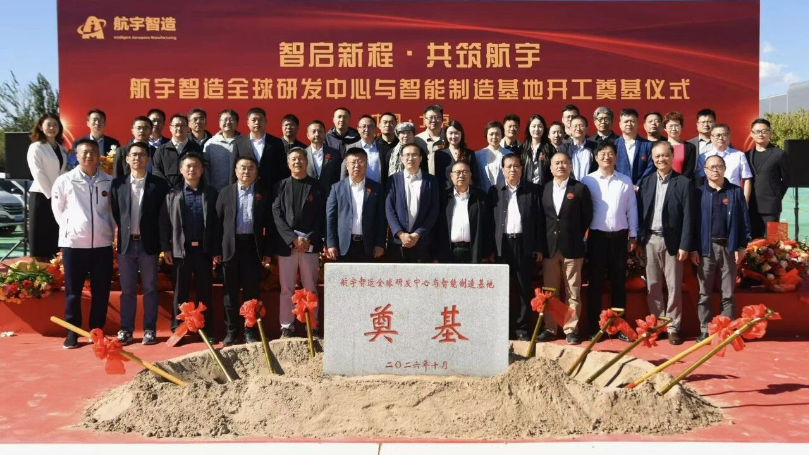
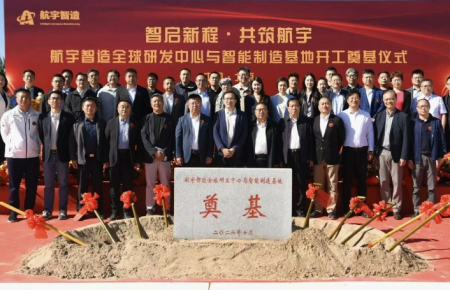
Intelligent Aerospace Manufacturing has commenced construction of a global R&D centre and smart manufacturing base in the Beijing Economic-Technological Development Area, focusing on new-energy vehicles (NEVs), aerospace equipment, and low-altitude manufacturing with a planned investment of about 1 billion yuan.
Quick Skim
Facility Combines R&D and Commercial Production
The campus occupies 43,000 square metres of land with a gross floor area of approximately 91,000 square metres. It includes seven buildings that will incorporate research facilities, pilot validation lines, and production plants within one integrated site.
Intelligent Aerospace Manufacturing, recognised as a national-level “Little Giant” enterprise, has existing capabilities in high-end lightweight manufacturing for commercial aircraft, aviation engines, and launch vehicles. The new base will develop a pilot production line utilising the company’s tube-beam mortise-and-tenon body-in-white technology, which is designed to reduce cycle times to seconds.
Scaling Production and Expanding Aerospace Focus
Chairman and CEO Cheng Pengzhi indicated that the company is exploring collaborations with automakers to scale production towards an annual capacity of 1 million vehicles. This approach aims to improve body-shop efficiency and provide an alternative to traditional automotive manufacturing, though large-scale production validation remains outstanding.
Beyond the automotive sector, the firm is targeting supersonic airliners, cargo drones, and low-altitude aircraft development. It is planning aircraft sub-assembly and final assembly facilities while progressing towards a potential initial public offering.
Implications for Industrial Operations
The new base represents a strategic shift from primarily research and development towards scaled industrial manufacturing. If successful, the technology could enhance manufacturing efficiency and reduce costs in body-in-white production for NEVs. However, the real-world impact on production scales, supply chains, and cross-sector aerospace projects will depend on forthcoming project outcomes and order volumes.
Intelligent Aerospace Manufacturing’s development highlights an integrated approach to manufacturing innovation that could influence industrial operations across Asia-Pacific’s automotive and aerospace sectors in the years ahead.