



Ho Chi Minh City Lines Up 90 PPP Projects Worth Over VND1,270 Trillion
Ho Chi Minh City is assembling a portfolio of 90 PPP projects with investment needs exceeding 1.27 trillion VND to address infrastructure capital shortfalls by 2030.

Ho Chi Minh City has prepared a portfolio of 90 public-private partnership (PPP) projects with total investment of more than VND1,270 trillion, as it seeks private capital for infrastructure.
Quick Skim
Ngo Hoang Minh, Deputy Director of the Ho Chi Minh City Department of Finance, told the Ho Chi Minh City Investment Legal Support Forum 2026 on 25 November that the city’s public investment needs for 2026–2030 are estimated at about VND3,100 trillion, while the budget can meet only about one-third of that.
State Capital For 39 Projects
The city plans to allocate about VND89,408 billion of state capital to participate in 39 of the 90 projects. In 2026 alone, it will allocate about VND14,611 billion for land clearance.
Minh said the city is focusing on three groups of measures: preparing land and setting payment methods from the project approval stage; a risk-sharing mechanism under which state capital can reach up to 70% of total investment; and shorter procedures, information transparency and the use of Building Information Modelling (BIM).
Bonds From 2027 And A Multilingual Catalogue
Investors can participate directly, form joint ventures with domestic businesses, or invest indirectly through the Vietnam International Finance Corporation in Ho Chi Minh City (VIFC-HCMC). The city plans a bond issuance mechanism from 2027 and dispute resolution in line with international practice.
From the first quarter of 2027, the Department of Finance will work with the Ho Chi Minh City Trade and Investment Promotion Centre (ITPC) to run a multilingual PPP project catalogue and set up a focal point to support investors.
Investors Flag Policy Risk And Loan Terms
Duong Dang Hue, Vice President and General Secretary of the Vietnam Association of Road Transport Infrastructure Investors (VARSI), said coordination among parties is not yet synchronised, and revenue risk-sharing is hampered by conditions, procedures and the state’s ability to guarantee its obligations.
He added that loan terms from credit institutions are often shorter than the lifespan of infrastructure projects, putting pressure on investors’ financial plans and capital recovery.
Tran Duy Hung, CEO of Monitor Consulting, said the Urban Development Law gives the Ho Chi Minh City People’s Council more authority over investor selection, contract types and payment mechanisms for PPP projects, including transit-oriented development linked to urban rail.
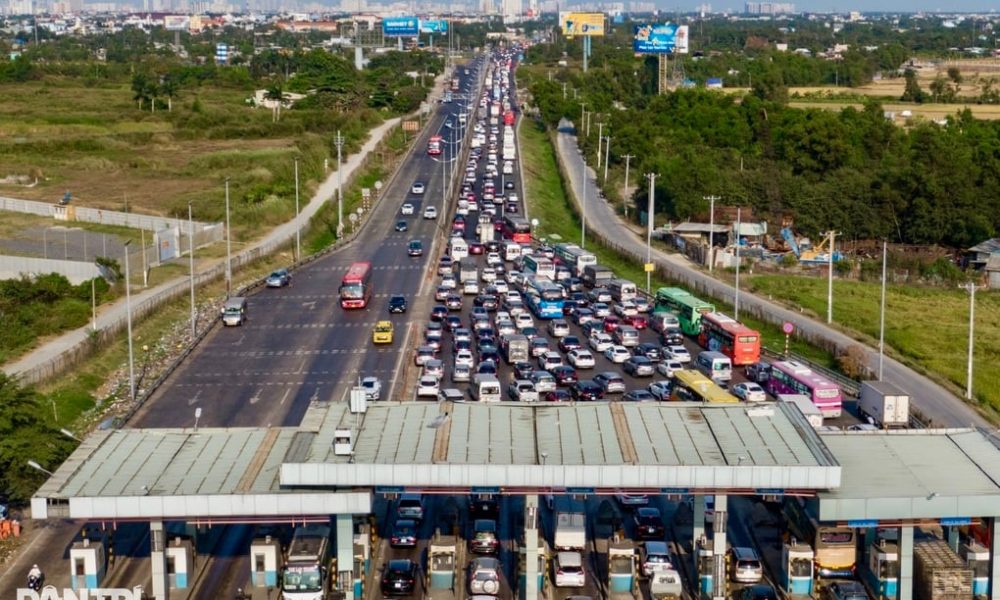
Photo: Ho Chi Minh City–Trung Luong Expressway near the Cho Dem toll station. Credit: Quang Minh / Dân trí.