



“Look for the Nail Before Deciding Which Hammer to Use”: AutomationSG’s Case for Governing AI One Use Case at a Time
26 Nov 2026 · The TIA Series by Industrial Gemba × AutomationSG AutomationSG launched TIA-Ready in July 2026 to give companies a faster, cheaper way to show their AI is under control. CEO Saw Biing...

 ???
26 Nov 2026 · The TIA Series by Industrial Gemba × AutomationSG
Quick Skim
AutomationSG launched TIA-Ready in July 2026 to give companies a faster, cheaper way to show their AI is under control. CEO Saw Biing Huei on what it asks of a company, what it costs, and the mistake he sees most often: picking the AI before the problem.
The TIA Series is produced by Industrial Gemba × AutomationSG.
Towards the end of 2025, Saw Biing Huei sat through several AI courses. Each training provider had its own method and its own reading of what AI meant for a business.
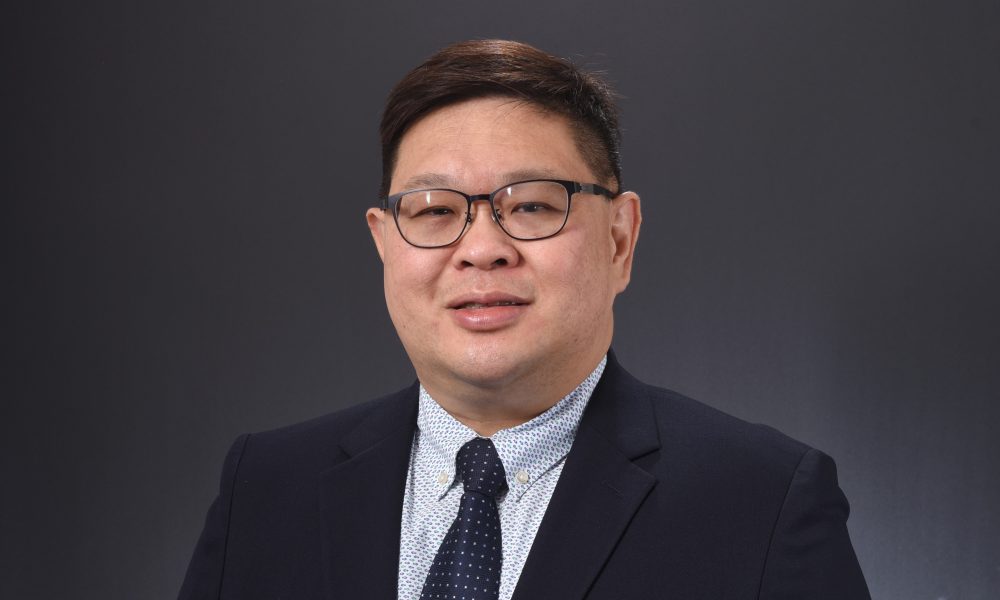
“Everyone was rushing into AI,” he says. “It reminded me of the Wild West during the California Gold Rush. There was tremendous excitement and opportunity, but it was also messy and unstructured. I felt it was time for a new sheriff in town to bring structure, order, and accountability.”
Biing Huei came to AutomationSG from venture and innovation work, where he taught founders to find the pain point before picking a solution. When he took the CEO role, the association’s recruiting team wanted it to set a direction on AI. In February 2026 he pitched a white paper on AI governance. That became the Trusted Industrial AI framework, TIA-Ready, launched on 29 July 2026.
AutomationSG’s corporate, professional and associate members cover more than 450 entities in Singapore. They include SMEs and MNCs, product makers, solution providers, system integrators, distributors and end customers. Some sell AI systems. Some buy and run them. Biing Huei says TIA-Ready is meant for both.
The Early Interest was About Data Leaks
Some of the earliest interest came from companies already using AI in their daily operations. Their worry was what was leaving the building.
The risk Biing Huei describes is ordinary. An employee pastes confidential customer information, a proprietary design or a trade secret into a public AI tool. That can breach a customer NDA without anyone noticing.
A second group needs to show AI risk management to someone else: for customer due diligence, supplier qualification, tenders or business continuity. For them, Biing Huei says, independently assessed evidence can protect existing customers and help win new ones. “AI governance has tangible commercial value.”
One System, Three Phases
TIA-Ready does not try to govern a whole company’s AI at once. A company picks one use case, such as a camera that checks for defects, and takes that through. The framework is anchored to ISO/IEC 42001 and built on ten governance domains. Biing Huei describes three phases:
- Managed. Define the use case: what it is for, its scope, where it operates, who it affects, and how risky it is.
- Governed. Put the processes in place, assess the risks and impacts, mitigate them, and build the evidence.
- Ready. Prepare an evidence dossier for an independent third-party assessor. AutomationSG then makes the recognition decision.
Whatever risk is left after mitigation has to be accepted, on the record, by management. They may then buy insurance, change contract terms or add safeguards on the floor.
Biing Huei is clear that the assessment is optional. Every use case should be governed. The outside assessment matters when a customer, user or regulator wants proof. “We call this a bite-sized approach to AI governance.”
The hardest part, he says, is not new work. Most companies already test products, run QA and manage risk. What they find hard is turning that into evidence an assessor can check, and adding what AI brings on top: model bias, robustness, data protection, probabilistic behaviour and lifecycle management. “Many companies are still unfamiliar with these risks and how to assess and mitigate them.”
The Person who Can Stop the Line
For anyone on the floor, the most concrete part of TIA-Ready is a new role: the Industrial AI Enablement Lead, or IAEL. This is the person who turns management’s AI rules into how work is actually done.
In a small company it may be one person. In a larger one it could be a team, or a function under a Chief AI Officer. Biing Huei compares it to the workplace safety officer or the data protection officer.
The IAEL is meant to be senior, with authority formally handed down from management. The role includes:
- Approving where and how AI is used, within set boundaries
- Overseeing risk assessment and mitigation
- Issuing stop-work orders and switching back to non-AI operations where needed
- Running incident response and escalation
- Keeping the evidence and preparing use cases for assessment
- Reporting to senior management
The stop-work power is the line that matters on the floor. It means someone has the authority to switch the AI off and fall back to the old way of working. AutomationSG runs a training pathway for the role, from foundation level up to advanced leadership.
Look for the Nail First
Asked for the most common mistake he sees, Biing Huei gives a one-line answer: “Starting with AI and then looking for a problem for it to solve.”
His rule for members is to judge AI against everything else on the table, on cost, value, yield, quality, throughput and reliability. “Look for the nail before deciding which hammer to use.”
He takes semiconductor lines as an example. AI can help with process optimisation, predictive maintenance, defect detection and yield, and a small gain in yield can be worth a lot. But for some tasks, dedicated automation still beats the newer physical and embodied AI on throughput, precision, repeatability and cost per task. For many repetitive jobs, he adds, a small dedicated model running at the edge may do the work at a better cost than a large one.
In manufacturing, he says, three things still decide it: cost, yield and quality.
Who Answers when the AI is Wrong
Customers are asking AI suppliers for things the suppliers often can’t show yet: the system’s limits, how robust it is, possible bias, how data is protected, how it stands up to attack, where humans step in, and what happens when it changes or fails.
Biing Huei singles out cybersecurity. As AI systems connect to each other, one compromised component or one bad software update can spread. He points to the faulty CrowdStrike update in 2024, which took down Windows machines worldwide, as an example of how far a single failure in connected systems can reach.
The accountability question is hard because one deployment can involve a developer, a manufacturer, a solution provider, an integrator and the end user. Each owns a different piece. TIA-Ready’s answer is to write down the scope, the boundaries and who is responsible for what, before anything goes wrong.
One point is worth reading twice. TIA-Ready Recognition is not a warranty. It says an independent assessor reviewed the company’s governance evidence within a defined scope. “Responsibility for the AI implementation, its operation and associated risks remains with the respective organisations,” Biing Huei says.
In Numbers
The Pilots. Three pilot engagements are under way. They cover machine vision, engineering and design, and AI-assisted interview coaching. Biing Huei says they are there to test the approach and refine the guidance and evidence requirements across different kinds of use cases and risks.
The Cost. AutomationSG aims to keep the full journey for a typical use case between S$6,000 and S$10,000. That covers scoping, implementation advice, the independent assessment and recognition, and is paid to AutomationSG. Use cases with a wider scope or higher risk can cost more. The staff time a company needs depends on how much of its process and evidence already exists.
The Time. Biing Huei says formal standards such as ISO/IEC 42001, EN 18286 or UL 3115 can take several months to more than a year to implement. For an SME chasing a customer contract, that delay can hold up the sale and the product launch. TIA-Ready aims to get one use case through in weeks or a few months, depending on scope, risk and the company’s starting point.
Once the baseline is set, he says, companies can reuse processes, controls and evidence for the next use case. That is where the return on the first one comes from.
What the Pilots have to Prove
The cost and time figures are targets. The three pilots will show whether they hold.
Readers should also know how the scheme is built. AutomationSG represents its members, sets the framework, takes the fee and makes the recognition decision. The assessment itself is done by an independent third party.
TIA-Ready is not an ISO/IEC 42001 certificate. Biing Huei frames it as a way to start small and build evidence towards ISO/IEC 42001 and, where it applies, EN 18286.
He has set his own test for whether it works. In a year, he wants to see companies start with one use case, scale up, and use the assessed evidence to win customer trust and new business. And if it goes the other way: “If the framework becomes unnecessarily burdensome or commercially impractical for SMEs, we would need to improve it.”
Industrial Gemba’s TIA Series will follow the pilot companies through the pathway and report what it takes.
The Gemba Takeaway
This week: audit the AI you already have. Biing Huei’s advice for any business leader, before going near TIA-Ready, is an inventory of the AI already in use.
“You may be surprised by how much AI is being used without management’s awareness,” he says, especially public AI tools staff use for work.
For each one, note what it does, what data goes into it, who is responsible for it, and what could go wrong.
Then ask six questions about one use case:
- What business or operational problem are we solving?
- Does AI deliver better value than the available alternatives?
- What is the AI intended to do, and within what boundaries?
- What could go wrong, and what would the impact be?
- Who is responsible for managing and mitigating those risks?
- What evidence do we have that the risks are being managed?
Write it down before anyone asks. For each AI system, record its purpose, scope, operating boundaries, the technology and data it uses, its known limits, risks, impacts and mitigations, and the person accountable. Record management’s acceptance of whatever risk is left. Keep it updated through deployment, changes and retirement.
Companies that want to go further can start at the AutomationSG TIA-Ready Framework page or take the TIA-Ready Readiness Survey.
None of the six questions needs a framework, a consultant or a budget. Any plant can answer them about one AI system this week, before anyone has written a policy. — Industrial Gemba