



Victory Giant Plans Up to US$700 Million Investment in Vietnam PCB Plant
Victory Giant plans to inject up to US$700 million into its Bac Ninh PCB subsidiary as part of a US$1.5 billion Southeast Asia expansion driven by AI hardware demand.

Victory Giant Technology, one of China’s largest printed circuit board (PCB) makers, plans to invest up to US$700 million in its Vietnam subsidiary as part of a US$1.5 billion Southeast Asia expansion, The Investor reported.
Quick Skim
In a filing to the Shenzhen Stock Exchange on 30 October, the company said its wholly owned Singapore subsidiary would inject up to US$700 million into Victory Giant Technology (Vietnam) Co Ltd and up to US$800 million into Victory Giant Technology (Thailand) Co Ltd.
Funds for Construction and Equipment
The funds will be used for factory construction, equipment purchases and working capital.
The investments are intended to accelerate production ramp-ups at both facilities, address what Victory Giant described as a “current capacity bottleneck” and fulfil additional orders from major international customers.
Shareholder and Regulatory Approvals Pending
The company’s board approved the investment plan on 29 October.
The transactions remain subject to shareholder approval and relevant regulatory clearances.
Bac Ninh Plant
The planned injection is five times the Vietnam unit’s existing registered capital of US$140 million.
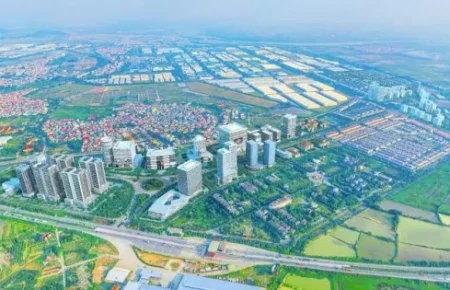
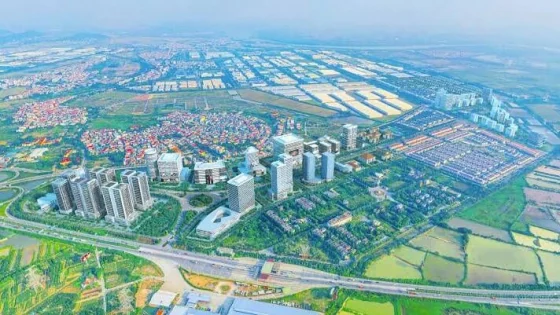
Victory Giant Technology (Vietnam) is registered at the VSIP Bac Ninh II Industrial Park in Bac Ninh, northern Vietnam, where it is licensed to manufacture printed circuit boards. The project covers 10.36 hectares.
The Vietnam unit remains in the pre-operating phase and has not yet recorded revenue.
AI Server Demand
Rising investment in AI computing infrastructure is driving demand for high-performance PCBs, particularly high-layer-count boards and advanced high-density interconnect (HDI) boards used in AI servers and graphics processing unit (GPU) systems.
The company said its major international customers are pursuing supply chain diversification and increasingly require localised production and delivery capabilities outside China.
Source: The Investor.
Photo: VSIP