




Hutchison Ports Thailand Completes 3.5 Million TEU Terminal D at Laem Chabang Port
Hutchison Ports Thailand has completed Terminal D at Laem Chabang Port, increasing container-handling capacity by 3.5 million TEU with advanced remote-controlled equipment.

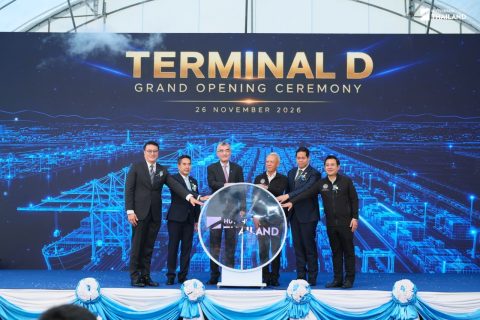
Hutchison Ports Thailand (HPT) has completed the development of Terminal D at Laem Chabang Port, adding 3.5 million TEU of annual container-handling capacity at Thailand’s largest container gateway, WorldCargo News reported.
Quick Skim
Completion Ceremony and Throughput Milestone
The milestone was marked by a ceremony on 26 November attended by Deputy Prime Minister and Transport Minister Phipat Ratchakitprakarn, government officials and industry representatives. During the ceremony, the Deputy Prime Minister visited Terminal D’s control room to observe HPT’s remote-controlled container handling operations.
The completion of Terminal D coincides with HPT reaching 55 million TEU in cumulative container throughput in 2026.
Terminal Specifications
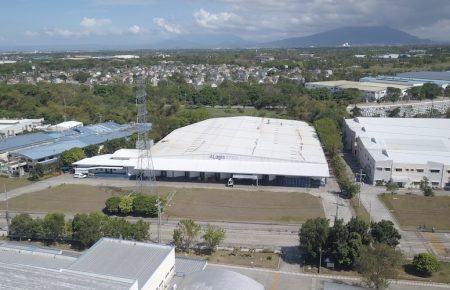
Covering approximately 770,000 sq m, Terminal D has a 1,700-metre quay and a water depth of 16 metres, allowing it to accommodate up to three Super Post-Panamax container ships simultaneously.
Construction began in 2016, with the project developed in three sections, D1, D2 and D3. The first 400 metres of quay entered operation in January 2019, followed by successive expansions to reach the full 1,700-metre length. Construction work and equipment deliveries were finalised in March 2026 and the terminal is now operating at full capacity, Hutchison Ports said.
Remote-Controlled and Electric Equipment
Terminal D’s equipment includes 17 remote-controlled ship-to-shore (STS) cranes and 48 remote-controlled rubber-tyred gantry (RTG) cranes supplied by ZPMC, supported by automated gates, autonomous electric trucks and a battery-swapping station. Hutchison Ports said HPT is the first container terminal in Thailand to adopt remote-control technology for its quay and yard cranes.
The terminal has been investing in electric equipment as part of Hutchison Ports Group’s efforts to achieve net-zero carbon emissions by 2050.
Photo: WorldCargo News