

Amada and Hitachi Complete AI Agent Trials, Plan Physical AI for Autonomous Factories
Amada and Hitachi have completed AI agent proofs of concept for factory operations and maintenance and plan to deploy them at model user sites.

Amada and Hitachi have completed proofs of concept for AI agents supporting factory operations and maintenance services, and will now deploy the technology at model users’ manufacturing sites as they work toward autonomous factories.
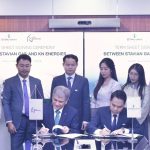
The two Japanese companies announced on 26 November 2026 that they will accelerate their collaboration on autonomous customer factories and more advanced Amada maintenance services through AI agents and physical AI, according to a joint press release.
Two proofs of concept
In the factory operations PoC, the companies tested AI agents proposing efficient ways to use machines and software, supporting production plan adjustments in response to sudden delivery-date changes, and presenting candidate causes, checking procedures and countermeasures when machine trouble occurs.
In the maintenance services PoC, they verified that AI can infer causes from accumulated knowledge and present recovery measures, even for complex cases without precedent.
MIRAI factory and HMAX Industry
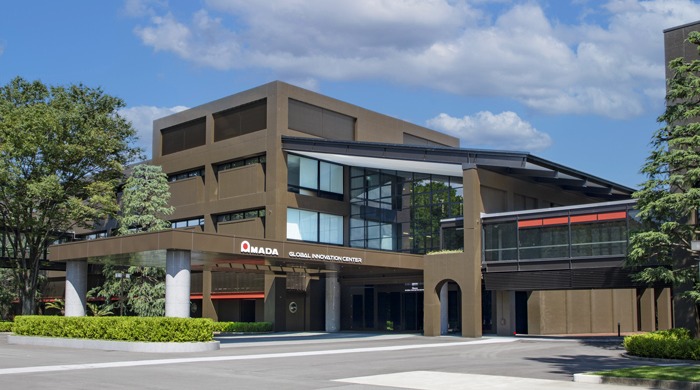
In November 2026, Amada opened a special area called “MIRAI factory” inside the Amada Global Innovation Center (AGIC) to showcase next-generation factories in which people and machines work together using AI agents and physical AI. More than 10,000 machines worldwide are connected to Amada’s V-factory IoT solution.
Hitachi plans to use the manufacturing domain knowledge gained, with support from Forward Deployed Engineers (FDE), to commercialise an integrated ontology knowledge database and on-site work image analysis as part of its HMAX Industry AI solutions for manufacturers.
Deployment plans
The companies will apply the AI agents at model users’ manufacturing sites with the aim of early commercialisation. They will also build systems in which AI agents analyse production plans, equipment status and work conditions, and physical AI controls production equipment and robots based on those decisions.
Photo: Amada