


Indonesia Urged to Become BYD’s Electric Vehicle Export Hub
Indonesia’s Industry Minister called on BYD to boost investment and component localisation to develop the country as an export base for electric vehicles.

Indonesia’s Industry Minister Muhammad Sarmuji has urged BYD to increase investment and deepen localisation of electric vehicle (EV) production in Indonesia, aiming to establish the country as a production hub and export base for the global automotive supply chain.
Quick Skim
Minister Visits BYD Facilities to Discuss Investment and Cooperation
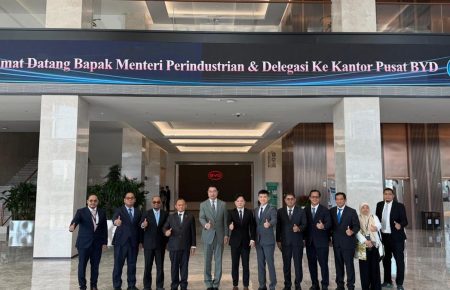
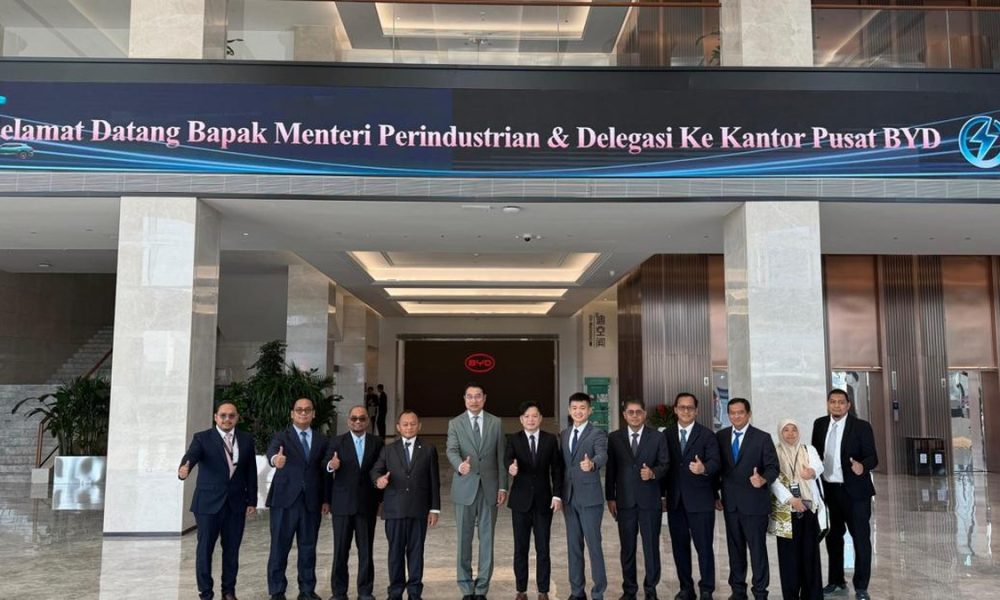
Sarmuji visited BYD’s headquarters and production facilities in Shenzhen, China, on 18 November, following a prior inspection of PT BYD Indonesia’s plant in Subang, West Java, on 13 November. During the Shenzhen visit, he met BYD Group Vice President Liu Xueliang to discuss strengthening investment and collaboration for developing Indonesia’s automotive industry, according to IDNFinancials referencing the Ministry of Industry of the Republic of Indonesia.
The minister referred to BYD as a strategic partner in modernising Indonesia’s automotive sector and said the company has potential to create greater added value for the national economy.
Increasing Local Content and Industrial Capability
Sarmuji emphasised increasing use of domestically sourced components and raising the Domestic Component Level (TKDN) in the EV industry. He highlighted the importance of involving local suppliers to strengthen Indonesia’s industrial structure and support related industries.
The government plans to complement this with human resource training and technology transfer to enhance Indonesian workers’ skills and technological expertise in EV production. “We hope Indonesian workers will not only be involved in production processes but will also become increasingly capable of mastering technology and improving their skills. BYD’s investment development must go hand in hand with expanded employment opportunities and improvements in national industrial capabilities,” he said.
BYD Confirms Commitment to Indonesia and Workforce Development
BYD Group Vice President Liu Xueliang reiterated the company’s commitment to expanding its investment in Indonesia through building production facilities, developing workforce skills, advancing technology, and targeting export markets. Liu described Indonesia as one of BYD’s strategic markets for new energy vehicles (NEVs).
BYD initially entered Indonesia with commercial vehicles in 2018 and expanded into passenger cars in 2024. The company offers technologies including battery electric vehicles (BEVs), plug-in hybrid electric vehicles (PHEVs), and fast-charging (flash charging) technology.
Liu said over 90% of BYD’s workforce in Indonesia are local employees, with ongoing efforts to improve Indonesian engineers’ capabilities to participate in research and development, design, and product development.
Plans for Greater Production Localisation, Export Orientation and Government Support
BYD aims to increase localisation of vehicle production in Indonesia and establish its facilities as a manufacturing base for domestic consumption and exports. Liu called for stronger government support to maintain a favourable investment climate, ensure healthy competition, and accelerate deployment of EV charging infrastructure.
He specifically requested fiscal and non-fiscal incentives for PHEVs, noting that this technology serves as a transitional solution for areas with limited charging infrastructure.
Sarmuji reiterated the government’s commitment to supporting EV investments while ensuring contributions to the national industrial base and manufacturing competitiveness. “The Indonesian government is committed to creating a favourable investment climate. We hope BYD will continue to play an active role in developing local industrial capabilities, expanding employment opportunities and increasing its contribution to Indonesia’s economy,” he said on 20 November in Jakarta.
Source: IDNFinancials (https://www.idnfinancials.com/news/72149/industry-minister-indonesia-to-become-byds-export-hub). Photo: Ministry of Industry (Kemenperin) documentation, via CNBC Indonesia.