


Tuas Port Begins Largest Expansion With 21 Berths Scheduled by 2028
Work starts on Singapore’s Tuas Port third extension, adding 21 mega berths and aiming to handle 65 million TEUs annually by the 2040s.

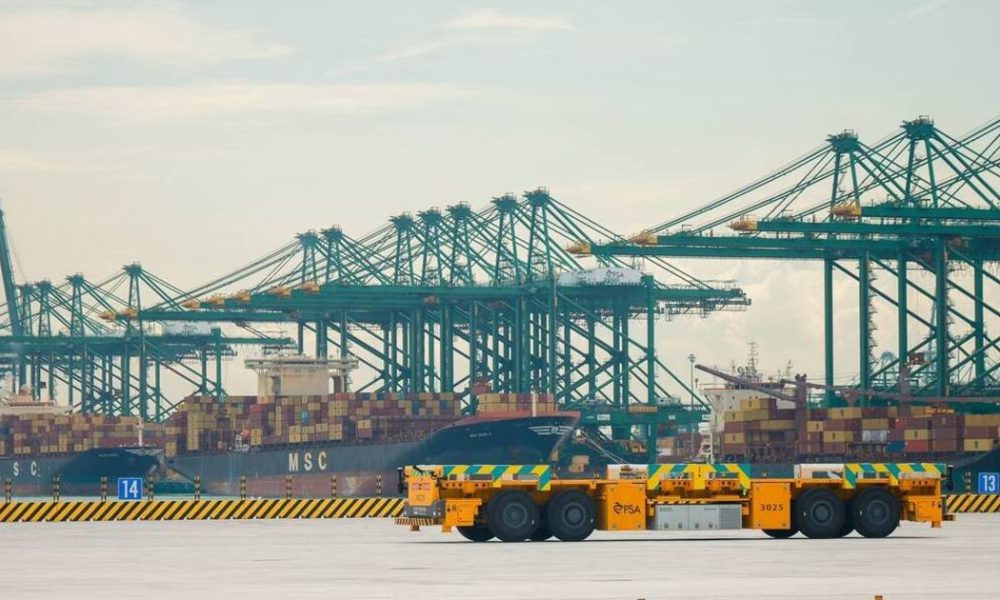
Work began on 20 November on the second phase of Tuas Port, the third and largest of four extensions, on nearly 400 hectares of reclaimed land.
Quick Skim
Expansion Planned to Consolidate All Container Operations
Finger Three will begin operations in 2028 with 21 mega berths, each 23 m deep, and will be fully operational by the mid-2030s with an 8.6 km wharf. When all four extensions are completed in the 2040s, the port will consolidate all of Singapore’s container operations at a single location.
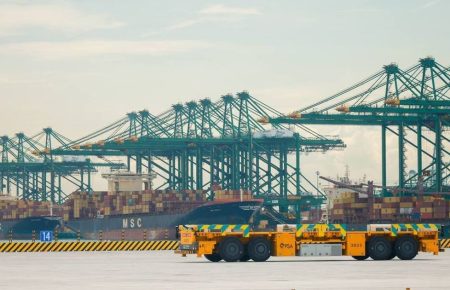
Once complete, Tuas Port will be the world’s largest fully automated port, able to handle 65 million twenty-foot equivalent units (TEUs) a year. The TEU is the maritime industry’s standard measure of container traffic. Tuas Port has handled 25 million TEUs since it officially opened in 2022.
Focus on Operational Reliability and Value Creation
Transport Minister Jeffrey Siow, speaking at the ground-breaking ceremony, emphasised that the expansion is not solely about increasing capacity. He said Singapore aims to improve “reliability and the value we deliver” to shipping lines and cargo owners.
He highlighted Singapore’s role as a fast turnaround port capable of compensating for delays in global supply chains and offering cargo owners services to store, process, consolidate and swiftly distribute goods to regional markets. PSA’s new supply chain hub at Tuas will integrate logistics and warehousing directly alongside port operations to further this strategy.
Technological Enhancements to Boost Productivity
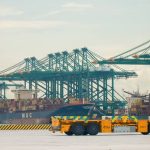
Tuas Port has been designed from the outset as a fully automated facility. For phase two, PSA will deploy about 1,000 next-generation intelligent guided vehicles (IGVs) that, unlike earlier models, calculate optimal routes in real time rather than following fixed paths. The IGVs will work safely alongside manned vehicles in the port environment.
Additional technological trials include the use of drones for shore-to-ship delivery of spare parts, fuel samples, and provisions to vessels at anchorages, replacing traditional boat transport. Singapore’s maritime authorities are also exploring the integration of artificial intelligence, digital twins, autonomous systems and real-time data to manage the port as a single unified system.
Investments in Sustainable Energy and Workforce Development
Singapore is investing in decarbonisation initiatives such as expanding liquefied natural gas bunkering facilities, licensing suppliers of clean fuels including LNG and methanol, and running live trials with alternative fuels including ammonia. These efforts aim to support the port’s sustainability goals in line with global maritime decarbonisation trends.
The Government is simultaneously focusing on upskilling maritime sector workers to keep pace with technological change. Transport Minister Siow said workforce development will be key to ensuring safer workplaces, better pay, and the creation of new job opportunities aligned with the port’s evolving operations.
Operations from the Tanjong Pagar, Keppel and Brani terminals will be transferred to Tuas Port by 2027, with Pasir Panjang Terminal remaining active until its operations also shift in the 2040s.
Photo: The Straits Times