


Australian Renewable Energy Projects Hit Record 2.4 GW Committed in Q3 2026
Large-scale renewable capacity committed to construction in Australia’s main grids reached 2.4 GW in Q3 2026, driven by wind, solar and battery projects.

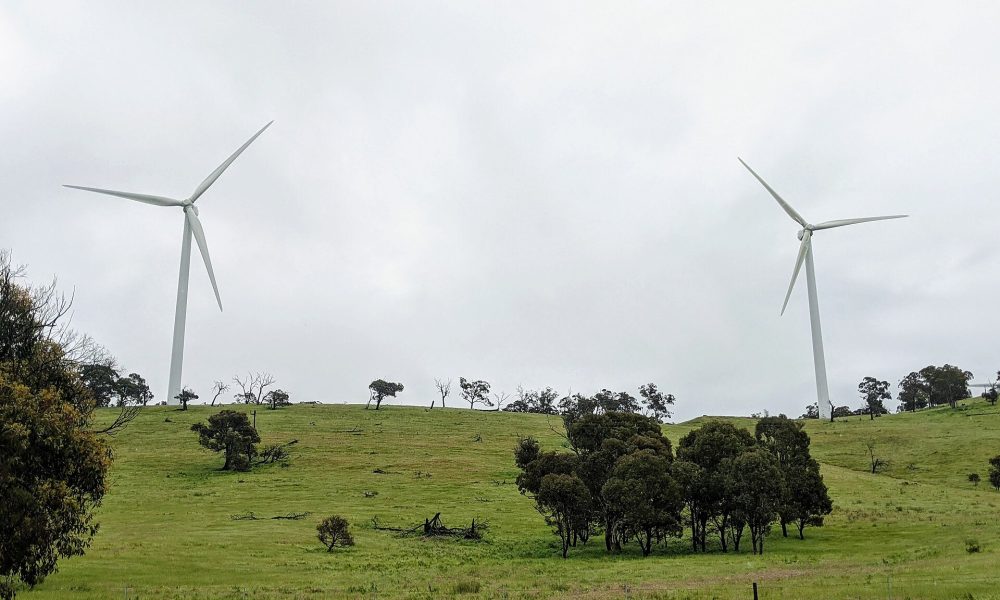
Australian renewable energy projects secured commitments to construction amounting to 2.4 GW in the third quarter of 2026, representing a record quarterly high according to the latest Australian Renewable Energy Scorecard from the Institute for Energy Economics and Financial Analysis (IEEFA) and Green Energy Markets (GEM).
Quick Skim
Wind Leads Record Commitments
The 2.4 GW jump in large-scale renewable projects financed for construction spans Australia’s National Electricity Market (NEM) and Western Australia’s South West Interconnected System (SWIS) in the July-September quarter. The Scorecard describes it as 20% up on the previous record, set in Q1 2022, and a step change from the low volumes recorded in Q1 and Q2 2026. The data was compiled and analysed by IEEFA Australia Lead Analyst Electricity Johanna Bowyer and Green Energy Markets Chief Executive Officer Tristan Edis.
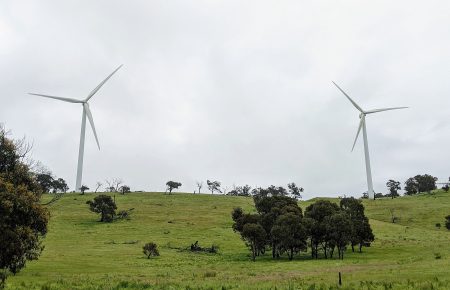
Wind made up the largest share of new capacity financed for construction, with 1.5 GW committed. Another 910 MW of large-scale solar was committed, the second-highest quarterly total on record after the 1.2 GW committed in the April-June quarter.
Capacity Under Construction
A combined 3.4 GW of solar is under construction across the NEM and SWIS, while 3.5 GW of wind is being built. Utility-scale batteries totalling 29.5 GWh are currently being built, with projects committed in the July-September quarter adding a further 13%.
The Scorecard notes that the utility-scale batteries under construction would provide 21% of the new energy storage capacity required across Australia’s main grids to achieve the federal government’s target of 82% renewables by 2030. With the battery projects put into construction this quarter, the Scorecard says the country now has 34% of the extra capacity needed to reach 2030 requirements, with wind projects at 21% and solar projects at 16%.
Shortfall and Contracting Bottleneck
The Scorecard warns that overall utility-scale capacity under construction is far short of the additional new capacity required to be operational by 2030.
Across the solar and wind pipeline, the biggest bottleneck is securing a contract for a significant portion of the power generated. Only 6% of fully approved projects across Australia’s main grids have also been contracted under power purchase agreements (PPAs), the Scorecard says.
Small-Scale Installations Fall
Rooftop solar installations dropped by 12% in Q3 2026 compared with the record levels of Q2 2026, but remained materially higher than recent year averages. The average size of a rooftop solar system fell to 9.9 kW from 10.5 kW in the previous quarter.
Small-scale battery installations declined by 44% after the record high of Q2 2026, while system sizes were reduced by 20%. The Scorecard highlights cuts to federal household battery rebates in connection with the drop.
“While home solar and battery systems have dropped precipitously this quarter, the record high installs over the second quarter of 2026, and rooftop solar still being materially above recent year averages, are cause for optimism,” said Green Energy Markets Chief Executive Officer Tristan Edis. He added, “Battery installations falling below recent averages, however, shows government support is still needed to help people invest in the long-term savings and security that renewables and battery systems provide.”
Photo: MDRX/Wikimedia Commons, CC BY-SA 4.0