


BME Opens Western Australia’s First Electronic Detonator Manufacturing Plant in Kalgoorlie
BME launched Western Australia’s first electronic detonator plant in Kalgoorlie, producing AXXIS Titanium and Silver detonators to support local mining operations.

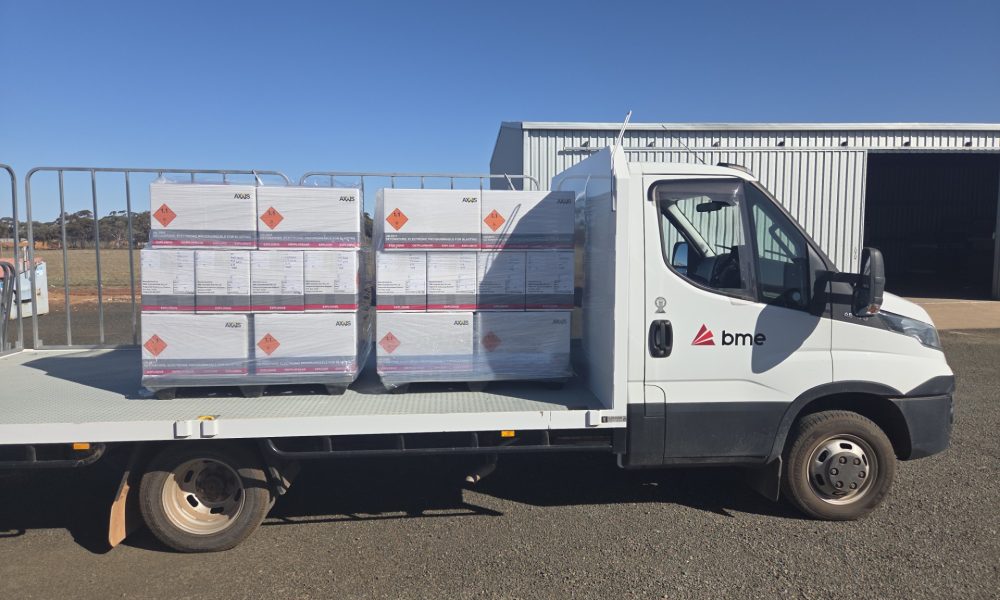
BME, a subsidiary of Omnia Holdings Limited, has opened Western Australia’s first electronic detonator manufacturing plant in Kalgoorlie to support mining customers with local production of its AXXIS electronic initiation systems.
Quick Skim
Local Manufacturing Reduces Supply Chain Risks and Lead Times
Located in the heart of Western Australia’s mining region, the Kalgoorlie facility will produce both BME’s AXXIS Titanium and AXXIS Silver electronic detonators. This new plant aims to shorten lead times, reduce reliance on imports, and mitigate supply chain risks for customers in the region and beyond.
According to Ralf Hennecke, Managing Director of BME, the plant incorporates a semi-automated production line sourced from BME’s Losberg facility in South Africa, leveraging proven manufacturing processes established across the group’s global footprint.
Seelan Gobalsamy, Group CEO of Omnia, described the launch as a “defining milestone” for Omnia Group and BME, saying it enhances the group’s global growth and investment in Australia.
Gobalsamy said the investment in local infrastructure enables BME to deliver greater value to customers in Western Australia.
Electronic Detonators Designed for Complex Mining Challenges
BME’s General Manager for Australia, Dr Rakhi Pathak, noted that the facility’s products address operational challenges such as rising costs, environmental constraints near infrastructure, and complex geological conditions.
The AXXIS Titanium system targets large-scale mining operations requiring extensive delay capacity and incorporates dual-capacitor safety features. Meanwhile, AXXIS Silver caters to smaller or cost-sensitive operations, offering precision timing and optimised performance.
Both AXXIS systems feature a dual-capacitor architecture that physically separates communication and testing energy from the firing energy, significantly reducing unintended initiation risks. Non-volatile memory stores permanent programming data to provide full track-and-trace functionality without reprogramming after power interruptions.
Robust lead wires enhance resistance to cut-offs and misfires during loading. These hardware capabilities integrate with BME’s digital blasting software platforms, including BLASTMAP® for design, XPLOLOG® for real-time blast hole data, and XPLOSMART®, which uses artificial intelligence for mine-to-mill optimisation.
Precision Blasting Drives Safety, Efficiency and Environmental Benefits
Dr Pathak explained that sub-millisecond timing control reduces blast-wave overlap, lessening ground vibrations and airblast near sensitive infrastructure, while maintaining pit wall stability.
Pre-blast digital diagnostics test each detonator to minimise the risk of misfires and unexploded charges. Controlled timing sequences improve material displacement, optimising excavator loading and preventing equipment damage from flyrock.
This precise energy distribution allows for wider drill patterns or lower powder factors, helping reduce drilling and explosive costs. Improved fragmentation streamlines downstream loading, hauling, crushing, and milling processes—the most energy-intensive stages of mining—thus reducing operating costs and carbon emissions.
Local Plant Supports Growth in Blasting Solutions and Services
The Kalgoorlie facility will serve as a dedicated platform for BME to supply its full range of blasting solutions, including high explosives and digital blasting technologies.
Dr Pathak said BME is expanding its long-term partnerships with mining companies, contractors, suppliers and regulators across Australia through the localised infrastructure.
Source: International Mining
Photo: BME/International Mining