
Tan See Leng Says Diversifying Fuels and Suppliers Is Key to Singapore’s Energy Security
Singapore’s energy minister said the country will diversify both energy sources and fuel suppliers, with natural gas expected to remain at 50% or less of the 2050 mix.

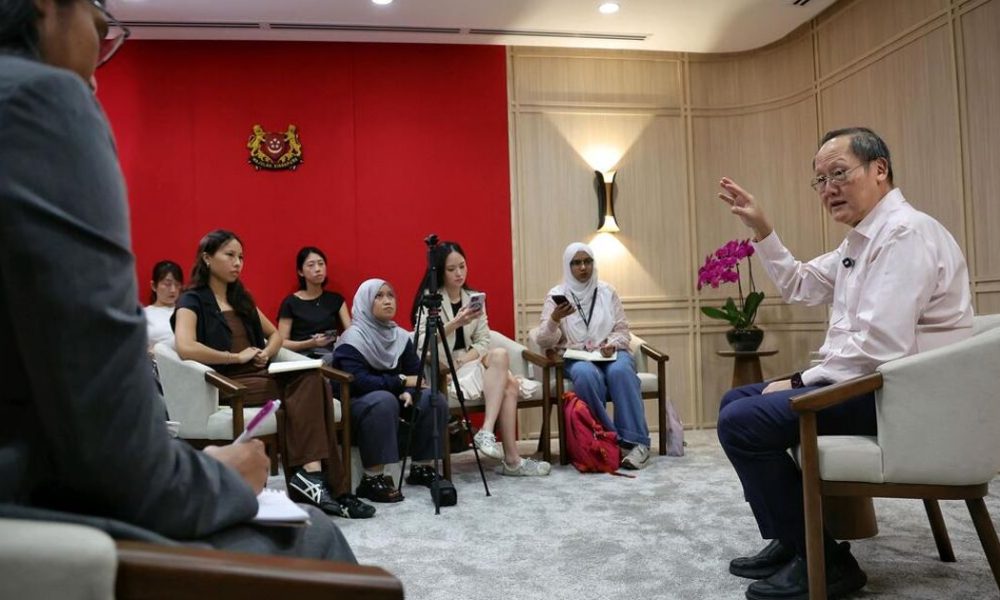
Singapore will safeguard its energy security by diversifying both its energy sources and its fuel suppliers, Minister for Energy, Trade and Industry (Energy and Industry) Tan See Leng said in an interview with local media on 13 November.
Quick Skim
Gas Supply Moves Beyond Piped Imports
According to The Straits Times, less than half of Singapore’s natural gas needs are currently served by piped gas, primarily from Indonesia and Malaysia. Indonesia’s existing gas supply contracts with Singapore run until the end of 2028. Indonesia reduced piped gas supplies in October.
Tan said that when Singapore’s second liquefied natural gas (LNG) terminal at Jurong Port begins operating by 2030, reliance on piped gas will drop further. With the Middle East conflict disrupting LNG shipments from Qatar, Singapore has secured replacement fuel from Australia, Africa and the US, and is reaching out potentially to Latin America as well.
Power plants must also be able to run on diesel, which Singapore can refine from oil reserves, and new plants must be designed to run on a blend of natural gas and a portion of hydrogen, he said.
Natural Gas Expected to Anchor the 2050 Energy Mix
Tan said the energy mix around 2050 may still be underpinned by natural gas, at 50% or less of the fuel mix. If 40% to 50% of electricity could come from renewable and cleaner sources, “I think we will be able to decarbonise”, he said.
Closer to 2050, the plan is for imported electricity to form around 25% to 30% of the mix, with domestic solar meeting around 10% of electricity needs. The rest could include green hydrogen and green ammonia.
Nuclear Studied While Decision Remains Open
Singapore has not made a decision on nuclear energy but has built up its capacity to study it, and plans a readiness assessment by the United Nations’ atomic watchdog in 2027. The country is studying advanced technologies such as small modular reactors, which Tan said have been deemed more suitable for Singapore than conventional large plants.
Cost Balanced Against Energy Security and Decarbonisation
Tan said Singapore does not subsidise electricity tariffs, and instead gives tiered U-Save rebates to households. He said carbon-capture technology could hold some promise, but its cost remains “very prohibitive” until it reaches a certain scale.
“And to me, we will decarbonise, but we will never decarbonise at all costs,” Tan said.