


Patimban Global Gateway Terminal Adds 12 Cranes to Increase Capacity by 600,000 TEU
Patimban Global Gateway Terminal will deploy three STS and nine electric RTG cranes, raising annual container capacity to 800,000 TEU by December 2026.

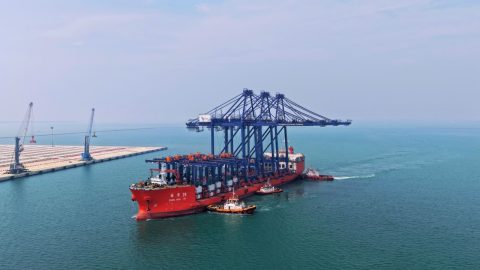
Patimban Global Gateway Terminal (PGT) in Indonesia has received three ship-to-shore (STS) cranes and nine electric rubber-tyred gantry (RTG) cranes supplied by ZPMC as it prepares to expand its container-handling capacity.
Quick Skim
The equipment is scheduled to enter service by the end of December 2026, adding 600,000 TEU of annual capacity and bringing the terminal’s total capacity to approximately 800,000 TEU, according to Africa Global Logistics (AGL), a wholly owned subsidiary of MSC Group.
Cranes Financed Through US$73.6 Million Agreement
The equipment purchase was financed through a US$73.6 million agreement secured in 2025 between PGT, AGL’s joint venture, and Indonesian infrastructure financing company PT Sarana Multi Infrastruktur.
AGL, Toyota Tsusho Corporation and Samudera Pelabuhan Indonesia formed a joint venture in 2024 to develop and operate the container terminal at Patimban International Port in West Java. PGT, the operating company responsible for the terminal, holds a 37-year concession to manage and develop the facility.
First MSC Weekly Service Links Patimban to Asian Hubs
In July 2026, PGT welcomed MSC’s first weekly container service to Patimban, inaugurated by the call of MSC Aria 3. The Seahorse service connects Patimban with Shanghai, Ningbo, Laem Chabang and Singapore. AGL described the introduction of the regular service as a milestone in the terminal’s development.
Government Gateway to Complement Tanjung Priok
Patimban is being developed by the Indonesian government as a complementary international gateway to Tanjung Priok, the country’s busiest port, with the aim of expanding capacity to serve the industrial corridor of Jakarta and West Java.
The port is being built in stages under a 40-year public-private partnership awarded to PT Pelabuhan Patimban Internasional (PPI), which is responsible for managing and developing the wider port. Its container-handling capacity is targeted to reach 7.5m TEU annually by 2033, up from an initial 250,000 TEU.
The master plan also includes expanding vehicle-handling capacity to 600,000 units a year, alongside the development of RoRo, service vessel and liquid bulk terminals.
Photo: WorldCargo News