
Nexans Completes 135 Kilometre Dynamic Cable Laying Offshore Western Australia for Chevron
Nexans has completed laying and trenching the 145 kV dynamic cable for Chevron’s Jansz-Io Compression project off Western Australia, with a final soak test planned for February.

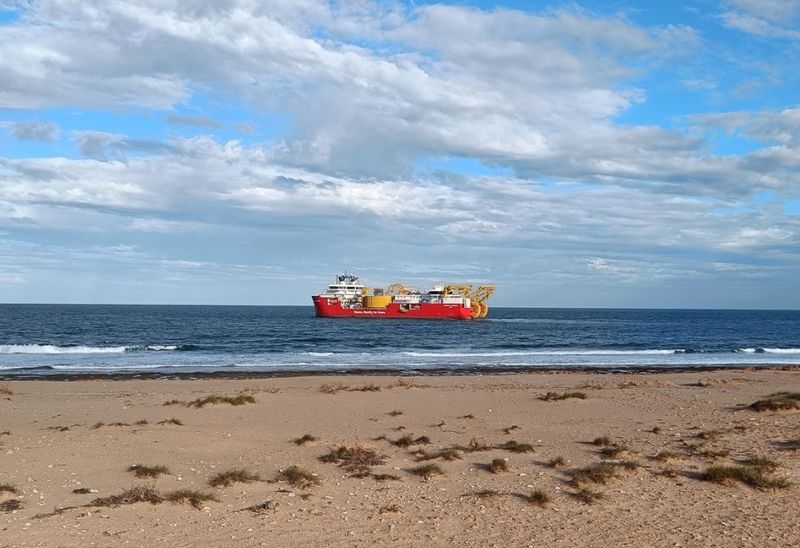
Nexans has completed the laying and trenching of the high-voltage dynamic cable for Chevron’s Jansz-Io Compression (J-IC) project offshore Western Australia.
Quick Skim
Cable Supports Subsea Compression at Gorgon
The cable-laying vessel (CLV) Nexans Aurora installed 26 buoyancy modules and trenched 30 kilometres of cable, after which it left Australia on 23 October.
J-IC uses subsea compression to sustain gas supply to the Gorgon LNG and domestic gas plants on Barrow Island. The 145 kV cable, about 135 km long, runs from the island to a floating field control station, which powers and controls the compressors on the seabed.
Installation Scope and Remaining Work
The completed operation included the overboarding and pull-in of the cable head to the field control station, installation of the buoyancy modules using a horizontal method developed for the project, laying of the cable in its dynamic configuration, installation of about 200 metres of vortex-induced vibration (VIV) strakes in the Scarp section, cable lay up the Scarp, float-out and pull-in of the second cable end at Barrow Island, as-laid survey and cable trenching.
Before handover, the remaining work includes cable jointing at the field control station and on Barrow Island, rock stabilisation along the last 28 km of the route, and a final soak test planned for February.
Project Background
Chevron sanctioned the Jansz-Io compression project in early July 2021 and ordered the field control station from the Daewoo Shipbuilding & Marine Engineering (DSME) shipyard, now known as Hanwha Ocean, a few months later.
Hanwha Ocean confirmed the load-out of the field control station for the project in November 2024.
Source: Offshore Energy
Photo: Offshore Energy