




Hyundai Glovis Launches World’s Largest Car Carrier With 10,800-Vehicle Capacity
Hyundai Glovis deployed the Glovis Navis, a 230m car carrier able to transport 10,800 vehicles, aiming to expand its fleet and meet growing export logistics demand.

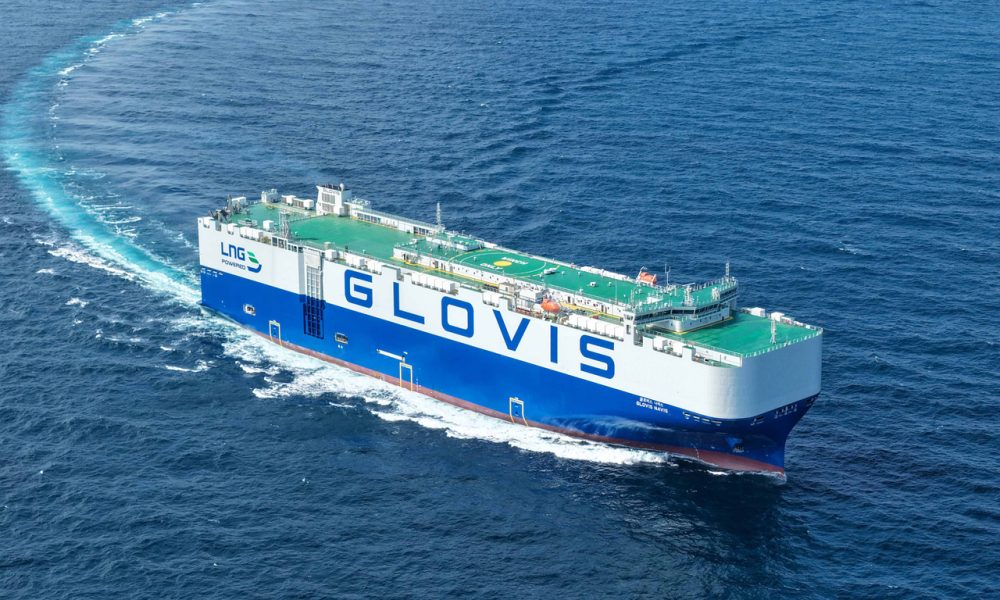
Hyundai Glovis has named the Glovis Navis, a pure car and truck carrier (PCTC) that it says is the world’s largest by cargo capacity, able to transport 10,800 vehicles per voyage.
Quick Skim
The vessel was acquired with financing from the Korea Ocean Business Corp. (KOBC). It was named on Thursday at the GSI shipyard in Guangzhou, China, in a ceremony attended by Hyundai Glovis President and CEO Lee Gyu-bok and representatives from KOBC and the shipyard, and was immediately deployed for finished-vehicle maritime transport.
Glovis Navis Features a 10,800-Vehicle Capacity With Flexible Cargo Decks
The Glovis Navis measures 230 metres in length and 40 metres in width, with 14 decks of vehicle storage space. Five of the 14 decks have adjustable heights, allowing the ship to carry SUVs, buses, trucks and construction equipment as well as passenger cars.
Hyundai Glovis said the vessel currently has the largest cargo capacity among car carriers in service.
Fleet Expansion Supported by KOBC Financing
The vessel follows a 2024 memorandum of understanding between Hyundai Glovis and KOBC to secure four ultra-large 10,800-vehicle PCTCs. KOBC provides policy financing, while Hyundai Glovis operates the ships on a long-term basis.
The Glovis Nova was delivered in July, followed by the Glovis Noble and the Glovis Navis this month. The final vessel, the Glovis Nautilus, is scheduled for delivery in February next year.
Under the arrangement, the new ships will give priority berthing space to South Korean automakers when they cannot find vessels for their export volumes. The aim is to ensure stable export logistics amid a shortage of car carriers, driven largely by a surge in finished-vehicle exports from China, longer voyages from route diversions linked to Middle East conflicts, and demand to replace ageing vessels.
LNG Dual-Fuel Engine and Shore Power Fitted
The Glovis Navis has a dual-fuel propulsion engine that can run on liquefied natural gas (LNG) as well as conventional marine fuel. It is also fitted with an alternative maritime power (AMP) system that allows the ship to draw electricity from shore while berthed, reducing the need to run onboard generators in port.
Fleet Growth Targets 128 Ships and 5 Million Vehicles by 2030
Hyundai Glovis plans to add 10 more LNG dual-fuel 10,800-vehicle carriers next year. Measured in equivalent 6,500-vehicle-capacity units, it aims to expand its average annual operating fleet from about 106 ships in the third quarter of this year to 110 ships in 2027, 118 in 2028, 123 in 2029 and 128 by 2030.
The company also plans to link overseas port operations with inland logistics networks, using hubs including Philadelphia in the United States and Amsterdam in the Netherlands, and to diversify cargo to include commercial vehicles and construction equipment.
Its goal is to grow annual finished-vehicle maritime transport from about 3.4 million units to 5 million by 2030, roughly 20 per cent of global finished-vehicle maritime cargo.
Photo: Hyundai Glovis