

Ministry Deploys First Autonomous Vehicle for Real-Road Trial in Gwangju
The South Korean Ministry of Land, Infrastructure and Transport begins real-road autonomous vehicle trials in Gwangju with 105 vehicles prepared for retrofit and inspection.

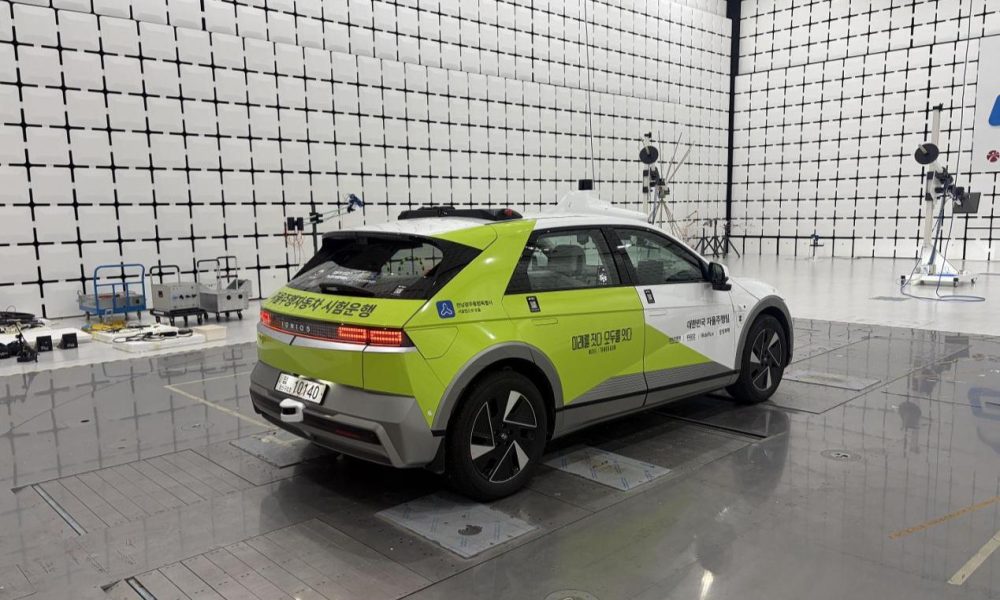
South Korea’s Ministry of Land, Infrastructure and Transport will deploy the first test vehicle in a pilot real-road autonomous driving project in Jeonnam-Gwangju Special Metropolitan City from Monday. The ministry said on Sunday that initial trials will focus on major arterial roads around Gwangju Songjeong Station, Pyeongdong Industrial Complex and the Cheomdan Area, before expanding to other areas.
Vehicle rollout and safety drivers
The government aims to deploy 120 autonomous cars by the end of this year and 200 by January. So far, 105 software-defined vehicles have been delivered to Hyundai Motor, Autonomous A2Z and RideFlux for retrofitting and inspection.
Through the first half of next year, safety drivers will be on board and will intervene during emergencies. Alongside the self-driving cars, manually driven vehicles will operate outside the designated zones to gather broader traffic data.
Data standards and operations
Collected data will be processed under artificial intelligence (AI) standardisation guidelines co-developed by the Korea Transportation Safety Authority (KOTSA), which operates under the ministry, together with autonomous driving developers.
Transport platform operators will dispatch vehicles under weekly plans, monitoring location, speed, battery levels and system status in real time from 7:30 a.m. to 6:00 p.m. on weekdays and weekends.
Permits and expansion
To support the rollout, KOTSA launched a temporary permit response task force on 18 November, expanding its safety verification staff from two to five. With nationwide autonomous vehicle operations projected to reach 3,000 vehicles next year, the ministry plans to streamline temporary permit procedures for vehicles with identical specifications.
On Thursday, the ministry set up a dedicated autonomous driving demonstration promotion team to oversee expansion of the real-road trial to five or six demonstration cities, and to introduce autonomous demand-responsive transit across 50 routes and zones nationwide next year.
Park Jun-hyung, director general of the Mobility and Automobile Bureau at the ministry, said Jeonnam-Gwangju “has entered a full-fledged testing phase with the operation of its first vehicle.” He said the ministry would accelerate deployment of follow-up vehicles and expansion of demonstrations centred on the newly launched promotion team.
Park Jeong-hwan, director general of the AI Mobility Bureau at Jeonnam-Gwangju Special Metropolitan City, said the city would oversee safety throughout the demonstration and turn it into an opportunity to enhance regional industrial competitiveness.
Photo: The Korea Times