


Singapore’s Public Healthcare Institutions Cut Energy Use by Nearly 8%
Energy use per square metre at Singapore’s public healthcare institutions fell 7.9% last year, while water use per person fell 22.5%, Health Minister Ong Ye Kung said.

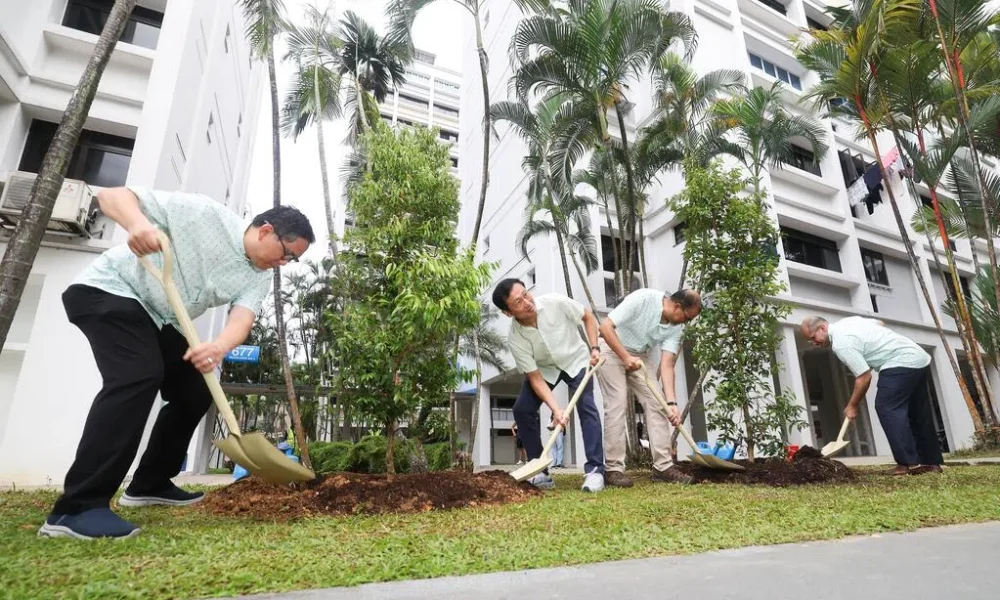
Energy consumption per square metre at Singapore’s public healthcare institutions fell by 7.9% last year against a baseline of five to seven years earlier, Health Minister Ong Ye Kung announced on 21 November at Clean and Green Singapore Day.
Quick Skim
Water consumption per person fell by 22.5%, while waste disposed of per person dropped by 29.4% over three years, according to Ong’s speech.
Energy and Resource Use Decline Despite Increased Workload
Ong Ye Kung highlighted that the declines occurred even as patient numbers and healthcare workload continued to rise rapidly. The reductions in energy, water, and waste reflect ongoing efforts to integrate decarbonisation and recycling initiatives across all public healthcare institutions in Singapore.
“Even though workload and patient numbers are rising rapidly, we continue to drive decarbonisation and recycling across all our healthcare institutions,” Ong said.
Alignment with Singapore Green Plan 2030
The energy and resource savings contribute to targets set under the Singapore Green Plan 2030, launched in 2021 to support sustainability and climate action across sectors. Ong noted Singapore’s limited size means the country’s climate measures may not substantially affect global emissions, but effective implementation can provide useful lessons internationally.
“I believe this is what makes our efforts worthwhile,” Ong added, stressing the importance of local action despite Singapore’s small geographic and emissions footprint.
Year of Climate Adaptation and National Adaptation Plan
This year is the “Year of Climate Adaptation”, and the first National Adaptation Plan is expected next year. Ong stressed that government, businesses, communities and individuals all have a part to play.
The Clean and Green Singapore Day event was jointly organised by the National Environment Agency, National Parks Board and North West Community Development Council, and took place at Kampung Admiralty and Woodlands Galaxy Community Club.
Community Engagement Initiatives Highlight Circular Economy
Alongside government activities, Clean and Green Singapore Day featured exhibitions such as the “Keep Singapore Clean 2026” roadshow and the “Adapting Together for a Liveable Home” interactive exhibition. As part of the OneMillionTrees movement, Ong and other officials planted six native trees near Woodlands Galaxy Community Club, including Syzygium zeylanicum and Gardenia tubifera species.
Also launched at the event was a pilot initiative to promote the Beverage Container Return Scheme (BCRS), aimed at increasing recycling rates by encouraging consumers to return bottles and cans via reverse vending machines. Decathlon and local social enterprise Commenhers jointly developed a compact, foldable carrier bag to facilitate transporting empty containers for recycling.
Decathlon Singapore is gathering internal feedback on the prototype bag, which holds about six cans and is made from upcycled tents and groundsheets. It is expected to go on sale next year.
Commenhers chief executive Nuryanee Anisah Mohamed Noor described the process of upcycling the materials as challenging due to damage and dirt, but said the bag’s design aims to remind and encourage consumers to support recycling efforts.
Decathlon Singapore’s circular economy transformation lead Joris Eyral said the collaboration reflects ongoing innovation to promote sustainability through community engagement and practical solutions.