



Bloom Energy now Fields Gigawatts, Off-Grid, No Water
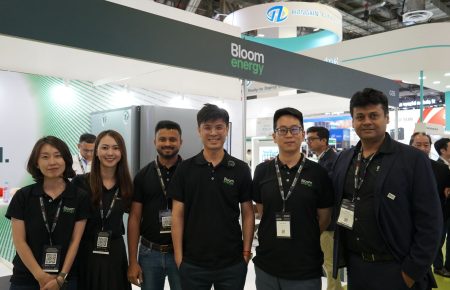
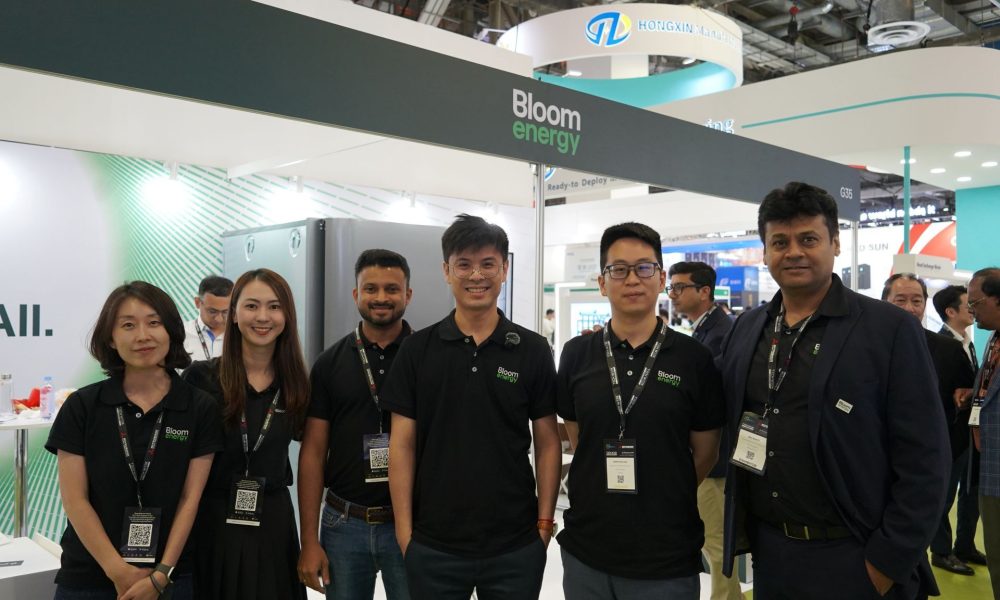
23 Oct 2026 · Stories from Data Centre World Asia Bloom Energy’s Taiwan Director P.J. Huang on why power is the real bottleneck, bringing your own, and the Oracle desert project that runs dry. “Two...

23 Oct 2026 · Stories from Data Centre World Asia
Quick Skim
Bloom Energy’s Taiwan Director P.J. Huang on why power is the real bottleneck, bringing your own, and the Oracle desert project that runs dry.
“Two years ago, 100 megawatts in Malaysia was a capstone project,” says P.J. Huang, Bloom Energy’s Taiwan Director. “Now people are talking about the gigawatt scale, whether it’s in the US, Japan, or Southeast Asia.”
The jump of an order of magnitude reframes the whole conversation, because the input to all of it is the one thing in shortest supply.
Power is the Bottleneck
“What people are waiting the longest for is power,” P.J. says. “Your input is power, your output is compute.” In market after market the answer from the government is the same. Capacity, but not until 2030 or 2035, or requests placed on hold altogether. “So it is time for people to think about on-site power. How do you bring your own power in a way that makes sense for you?”
Off-Grid, in a Desert, with No Water
His headline example is Oracle, running “2.5 gigawatts completely off-grid to power their AI data centre”, and doing it in a desert. Part of why Bloom won, he says, is what its fuel cells don’t need: “we’re competitive on every other front and we don’t need water.” On a site where on-site turbines would have to be cooled, that is decisive. It also scales in small steps. “Our smallest building block is a third of a megawatt… we grow as you grow”, across new sites and existing ones alike.
Not a Battery, and Not Only Data Centres
The misconception he most wants to clear up is a category error. “Most people may think that we are a battery energy storage system, but we’re not. We are primary power generation,” he says; and distinct from combustion, “the most efficient, cleanest way… without combustion, without smoke stacks.” Nor is this a data-centre-only story: this year alone Bloom signed a factory, a regional hospital and a state-owned utility in Taiwan, with Equinix a customer for over a decade. “The power gap,” as he puts it, “is a problem that everybody is facing.”
The Monday Takeaway
If the grid can’t commit power until 2030, on-site primary generation moves from plan B onto the critical path, and on a water-stressed or remote site, a water-free source changes where you can build at all.
This interview is part of Industrial Gemba’s coverage from Data Centre World Asia. Responses have been edited for length and clarity. Watch the full interview on YouTube.