






China Advances AI Infrastructure in Southeast Asia, Influencing Regional Technology Autonomy
Chinese firms expand AI infrastructure in Southeast Asia through telecommunications and cloud services, raising concerns about dependency and technological sovereignty.

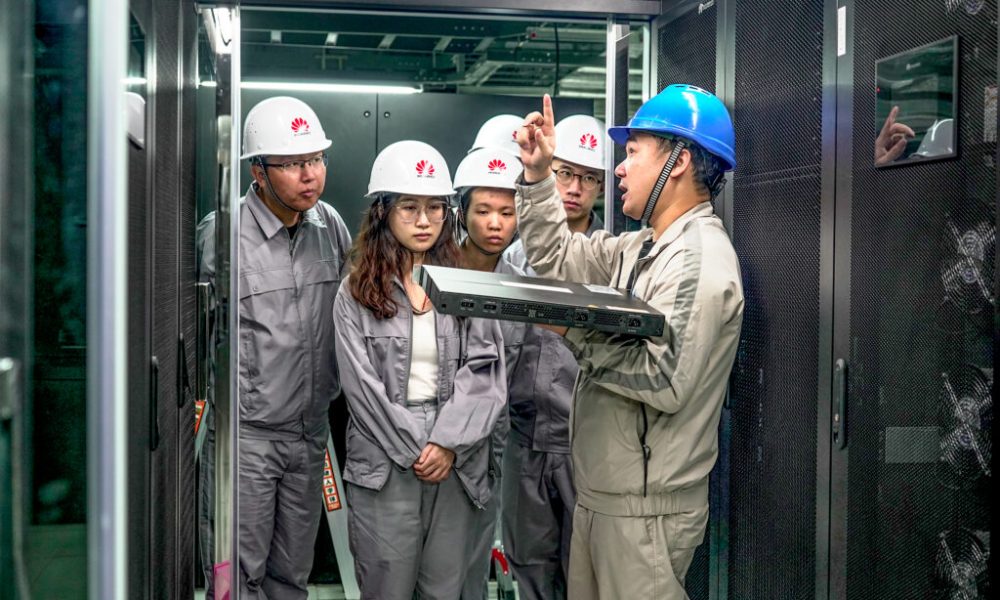
Chinese companies are increasingly embedding artificial intelligence within Southeast Asia’s telecommunications networks, cloud platforms and critical infrastructure, positioning China as a significant provider of the region’s AI foundation. This development may impact Southeast Asia’s technological autonomy as governments and businesses adopt these technologies, potentially creating dependencies that are complex to reverse.
Quick Skim
China Expands AI Infrastructure Through Regional Partnerships
China has intensified its engagement with Southeast Asia on AI infrastructure, exemplified by the China-ASEAN AI Application Cooperation Centre launched in Nanning, Guangxi following the first ministerial AI roundtable in September 2025. A subsequent meeting in September 2026 involved all 11 ASEAN members, with Guangxi provincial officials reporting 44 AI cooperation agreements and joint large-model research with eight ASEAN countries.
At the fourth China-ASEAN AI Cooperation Forum in September 2026, one outcome included a Lao-language AI model deployed for Laos’s state electricity corporation, where computational resources remain in Guangxi while services are delivered locally in Laos. Preliminary agreements from the 23rd China-ASEAN Expo are worth approximately US$150 million, reflecting a division of labour across Chinese cities focusing on research, integration, and application.
Chinese Technology Embedded in Southeast Asia’s Networks
Chinese telecommunications firms have leveraged their existing presence in the region to incorporate AI into network upgrades. Huawei’s partnerships, spanning countries from Thailand to Brunei, have progressed to AI integrations. At the 2026 Mobile World Congress, Huawei and Indonesia’s Telkomsel announced cooperation on 5G and broadband enhancements with embedded AI capabilities. Telkomsel also extended its partnership with ZTE on AI-native networks.
Further investments include Tencent’s data-centre expansions in Indonesia and ByteDance’s approval to enlarge data infrastructure in Thailand. These developments suggest AI deployment can occur via telecommunications or cloud contracts without explicit procurement of Chinese AI models, thus deepening dependency on the Chinese technology ecosystem.
Implications for Southeast Asia’s AI Autonomy and Supply Chains
This infrastructure-driven approach to AI integration raises challenges for regional technology sovereignty. While regional governments may maintain the option to use alternative AI models, dependencies on specific hardware, cloud infrastructure and technical support limit true independence. Malaysia’s example highlights this complexity: a 2025 private sector AI infrastructure initiative involving Huawei’s Ascend AI hardware was quickly disavowed by the government, and Huawei denied chip sales in Malaysia.
There are economic advantages to adopting Chinese technology, notably cost-effectiveness and delivery, but governments face risks associated with vendor lock-in, limits on auditing and modifying externally hosted AI models, and geopolitical considerations. These factors emphasise the importance of governance over who controls, maintains, and modifies AI infrastructure.
China’s role also extends into AI governance; five ASEAN members have joined the Shanghai-based World Artificial Intelligence Cooperation Organisation. Future developments such as ASEAN’s Digital Economy Framework Agreement and Malaysia’s sovereign computing choices will further test regional decisions on balancing Chinese technology against alternative providers under geopolitical constraints.
The commercial attractiveness and scale of Chinese investments and partnerships suggest that fundamental choices about Southeast Asia’s AI infrastructure and autonomy are taking place incrementally. Recognition of these dependencies is critical, as reversing them could become more difficult over time.