





Colombo Port Congestion Expected to Persist for Two More Weeks
Congestion at the Port of Colombo is expected to continue for another two weeks as diverted Gulf cargo, adverse weather and limited deep-draft berth capacity push vessel turnaround times to as much...

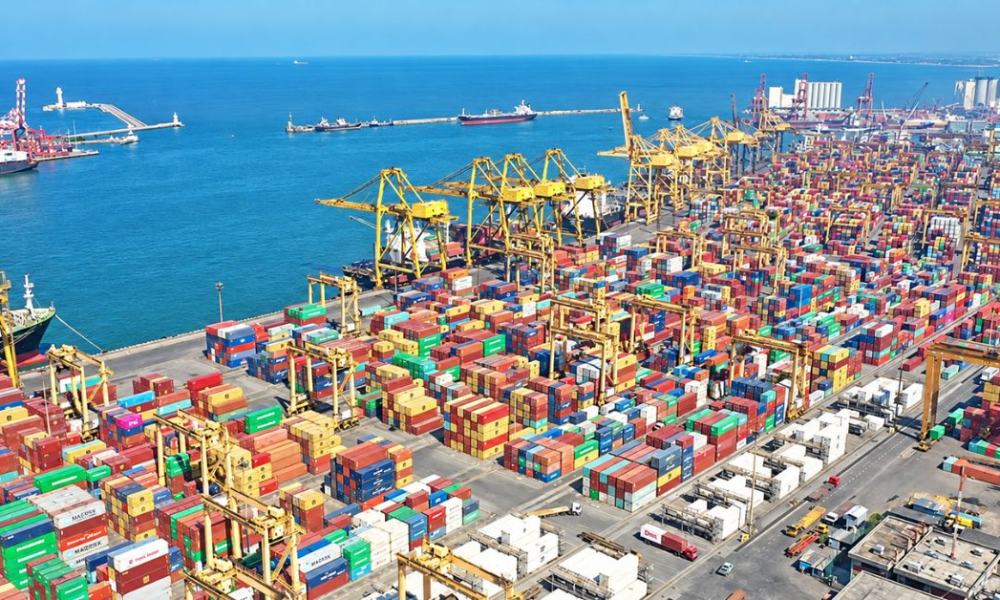
Congestion at the Port of Colombo is expected to continue for another two weeks as diverted Gulf cargo, adverse weather and limited deep-draft berth capacity push vessel turnaround times to as much as six days.
Quick Skim
The disruption is concentrated at Colombo International Container Terminal (CICT) and Colombo West International Terminal (CWIT), the two facilities capable of handling the largest vessels currently calling at the Sri Lankan port.
South Asia Gateway Terminal and Jaya Container Terminal are operating closer to normal levels, while additional relay cargo continues to place pressure on Colombo’s deeper-draft facilities.
Gulf Cargo Diversions Increase Port Pressure
The congestion follows a sharp shift in regional container flows as shipping lines redirect cargo away from the Gulf.
Container volumes at Jebel Ali fell to 3.14 million TEUs in the first half of 2026, nearly 60% below the 7.77 million TEUs handled during the same period a year earlier. Second-quarter volumes were down more than 90%.
With most vessels serving Jebel Ali normally passing through the Strait of Hormuz, shipping lines have redirected relay cargo towards South Asian ports capable of accommodating large vessels.
Colombo has absorbed a significant share of that traffic because of its deep-draft terminals and established transshipment operations.
Berthing Delays Reach 36 Hours
Shipping lines reported berthing delays of 24 to 36 hours during the final week of August, even for vessels operating under contracted berthing windows.
High yard density, adverse weather and an inter-terminal transfer backlog of as much as 35,000 TEUs have contributed to slower vessel and container movements.
Strong winds have also disrupted berthing operations, adding further pressure to terminal schedules.
Congestion Spreads Across South Asian Gateways
Colombo is not the only port facing capacity pressure.
India’s Nhava Sheva recorded yard utilisation above 90%, with delays reaching up to 48 hours, while Mundra reported yard density above 77% and delays of up to 24 hours.
The congestion across multiple South Asian gateways limits the number of alternatives available to shipping lines seeking to reroute Gulf cargo.
This is increasing pressure on berth availability, container yards and inter-terminal logistics across the region.
Tug Capacity Adds to Operational Constraints
Navigation within Colombo harbour is creating another bottleneck.
An insufficient tug fleet has slowed vessel movements and contributed to longer turnaround times. Sri Lanka approved the hiring of two additional tugboats for US$17.16 million over five years, excluding taxes, but the vessels are not expected to enter service until 2027.
Until additional harbour resources become available, terminal operators will need to manage growing vessel calls with existing marine-service capacity.
Container Throughput Continues to Rise
Despite the congestion, Colombo is recording strong container growth.
The port handled 774,513 TEUs in July, up 7.3% year on year. Total throughput for the first seven months reached 5.22 million TEUs, an increase of 11.2%.
Transshipment volumes rose 8.4% in July to 628,053 TEUs, while cumulative transshipment traffic increased 11.4% to more than 4.18 million TEUs.
Transshipment and re-stow cargo together accounted for 85.4% of Colombo’s July throughput, increasing pressure on berth and yard capacity.
Colombo Moves Into Global Top 20
Higher volumes have pushed Colombo from 26th to 20th in global container port rankings, based on first-half throughput of 4.44 million TEUs.
At its current pace, the port could handle around 8.9 million TEUs in 2026, exceeding its previous annual record of 8.29 million TEUs set in 2025.
Capacity is also expected to increase when the second phase of Colombo West International Terminal is completed in December, taking the terminal towards 3.2 million TEUs of annual handling capacity.
Near-Term Congestion Remains a Logistics Risk
For shipping lines and cargo owners, Colombo’s congestion highlights how quickly disruption at one regional trade corridor can shift pressure onto alternative ports.
The combination of diverted Gulf cargo, weather disruption, limited tug capacity and high terminal utilisation is expected to keep operations challenging in the near term.
Conditions could begin to improve as diverted volumes ease and additional terminal capacity becomes available, but the current disruption is likely to remain an important factor for vessel scheduling, transshipment planning and regional supply chains over the coming weeks.