




Marine Fuel Supply Squeeze Eases as Shipping Hubs Adapt to Hormuz Disruption
Marine fuel supplies at major global bunkering hubs have stabilised after severe shortages earlier this year, as traders and shipping companies find alternative sources despite continued disruption...

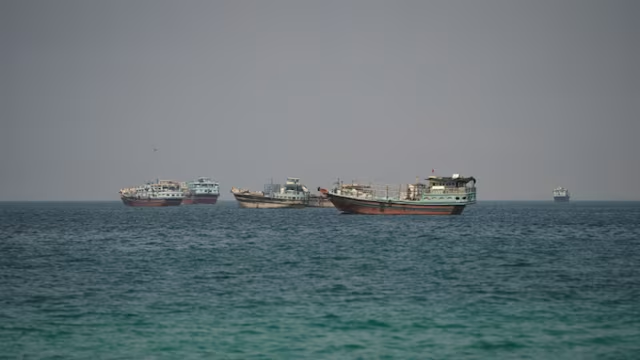
Marine fuel supplies at major global bunkering hubs have stabilised after severe shortages earlier this year, as traders and shipping companies find alternative sources despite continued disruption to oil flows through the Strait of Hormuz.
Quick Skim
Industry executives speaking at the APPEC conference in Singapore said bunker availability has improved significantly compared with March and April, although prices remain elevated and supply risks have not disappeared.
Bunker Availability Improves at Major Hubs
Emarat Maritime managing director Rishi Nyati said shipping companies are currently able to source marine fuel and load it onto vessels without major difficulties.
The situation contrasts with the early months of the Iran war, when disruptions to Middle Eastern exports tightened fuel availability across major shipping centres.
Repsol’s Asia head for heavy products Max Tay similarly said there is no current shortage of fuel oil, although the market remains vulnerable to smaller supply shocks.
Singapore Fuel Prices Remain More Than 60% Higher
Improved availability has not returned marine fuel costs to pre-war levels.
Prices for very low-sulphur fuel oil (VLSFO) in Singapore are still more than 60% above levels recorded before the conflict, according to market data cited by Reuters.
Prices surged after the US and Israel attacked Iran in late February and reached record highs in March.
They have since eased from those peaks, but the higher cost environment continues to affect bunker purchasing decisions.
Alternative Supplies Reduce Hormuz Impact
Fuel suppliers have adapted to reduced exports through the Strait of Hormuz by sourcing replacement barrels from other markets.
Tay said supply alternatives remain available despite continued disruption through the waterway.
However, availability of specific blending components remains a concern because marine fuels must meet different technical specifications depending on vessel and market requirements.
This means the overall supply of fuel oil may be sufficient even when certain compliant bunker grades are more difficult or expensive to produce.
Fujairah Bunkering Still Well Below Pre-War Levels
Recovery has been uneven across major bunkering centres.
At Fujairah in the UAE, bunker activity has recovered to only around 40% of pre-war levels, according to Repsol.
Singapore, meanwhile, has maintained relatively stable bunkering activity since the war began.
The contrast has reinforced Singapore’s importance as a refuelling hub for vessels operating across Asian and international trade routes.
Hormuz Remains Partially Open
Despite prolonged disruption, the Strait of Hormuz has not completely closed.
Nyati said approximately 10 to 15 commodity-vessel transits are taking place in both directions each day, mainly through the Omani corridor on the southern side of the waterway.
Ship-tracking data continues to show highly variable traffic through the strait, highlighting the operational uncertainty facing energy and shipping companies.
High Prices Could Still Restrict Supply
The next challenge for the bunker market may be economics rather than physical availability.
Equatorial Marine Fuel Management Services chief operating officer Sheen Mao Choong said replacement barrels can be sourced, but suppliers may be unwilling to bring them into the market if prices are too high for customers.
That could restrict volumes even when fuel is technically available.
For shipowners, the improving supply situation therefore reduces the immediate risk of widespread bunker shortages, but higher fuel costs, blending-stock availability and continued Hormuz disruption remain key operational risks.
The market has adapted considerably since the severe shortages earlier in the year, but marine fuel supply chains remain exposed to further geopolitical disruption.