






15th Maritime Dialogue Advances Implementation of BBNJ Agreement in Vietnam
Vietnam’s 15th Maritime Dialogue addressed national and international measures to operationalise the BBNJ Agreement on marine biodiversity conservation.

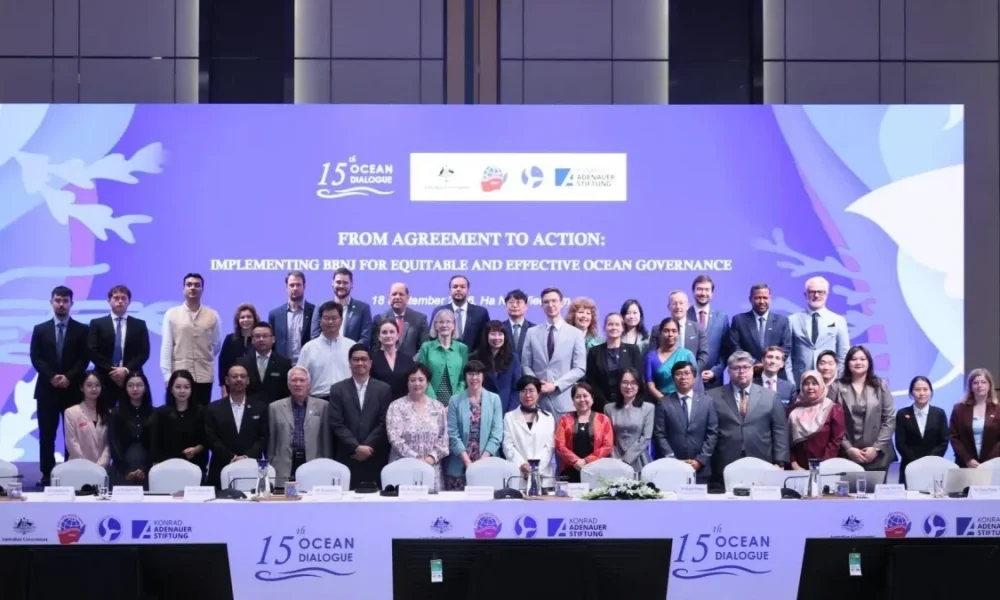
The 15th Maritime Dialogue convened in Hanoi, gathering over 140 delegates to exchange strategies for implementing the Agreement on the Conservation and Sustainable Use of Marine Biodiversity Beyond National Jurisdiction (BBNJ Agreement), focusing on translating international commitments into practical national, regional, and global mechanisms.
Quick Skim
Discussion Centres on Aligning BBNJ with National Legal Frameworks
The dialogue featured contributions from government officials, international delegates, and experts emphasizing the necessity of harmonising the BBNJ Agreement with domestic laws and institutions. Associate Professor Dr Nguyen Thi Lan Anh, Deputy Director of the Diplomatic Academy of Vietnam, highlighted the Agreement as a framework under the 1982 United Nations Convention on the Law of the Sea (UNCLOS), requiring consistent implementation alongside existing global and regional arrangements.
She underlined that national-level execution grounded in international cooperation, science, and technology is essential for the Agreement’s effectiveness. The dialogue also referenced Vietnam’s Resolution No. 20-NQ/TW, which aims to develop Vietnam into a strong maritime nation by 2030 with modern governance and sustainable marine environmental management, thereby supporting BBNJ goals.
International Perspectives Emphasise Cooperation and Capacity Building
Australian Ambassador to Vietnam Gillian Bird noted the impacts of climate change, biodiversity loss, and pollution on oceans and recognised the importance of a sustainable marine environment for national security and prosperity. Australia plans to ratify the BBNJ Agreement and participate in the Meeting of Members in January 2027, while committing to regional support through initiatives such as the US$160 million Southeast Asia Maritime Security Partnerships programme.
Germany’s representation, through Lewe Paul of the Konrad-Adenauer-Stiftung, stressed Germany’s active role in supporting the BBNJ negotiations and its alignment of domestic legislation, including the Ratification Act and BBNJ Act, with international obligations. Germany’s experience demonstrates the importance of developing a domestic legal framework in parallel with international commitments.
Maritime Dialogue Supports Practical Measures for Effective Governance
Structured into three sessions, the dialogue tackled subjects including compatibility of the BBNJ Agreement with national legal structures, international cooperation mechanisms, and institutional frameworks to facilitate implementation. Key discussions addressed inter-sectoral coordination, management of marine genetic resources, environmental impact assessments, scientific research cooperation, information exchange, capacity building, technology transfer, and financing arrangements.
The Maritime Dialogue is a recurring initiative by the Diplomatic Academy of Vietnam aimed at fostering cooperation among policymakers, scientists, and legal experts to address challenges in marine and ocean governance.
Implications for Maritime Operations and Regional Collaboration
The dialogue’s outcomes suggest that effective implementation of the BBNJ Agreement will require integrated efforts across legislation, scientific research, and international partnerships. For industrial operations, aligning national frameworks with global standards could affect environmental compliance requirements, resource management, and cross-border cooperation in activities ranging from marine technology deployment to environmental monitoring.
Engagement in capacity building and technology transfer noted during the dialogue may support workforce development and operational sustainability in the maritime sector across Asia-Pacific.
Looking ahead, attention will focus on Vietnam’s actions to harmonise its laws with the BBNJ Agreement and the preparations for Australia’s ratification and regional engagement activities slated for 2027, which could set precedents for cooperative marine governance in the region.