







US, Japan and Philippines Conduct Joint Maritime Drills Amid South China Sea Tensions
The US, Japan and Philippines held joint exercises in the South China Sea as Manila and Beijing exchanged accusations over recent maritime confrontations.

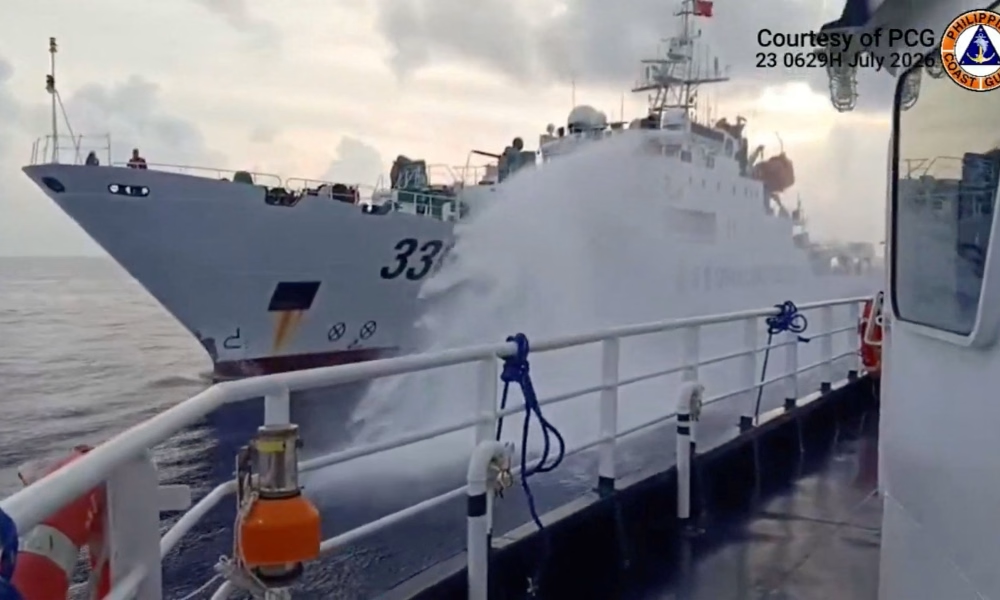
The United States, Japan and the Philippines conducted joint maritime drills in the South China Sea amid renewed tensions between Manila and Beijing over disputed waters.
Quick Skim
Joint Exercises Conducted Amid Maritime Disputes
The exercises involved naval and coast guard units from the three countries operating in contested areas of the South China Sea, aimed at enhancing coordination and interoperability. These drills emphasise ongoing security concerns in this strategically significant region.
Philippines Accuses China of Aggressive Actions
On 23 July 2026, the Philippines Coast Guard reported that a Chinese coast guard vessel fired a water cannon at a Philippine fisheries ship. The incident took place in contested maritime zones, heightening diplomatic tensions.
According to the Philippines Coast Guard, the Chinese vessel involved matched the exterior and structural features of known China Coast Guard ships. The video evidence provided was recent and had not appeared online before 23 July, though independent verification of the incident’s date and location remains pending.
South China Sea: An Area of Strategic Importance
The South China Sea is critical for commercial shipping, fisheries, and energy resources. Multiple claims and overlapping maritime boundaries have led to frequent confrontations between regional navies and coast guards, complicating operational environments.
For industrial and maritime operators, these tensions affect shipping routes, port accessibility, and risk assessments for vessels operating in the area.
Implications for Regional Security and Supply Chains
The partnership between the US, Japan and the Philippines through combined drills seeks to ensure freedom of navigation and maintain stability. These activities have implications for the planning and deployment of vessels, particularly for managing security risks in supply chains traversing these waters.
It also highlights the importance of improving interoperability among allied navies to respond to potential maritime security incidents in the region.
Outlook for South China Sea Operations
Future developments will likely focus on further joint exercises and diplomatic engagements to manage tensions. Monitoring of maritime incidents and adjustments to operational protocols are expected as the situation evolves, impacting shipping and maritime infrastructure across Asia-Pacific.