




Malaysia Faces 9GW Power Capacity Gap as Data Centre Demand and Heat Intensify
Malaysia will need around 9GW of additional gas-fired generation capacity by 2032 as rapidly expanding data centres and hotter temperatures drive electricity consumption higher, according to...

Malaysia will need around 9GW of additional gas-fired generation capacity by 2032 as rapidly expanding data centres and hotter temperatures drive electricity consumption higher, according to government and energy officials.
Quick Skim
Data centres accounted for a record 9.3% of total electricity consumption in the second week of August, up from an average of about 7% so far this year, Energy Commission CEO Siti Safinah Salleh said.
The increase comes as Malaysia develops into Southeast Asia’s fastest-growing data-centre market, attracting billions of dollars of investment from technology companies including Amazon and Microsoft.
Hotter Weather Raises Data Centre Cooling Demand
Higher temperatures are adding to the electricity requirements of Malaysia’s growing data-centre sector.
Siti said hotter weather increases the amount of energy required by cooling systems, contributing to the jump in power consumption recorded during August.
The Energy Commission had not expected the hotter conditions to continue beyond early September.
At the same time, low water levels at hydroelectric dams have reduced another source of available electricity, adding pressure to the power system.
Data Centres Could Reach 31% of Peninsula Demand
The impact of data centres on Malaysia’s electricity system is expected to increase significantly over the next decade.
Zaharin Zulkifli, deputy director for economic statistics and research at the Energy Commission, said data centres could account for as much as 31% of electricity demand in Peninsular Malaysia by 2035.
That growth will require substantial investment in generation capacity and supporting electricity infrastructure as more large-scale facilities come online.
Malaysia has become a major regional data-centre location as operators seek capacity outside more established hubs and expand cloud and AI infrastructure across Southeast Asia.
Malaysia Needs 9GW of New Gas Capacity
Economy Minister Akmal Nasir said Malaysia will need to add around 9GW of gas-fired generation capacity by 2032 as it responds to rising electricity demand while gradually retiring coal-fired power plants.
Malaysia plans to retire its final coal-fired power plants by 2044.
Gas is expected to remain an important part of the country’s electricity mix during the transition, providing dispatchable generation alongside renewable energy and other sources.
Malaysia’s domestic gas resources have also helped it respond to rising power demand at a time when LNG availability across parts of Asia has been affected by geopolitical disruption.
Existing Power Plants to Bridge Near-Term Gap
No additional gas-fired power capacity is expected to enter service in Malaysia during 2026 or 2027.
The Energy Commission therefore plans to optimise the existing generation fleet to meet rising electricity demand through the end of next year.
The immediate challenge is to maintain sufficient generation and reserve capacity while new infrastructure is developed.
Despite the rapid increase in data-centre electricity consumption, industry representatives said Malaysia is not expected to face near-term power shortages because anticipated demand growth has already been incorporated into grid planning.
Power Infrastructure Becomes Critical to Data Centre Growth
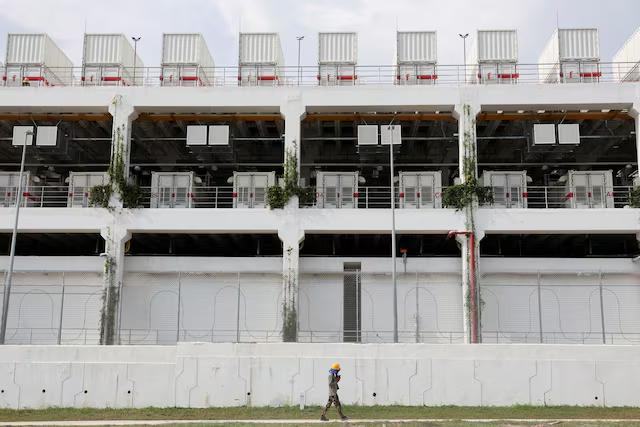
Malaysia’s data-centre expansion is increasingly becoming an energy-infrastructure challenge as computing capacity grows alongside electricity and cooling requirements.
Higher-density AI workloads require substantial amounts of continuous power, while tropical temperatures increase the energy needed to keep servers within operating limits.
The projected rise of data centres to nearly one-third of Peninsular Malaysia’s power demand by 2035 means future development will depend increasingly on sufficient generation capacity, grid infrastructure and reliable energy supply.
Malaysia’s challenge will be to expand that infrastructure while simultaneously reducing its reliance on coal and meeting the needs of a rapidly growing digital economy.