
Vietnam and South Korea Sign Eight Agreements to Boost AI and Semiconductor Links
Vietnam and South Korea formalised eight co-operation agreements at the inaugural AI-semiconductor summit, emphasising technology development and workforce training.

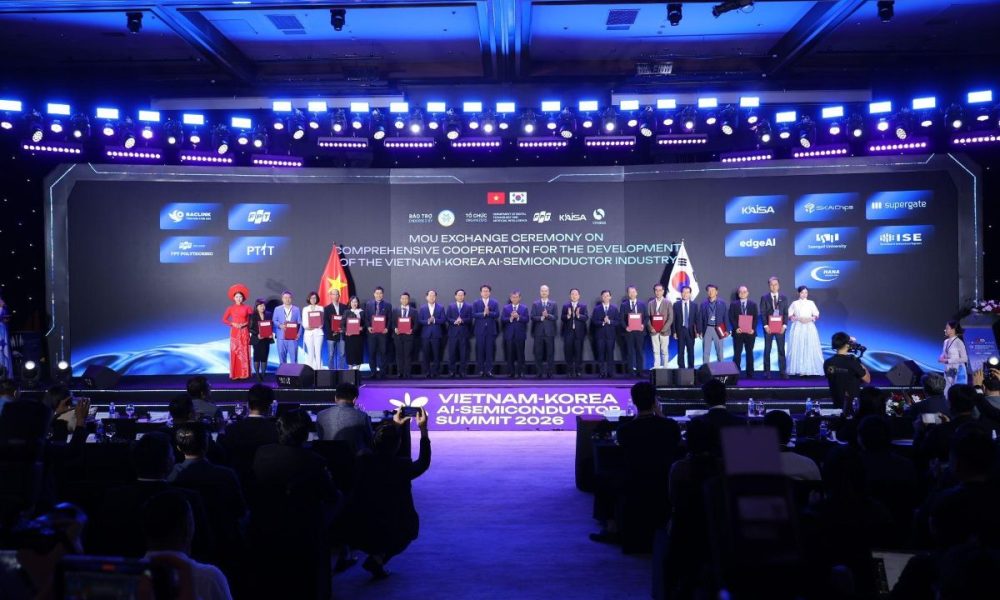
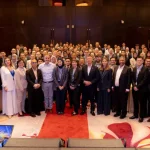
Vietnam and South Korea concluded eight memorandums of understanding (MOUs) during the first Vietnam–Korea AI–Semiconductor Summit (VKAISS 2026), advancing collaboration in artificial intelligence, semiconductor technologies, and workforce development. The event, held in Vietnam, gathered over 400 delegates from more than 50 semiconductor companies, research institutes, universities and government bodies, signalling enhanced industrial ties between the two nations.
Quick Skim
- Vietnam–Korea Summit Focuses on Industry Collaboration
- Eight Memorandums Cover Supply Chains, Technology and Training
- Workforce Development Partnerships Target Technical Skills
- Industry Leaders Emphasise Long-Term Cooperation Goals
- Implications for Asia-Pacific Semiconductor Industry
- Outlook for Future Cooperation
Vietnam–Korea Summit Focuses on Industry Collaboration
The summit was organised under the direction of Vietnam’s Ministry of Science and Technology, involving its Department of Digital Technology and Artificial Intelligence, alongside Vietnam’s FPT Corporation, South Korea’s Korea AI Semiconductor Fabless Industry Association (KAISA), and the VINASA Semiconductor Industry Development Committee (VSID).
Attendees included officials from Vietnam’s Ministry of Science and Technology, the South Korean Embassy in Vietnam, Bac Ninh provincial authorities, KAISA, and FPT. The programme featured high-level discussions on bilateral cooperation and workforce development, complemented by technical presentations and panel sessions.
Eight Memorandums Cover Supply Chains, Technology and Training
The signed MOUs establish frameworks for business partnerships, supply chain integration, technology development, and skills training. Of these, KAISA partnered with the Bac Ninh Semiconductor Association to connect South Korean semiconductor firms with Vietnamese enterprises.
FPT Corporation entered specific agreements with HANA Micron, Supergate, and EdgeAI focusing on semiconductor packaging and testing processes. Furthermore, FPT and SKAIChips agreed to explore applications combining AI and semiconductor technologies.
Workforce Development Partnerships Target Technical Skills
Efforts to bolster the semiconductor and AI talent pipeline include collaborations between FPT Polytechnic College, Soongsil University (South Korea), EdgeAI, the Posts and Telecommunications Institute of Technology, and the Institute of Semiconductor Engineers (ISE). These partnerships are intended to optimise technical training and prepare a workforce aligned with industry demands.
Industry Leaders Emphasise Long-Term Cooperation Goals
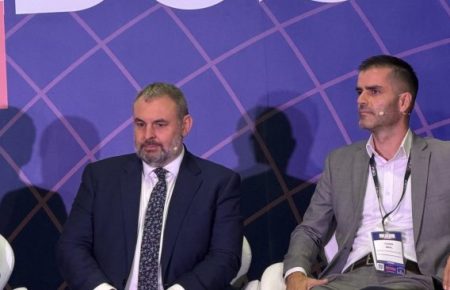
Vietnamese Deputy Minister of Science and Technology Tran Trung Tinh highlighted that the nation’s goals extended beyond investment attraction towards strengthening indigenous technological capabilities and deepening engagement in global semiconductor value chains.
KAISA Chairman Kyungho Kim remarked on the complementary nature of South Korea’s semiconductor technology and Vietnam’s engineering workforce and market potential. He envisaged VKAISS evolving into a sustained platform for bilateral industry collaboration.
FPT Senior Executive Vice President Nguyen The Phuong called attention to the necessity of translating the agreements into joint research projects, practical training programmes and commercially viable products to achieve concrete industrial outcomes.
Implications for Asia-Pacific Semiconductor Industry
The coordinated efforts between Vietnam and South Korea seek to address critical industrial challenges including supply chain resilience, skilled workforce shortages, and technological advancement. By aligning research, manufacturing, and training initiatives, the partnerships aim to strengthen regional semiconductor production capabilities.
Outlook for Future Cooperation
According to event organisers, monitoring the tangible outcomes from current agreements will be important, particularly regarding joint product development and workforce competence. There are also expectations for VKAISS to continue as an ongoing forum supporting innovation and industrial partnership between Vietnam and South Korea.
Source: EE Times Asia. Photo: EE Times Asia.