

Samsung Medison Expands Hongcheon Ultrasound Plant to Double Capacity by 2030
Samsung Medison has opened a new manufacturing building in Hongcheon, aiming to increase ultrasound system production to 40,000 units annually by 2030.

Samsung Medison, a Samsung Electronics subsidiary, inaugurated an expanded manufacturing facility at its Hongcheon plant in Gangwon Province on 13 November, marking a strategic move to meet growing global demand for ultrasound diagnostic equipment.
Quick Skim
Expanded Hongcheon Plant Increases Production Capacity
The new facility comprises a two-story building covering 14,548 square metres, representing Samsung Medison’s largest expansion since its acquisition by Samsung Electronics in 2011. The enhancement includes a streamlined 200-metre straight production line designed to optimise process flow and material handling within the factory.
The company has invested 50 billion won in this expansion, which encompasses factory environment upgrades, implementation of automated manufacturing equipment, and the integration of environmentally friendly infrastructure.
Comprehensive In-House Manufacturing Processes
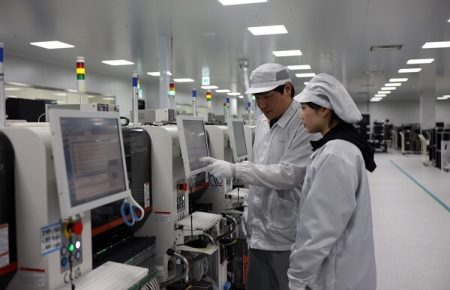
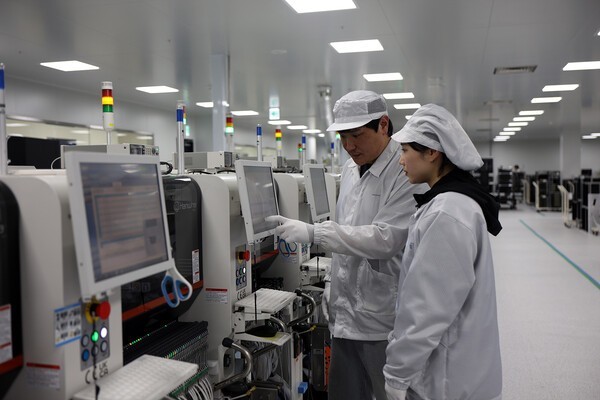
The Hongcheon plant handles the full production cycle of premium ultrasound systems, from circuit board fabrication and mechanical assembly to reliability testing and finished product shipment. Key stages include surface-mount technology (SMT) processing where electronic components are automatically placed on printed circuit boards, followed by printed board assembly (PBA) inspection and system ageing tests.
Automated equipment, such as high-speed chip mounters provided by Hanwha Semitech and Fuji, operates within cleanroom conditions to ensure precision and quality. The inspection process includes extended 48-hour power cycling of components to detect IC defects, with all monitoring controlled centrally without manual intervention.
Energy Efficiency and Environmental Controls
Samsung Medison has implemented Samsung Electronics’ b.IoT integrated building management system in the new plant. The system centrally manages air conditioning and energy consumption, applying intelligent algorithms for temperature and humidity control. This has resulted in approximately 30% reduction in energy use compared with pre-expansion levels.
Quality Assurance and Long-Term Reliability Testing
Finished products undergo system ageing at 40 degrees Celsius for 24 hours to identify potential defects. This is followed by outgoing quality control (OQC) replicating hospital-like conditions, where workers evaluate image quality, touchscreen responsiveness, and operational ease within dimly lit rooms to simulate real examination environments.
Approved products are then carefully packaged using specialised foam materials and prepared for export to around 110 countries.
Production Increase Targets and Market Growth
Samsung Medison aims to manufacture between 24,000 and 28,000 ultrasound systems this year at Hongcheon. According to Son Hyun-soo, head of manufacturing, further investments in automation could boost annual output to 40,000 units by 2030.
Photo: THE ELEC