




Vietnam Faces Power Shortage Risk as AI Data Centres and Rail Drive Electricity Demand
Vietnam could face electricity shortages from 2027 as demand from AI data centres, semiconductor manufacturing and electrified transport grows faster than planned power generation and grid...

Vietnam could face electricity shortages from 2027 as demand from AI data centres, semiconductor manufacturing and electrified transport grows faster than planned power generation and grid infrastructure can be delivered, according to the Ministry of Industry and Trade.
Quick Skim
- Electricity Shortfall Could Reach 61 Billion kWh by 2030
- AI, Semiconductor Plants and Rail Reshape Power Demand
- Power Generation and Grid Projects Fall Behind Schedule
- LNG and Nuclear Projects Face Development Challenges
- Rooftop Solar and Battery Storage Proposed for 2027–2028
- Additional Power Capacity Planned for 2027 and 2028
- Reliable Electricity Becomes Critical to Industrial Expansion
The ministry is reviewing the country’s revised Power Development Plan VIII (PDP8) to account for changing electricity requirements and assess whether the power system can meet demand through 2030 and beyond.
Electricity Shortfall Could Reach 61 Billion kWh by 2030
The ministry’s projections indicate that Vietnam could face a power capacity shortfall of approximately 4,256MW in 2027, equivalent to an electricity supply gap of 2.9 billion kWh.
The projected electricity shortfall could then widen to:
-
2028: 20.7 billion kWh
-
2029: 50.4 billion kWh
-
2030: 61 billion kWh
These figures represent potential shortages if planned generation and transmission capacity do not keep pace with demand, rather than confirmed future power cuts.
Northern Vietnam faces particular pressure because of rapid industrial expansion and the concentration of new electricity-intensive projects.
AI, Semiconductor Plants and Rail Reshape Power Demand
Vietnam’s electricity planning must now account for several industries with different operating requirements.
AI data centres can require hundreds of megawatts at a single location and need a continuous power supply. Semiconductor and other high-tech manufacturing facilities also depend on stable electricity to maintain production.
Meanwhile, electric-vehicle charging networks, metro systems and the proposed North–South high-speed railway could add substantial demand across multiple locations.
The ministry has asked provincial and city authorities to submit updated information on these emerging requirements, alongside the status of existing and planned power projects.
Power Generation and Grid Projects Fall Behind Schedule
Delays in planned energy infrastructure are adding to concerns about future electricity supply.
According to ministry data, projects already operating account for only around 5% of the generation capacity planned under PDP8.
A further 9% of projects have started construction but are not yet operational, while 28% have selected investors but have not begun construction.
Transmission development is also behind schedule. Of 43 major transmission projects planned for 2026–2030, only 10 have entered construction.
LNG and Nuclear Projects Face Development Challenges
Several planned sources of electricity may take longer to become available.
LNG-fired power projects face challenges involving financing, fuel-price volatility and negotiations over power purchase agreements. Their development also depends on supporting infrastructure, including import terminals, storage facilities, regasification systems and pipelines.
Vietnam’s revived Ninh Thuận 1 and Ninh Thuận 2 nuclear power projects do not yet have clear implementation timetables, creating further uncertainty around longer-term generation capacity.
Rooftop Solar and Battery Storage Proposed for 2027–2028
To ease potential supply pressure, particularly in northern Vietnam, the ministry has proposed accelerating smaller-scale generation and energy storage projects.
The measures include approximately 2,800MW of rooftop solar at schools, hospitals and government facilities, targeted for completion before June 2027.
Industrial facilities and industrial clusters could also be encouraged to install rooftop solar combined with battery energy storage systems, with a proposed capacity target of 3,000–5,000MW before the 2027 and 2028 dry seasons.
The ministry has additionally proposed 2–3GW of battery storage to help meet peak-hour electricity demand.
Additional Power Capacity Planned for 2027 and 2028
Vietnam’s near-term proposals also include bringing approximately 1GW of additional generation capacity into operation in 2027.
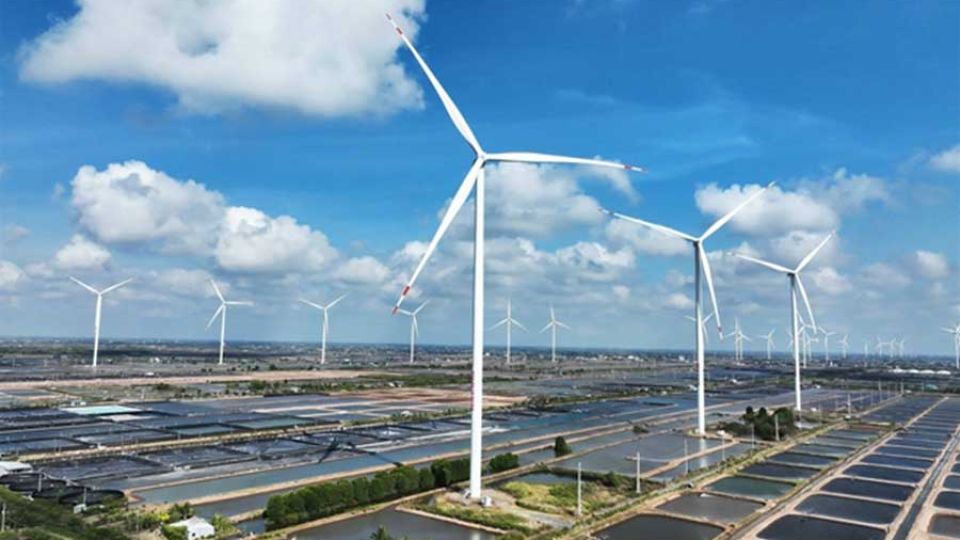
For 2028, the ministry has identified a potential 3GW of solar capacity and 2GW of onshore and nearshore wind capacity from projects that have already received investment approval and selected investors.
The ministry is also considering longer-term adjustments to PDP8, including additional renewable-energy projects and coal-fired generation to compensate for delays to other sources of continuous power supply. These remain proposals rather than completed capacity additions.
Reliable Electricity Becomes Critical to Industrial Expansion
Vietnam’s growing demand for AI infrastructure, semiconductor manufacturing and electrified transport is increasing the importance of timely power and transmission development.
For industrial operators, the issue extends beyond the total amount of electricity available. Data centres and advanced manufacturing facilities require power to be delivered reliably at specific locations, while railway electrification adds demand across wider transport networks.
The coming years will depend on how quickly Vietnam can bring planned generation, storage and grid infrastructure into operation as new industrial facilities begin consuming electricity.