



Water In, Heat Out. Ecolab says the Data Centre’s Oldest Design is Already Obsolete
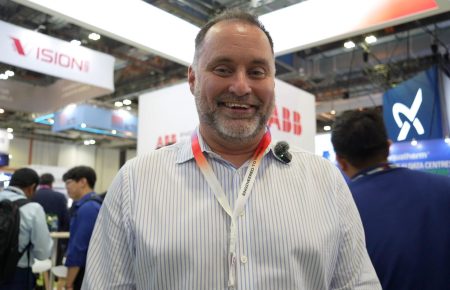
15 Oct 2026 · Stories from Data Centre World Asia Ecolab’s VP of Strategic Partnerships Mike Obradovitch on circular design, optimising the whole thermal stack, and why brownfields are back in play....

15 Oct 2026 · Stories from Data Centre World Asia
Quick Skim
Ecolab’s VP of Strategic Partnerships Mike Obradovitch on circular design, optimising the whole thermal stack, and why brownfields are back in play.
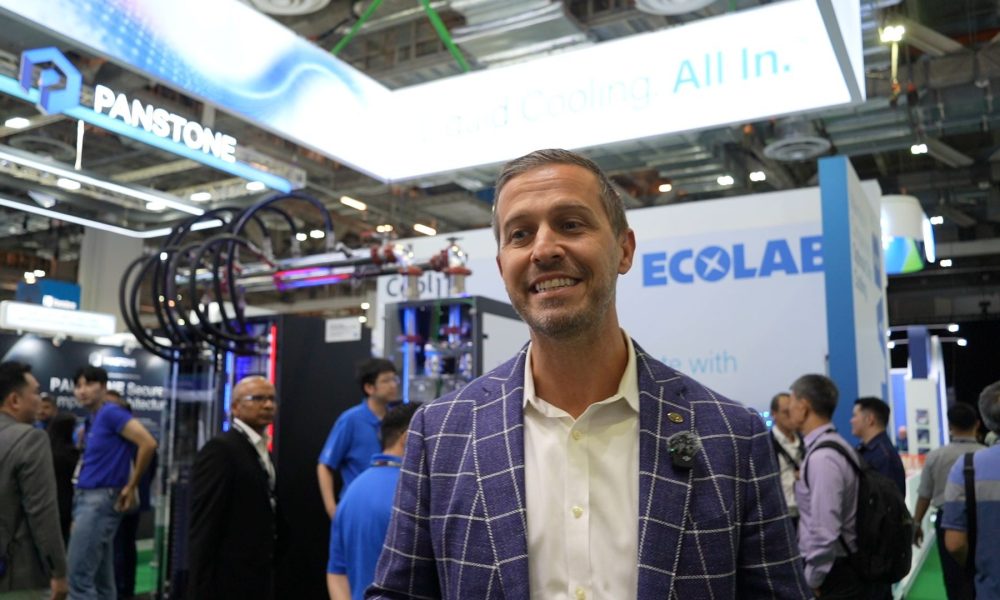
Ask Mike Obradovitch what has changed and he starts with the shift now reshaping the hall: liquid cooling has gone from niche to the default way to pull heat out of dense racks. “We’re seeing much more tremendous engagement around deployment of liquid cooling technologies,” says Ecolab’s VP of Strategic Partnerships.
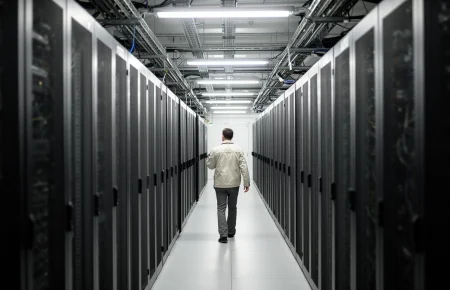
With it comes a harder look at the resources a data centre consumes to stay cool, and a challenge to the way most facilities are still designed.
The Design That’s Already Obsolete
“A lot of people have the perception that data centres continue to operate in their old linear designs; water and power in, waste and heat out,” Mike says. “New designs are really embracing circularity.” Unlocking AI at scale, in his telling, means designing a facility that treats a community’s water and energy “as assets as opposed to utilities,” and lands as lightly as possible on local grids and watersheds. The linear model, he argues, simply won’t scale to where AI is heading.
Optimise the Stack, Not the Parts
His sharpest efficiency point is about how operators buy. The biggest gains come “when the entire thermal stack is optimised together, as opposed to optimising the individual components,” he says, piecing it together part by part leaves efficiency on the table. That system view extends to supply: the components he watches are pumps, heat exchangers and valves, the parts that create bottlenecks at scale if the pipeline runs thin.
New build or brownfield
The work is not only greenfield. Alongside a wave of new data centres deploying liquid cooling, Mike sees brownfield retrofits; older, legacy facilities repurposed to carry denser workloads efficiently. The earliest at-scale liquid-cooling deployments are in the US and Europe; across APAC he singles out Korea, Japan and Malaysia as accelerating fast.
The Monday Takeaway
Design the thermal stack as one system rather than a cart of best-in-class parts; that’s where the real efficiency hides. And before committing to a new build, ask whether a legacy site can be re-cooled for denser compute instead of replaced.
This interview is part of Industrial Gemba’s coverage from Data Centre World Asia. Responses have been edited for length and clarity. Watch the full interview on YouTube.