Uzbekistan, Japan Advance $12 Billion Project Portfolio as Central Asia Cooperation Develops
Uzbekistan and Japan discuss expanding $12 billion joint projects in trade, infrastructure, and green energy following 2025 Central Asia + Japan Summit.

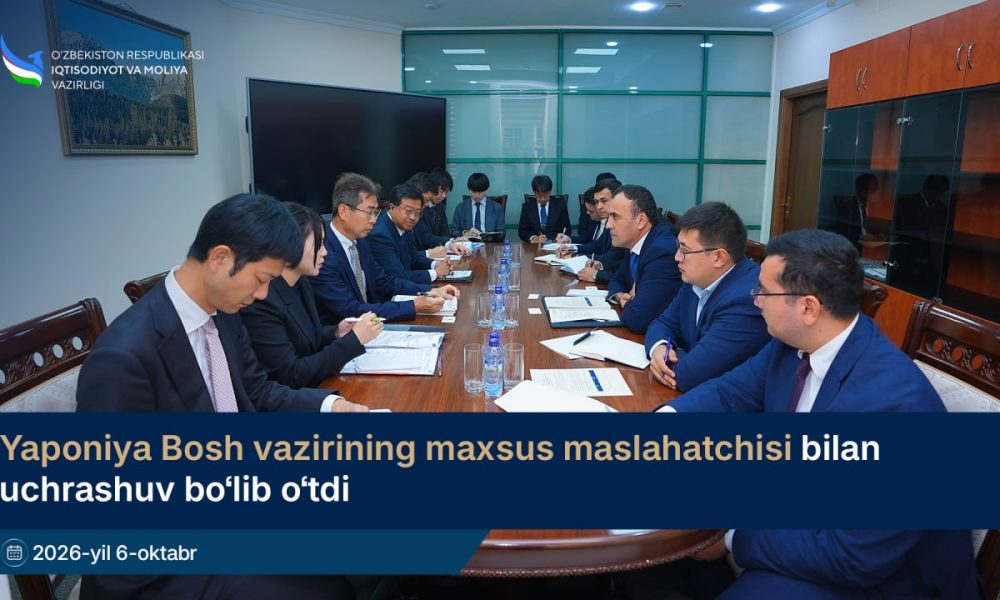
Uzbekistan and Japan have discussed expanding cooperation across a portfolio of joint projects valued at around $12 billion, focusing on trade, infrastructure and innovation, following the first “Central Asia + Japan” Summit held in 2025. The discussions took place during talks in Tashkent on 6 October between Uzbek First Deputy Economy and Finance Minister Ilkhom Norkulov and Japanese Prime Minister’s Special Adviser Yoshimasa Uno, according to the Ministry of Economy and Finance of Uzbekistan.
Quick Skim
Trade and Economic Cooperation Reviewed
The meeting, attended by Japanese Ambassador to Uzbekistan Kenji Hirata and other officials, reviewed prospects to expand bilateral trade and economic cooperation. Both parties explored new areas for mutually beneficial partnerships, aiming to build on agreements signed during a high-level visit following the 2025 summit held in Tokyo.
Infrastructure and Innovation Development Discussed
Commitments were made to advance infrastructure projects and promote innovation-driven growth. The discussions reflected ongoing efforts to convert summit outcomes into concrete initiatives supporting Uzbekistan’s economic modernisation and Japan’s engagement in Central Asia.
Updated Free and Open Indo-Pacific Framework Presented
The Japanese side presented an updated version of its “Free and Open Indo-Pacific” (FOIP) concept, termed FOIP 3.0, as introduced by Prime Minister Sanae Takaichi in May 2026. This framework underpins Japan’s strategic approach towards enhanced regional connectivity and security in the Indo-Pacific, including Central Asia.
Focus on Green Energy and Sustainability Technologies
Among the project prospects discussed, special emphasis was placed on green energy, energy efficiency, and water-saving technologies. These sectors align with regional priorities to improve sustainability and resource management amid growing environmental challenges.
Implications for Industrial Operations
These developments are expected to influence Uzbekistan’s industrial and infrastructure sectors by accelerating investment flows, improving supply chain links with Japan and beyond, and introducing advanced technology solutions. Enhanced cooperation may lead to improved operational efficiencies, greater deployment of sustainable technologies, and new opportunities for workforce development within Uzbekistan’s manufacturing and utilities industries.
Next Steps in Bilateral Cooperation
Both Uzbekistan and Japan expressed readiness to continue advancing their practical cooperation in priority areas. The ongoing dialogue aims at expanding joint ventures and project implementation, with future developments closely linked to progress on the FOIP 3.0 strategy and commitments from the 2025 summit. Further updates are anticipated as these initiatives move towards execution.