

Vestas Advances Hybrid Wind Projects as Australia Tests Grid Integration Solutions
Vestas is leading hybrid wind and storage projects in Australia, developing new turbine technology and grid integration strategies amid challenging conditions.

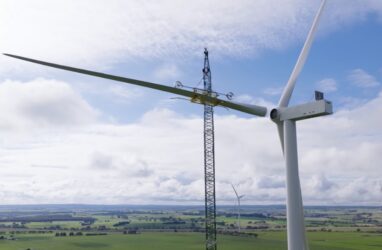
Vestas has identified Australia as a key market for advancing hybrid wind energy technology, leveraging the country’s complex grid environment to develop solutions for integrating renewables with storage and solar behind a single grid connection.
Quick Skim
The Danish wind turbine manufacturer employs nearly 800 staff in Australia and has installed close to 9 gigawatts (GW) of wind capacity, with a further pipeline of projects including hybrid configurations combining wind, solar, and battery storage.
Australia Drives Vestas’ Hybrid Project Development
Juan Furones, senior vice president of onshore wind at Vestas, confirmed during a recent visit that Australia ranks among the company’s top three markets globally. The region leads Vestas’ push into hybrid renewable projects, currently accounting for around 1.2 GW of hybrid wind capacity.
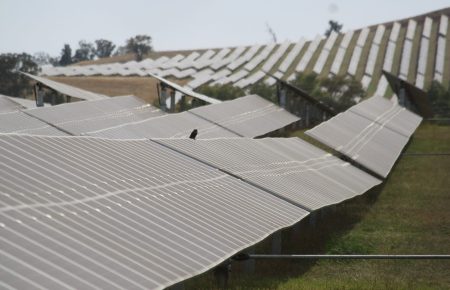
These include Kennedy Energy Park, Vestas’ first full-scope engineering, procurement, and construction (EPC) hybrid project, and Port Augusta in South Australia, one of the largest co-located wind and solar hybrid plants worldwide.
Besides wind and solar pairings, Vestas is developing projects incorporating battery storage, with about 450 megawatts (MW) of battery capacity either retrofitted or integrated within new full-scope EPC projects. Furones said that Australia provides a practical testing ground for hybrid solutions given its complex grid conditions, which Vestas considers some of the most challenging in the world.
Complex Grid Conditions Inform Global Solutions
According to Furones, expertise gained in Australia informs Vestas’ global product roadmap. “If I can connect in Australia, I can probably connect anywhere,” he said.
Hybrid plants combining wind with solar and storage behind a single connection point are increasingly viewed as essential for firming renewable output and replacing thermal generation sources.
Solar and battery hybrids have dominated Australian developments, but wind projects co-located with battery storage are gaining interest. Vestas has experience delivering around 11 hybrid projects worldwide over the past decade but considers Australia the forefront of this evolution.
New Turbine Technology Supports Hybrid Capabilities
Vestas is incorporating batteries and hybrid plant design as central to its future turbine development, beginning with the V182-7.2 MW machine—the latest version of its EnVentus platform, with more than 15 GW installed in over 25 countries.
The V182 features 89-metre blades, three metres longer than the previous V172-7.2 MW model, improving energy capture and stability, particularly during low to medium wind speed conditions when electricity prices tend to be higher.
This design enhances generation performance and revenue certainty, which assists developers in competitive bidding beyond solely reducing upfront costs. “We will be able to perform, here, the exercises and the connectivity that will eventually become the future in other markets,” Furones said.
Furones indicated that future market demands will increasingly seek integrated hybrid solutions under one grid connection. He said, “One single point of connection should, from a project standpoint, be the preferred option, even for grid operators.”
While standalone turbines and wind farms will persist in some regions, hybridisation involving combined renewable generation and storage is expected to accelerate.
Regulatory and Development Challenges in Australian Market
Despite its technical leadership, Vestas acknowledges challenges in Australia beyond grid connection complications. Furones described renewables as “a political football” within government discourse, slowing the pace of project completions despite the country’s substantial wind resource and energy demand.
He noted that each year only a limited number of projects progress to completion. Nevertheless, Vestas recently reached notice to proceed or construction commencement for 958 MW of projects during the last week of the third quarter of 2026.
Addressing investor and developer concerns, Furones stated Vestas delivers both on scheduling and cost competitiveness, even as market factors such as interest rates present headwinds. “We’ve proven that we can deliver on both metrics, on being price competitive and on the return of investment,” he said.
Photo: RenewEconomy