

Singapore and Australia Expand Essential Supplies Pact and Sign Carbon Storage Deal
Singapore and Australia signed agreements to extend essential goods cooperation and establish cross-border carbon storage, enhancing economic resilience and decarbonisation efforts.

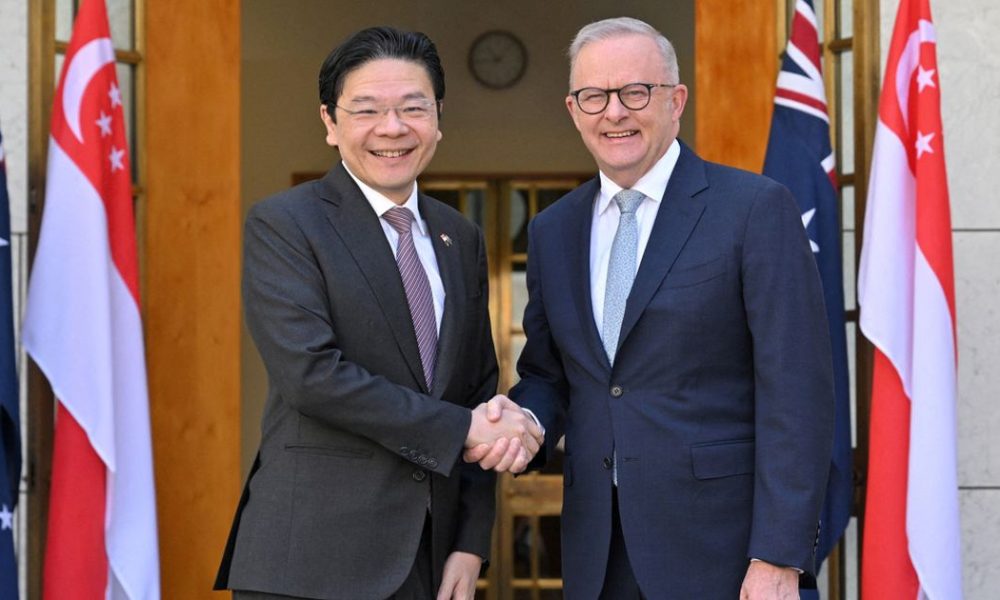
Singapore and Australia signed two agreements in Canberra on 24 November to expand cooperation on essential supplies and set up a framework for cross-border carbon capture and storage (CCS).
Quick Skim
The agreements were exchanged at a ceremony witnessed by Prime Minister Lawrence Wong and his Australian counterpart Anthony Albanese, following the 11th Singapore-Australia Annual Leaders’ Meeting, The Straits Times reported.
Essential supplies pact widened to 10 categories
The new memorandum of understanding (MOU) supplements a legally binding Protocol on Economic Resilience and Essential Supplies signed in July under the Singapore-Australia Free Trade Agreement. The July protocol covers petroleum oils and liquefied natural gas (LNG), with both countries committing to endeavour not to impose export restrictions on agreed essential supplies. It also provides for advance notification and consultation, but has yet to enter into force as both sides complete their domestic procedures.
The new MOU covers 10 categories of goods, including food, semiconductors, water treatment chemicals, pharmaceuticals and medical products, telecommunications equipment, agricultural inputs such as fertilisers, construction materials, renewable energy technologies and traffic signalling equipment, according to a factsheet from Singapore’s Ministry of Energy, Trade and Industry.
Based on figures cited by the Australian government in July, Singapore supplied 55% of Australia’s petrol, 15% of its diesel and 23% of its aviation fuel. The MOU was signed by Singapore’s Minister for Sustainability and the Environment and Minister-in-charge of Trade Relations Grace Fu and Australian Foreign Minister Penny Wong.
Framework for carbon dioxide transport to Australia
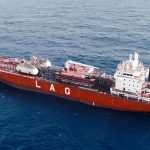
The CCS agreement establishes a framework for transporting captured carbon dioxide from Singapore to Australia for offshore geological storage. It formalises the transfer of responsibility for accounting for the transported carbon dioxide, and lays the groundwork for measuring, reporting and accounting for the emissions in line with the Paris Agreement and United Nations Framework Convention on Climate Change reporting guidelines.
PM Wong described the agreement as a landmark development that would open up new possibilities for industries to reduce emissions. Albanese described the treaty as a first of its kind, saying it would enable the safe movement of carbon dioxide from Singapore to Australia, support regional decarbonisation and attract new investment in Australian industry.
Low-emission co-innovation programme
PM Wong said both countries would launch the Getting to Zero Co-Innovation Programme to support enterprises in developing and commercialising low-emission products and services. The programme is part of efforts to put the Singapore-Australia Green Economy Agreement, signed in 2022, into action.
Photo: The Straits Times