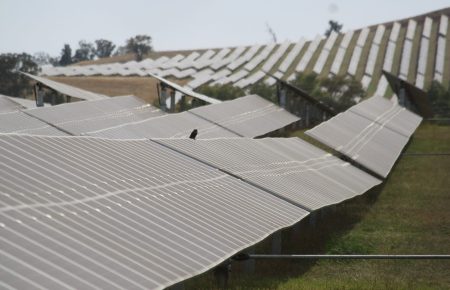





BloombergNEF Projects Australia to Reach 215 GW Solar Capacity by 2050
BloombergNEF forecasts Australia’s solar capacity could grow to 215 GW by 2050, becoming the largest power source amid rising electricity demand and renewable deployment.

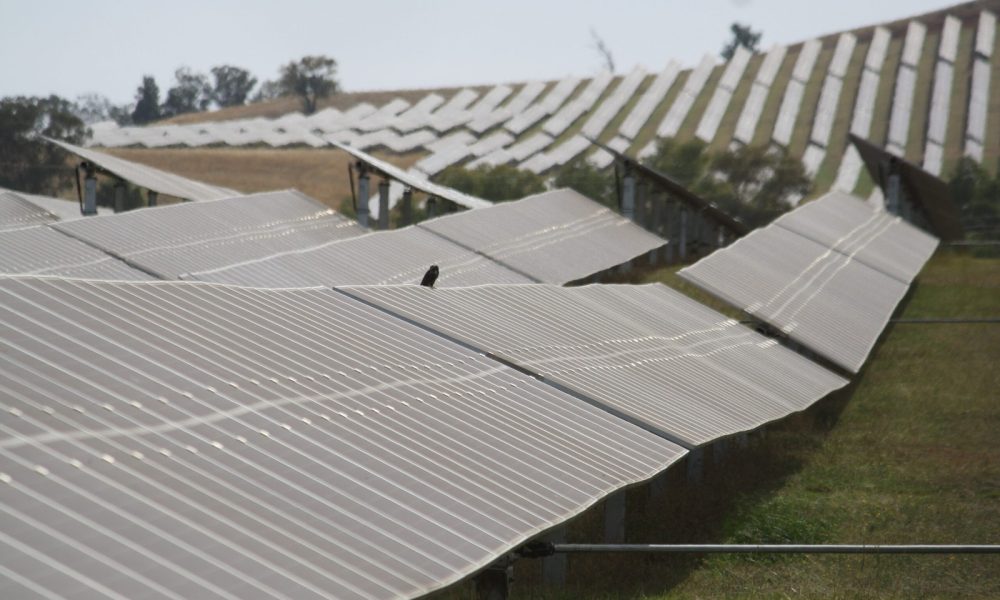
Bloomberg New Energy Finance (BNEF) forecasts Australia’s solar capacity to increase to 215 GW by 2050 under a net zero scenario, more than five times its 2025 level of 43 GW.
Quick Skim
Solar Capacity Expected to Quintuple by 2050
Under BNEF’s net zero scenario (NZS), solar capacity grows to 215 GW by 2050, driven by full decarbonisation of power, transport, industry and buildings. The business-as-usual economy transition scenario (ETS) projects solar reaching 137 GW by 2050.
Solar’s expansion reflects Australia’s high-quality solar resource and cost advantage of both utility-scale and rooftop installations. Both scenarios identify solar as the largest contributor to the future power generation mix.
Wind and Battery Storage Capacities Also Increase Strongly
Onshore wind capacity rises from 15 GW in 2025 to 61 GW under the ETS and 107 GW under the NZS by 2050. Battery storage capacity grows from 5 GW in 2025 to 45 GW under the ETS and 50 GW under the NZS.
BNEF states that the larger battery deployment in the NZS supports system flexibility required by higher electricity demand and an increasing share of variable renewables.
Renewable Generation Share May Miss 2030 Government Target
Despite capacity expansion, Australia is unlikely to meet the federal government’s 82% renewable generation target by 2030. The NZS models renewables at 64% and the ETS at 61% for that year.
Renewables reach 82% only in 2035 under the NZS, while the ETS reaches 78% by then. BNEF Australia Senior Associate and report author Sahaj Sood said slow grid expansion, social-licence concerns, permitting challenges and growing power demand may have put the 2030 target out of reach. “Net zero fundamentally changes the scale of Australia’s power system,” he said.
Electricity Demand Growth and Declining Renewable Costs
Electricity demand climbs to 339 TWh by 2050 under the ETS, up 50% from 2025, and to 506 TWh under the NZS, 49% above ETS and 123% higher than in 2025. Electric vehicles demand reaches 52 TWh (15%) under ETS and 69 TWh (14%) under NZS. Data centres contribute around 38 TWh in both scenarios by 2050.
BNEF reports levelised costs of electricity (LCOE) for single axis tracking solar are expected to fall from about $44 per MWh in 2025 to approximately $16 per MWh in 2050, a 63% decline. Onshore wind LCOE will reduce from $77 to roughly $51 per MWh, down 34%.
Photo: pv magazine