


Hefei’s Manufacturing Boom Highlights Limits of China’s State-Led Industrial Model
Hefei’s high-tech manufacturing sector is expanding rapidly, with output from electric vehicles, semiconductors and display panels driving some of China’s strongest urban growth, but weak consumer...

Hefei’s high-tech manufacturing sector is expanding rapidly, with output from electric vehicles, semiconductors and display panels driving some of China’s strongest urban growth, but weak consumer spending is exposing limits in the city’s state-backed industrial model.
Quick Skim
The Anhui provincial capital grew 6.8% year on year in the first half of 2026, while factory output jumped 25.6% and exports surged 51.9%. Retail sales, however, increased only 0.6%, creating a widening gap between industrial production and domestic consumption.
High-Tech Manufacturing Drives Hefei Growth
Hefei has developed into one of China’s most prominent advanced manufacturing centres through sustained government investment in strategic industries.
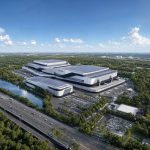
The city is home to major technology manufacturers including ChangXin Memory Technologies (CXMT), display producer BOE Technology and electric vehicle maker NIO.
CXMT produces DRAM memory used in AI computing, while BOE and NIO have helped establish Hefei as a manufacturing base spanning semiconductors, displays and electric vehicles.
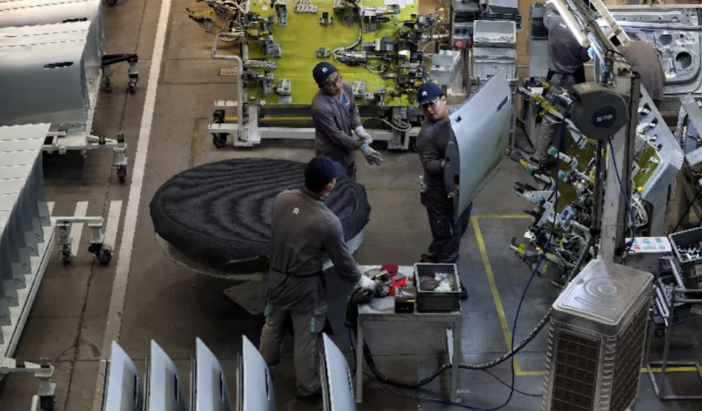
In 2025, Hefei produced around 1.37 million electric vehicles, equivalent to roughly one in every 12 vehicles manufactured across China.
‘Hefei Model’ Uses Early State Capital
The city’s development strategy has become known as the “Hefei model”, reflecting its use of government-backed investment to support technology companies before many private investors were willing to commit capital.
Hefei began investing in promising but loss-making companies from around 2008 while offering incentives to attract high-tech manufacturers.
The city has since more than doubled the size of its economy over the past decade, supported by access to university talent, a large workforce and its location within the Yangtze River Delta economic region.
One of the strategy’s biggest financial successes came with CXMT’s July stock-market listing. Stakes held by Hefei-linked state investors rose more than fivefold in value to more than 1 trillion yuan (US$148.9 billion).
Production Growth Outpaces Consumption
Despite the expansion of advanced manufacturing, the economic benefits have not spread evenly through Hefei.
The gap between production and consumption reached about 25 percentage points during the first half of 2026, around six times the national difference.
HSBC chief Asia economist Fred Neumann said Hefei illustrates a wider challenge in transmitting high-tech manufacturing success into stronger consumption across the broader economy.
Weak domestic demand means more manufactured products must be sold overseas, contributing to China’s rising exports and increasing trade tensions with major international markets.
Overcapacity Becomes a Growing Concern
Hefei’s success also highlights the risks of multiple regions pursuing similar state-backed manufacturing strategies.
China has introduced an “anti-involution” campaign aimed at addressing excessive competition, price wars and industrial overcapacity as local governments compete to develop similar strategic sectors.
S&P Global Ratings chief Asia-Pacific economist Louis Kuijs warned that replicating the Hefei model too widely could result in duplicated investment and larger supply-demand imbalances.
The challenge is particularly relevant as China directs increasing financial resources towards sectors including electric vehicles, semiconductors and other advanced manufacturing industries.
High-Skilled Workers See Stronger Opportunities
Hefei’s manufacturing growth has created significant opportunities for engineers, researchers and other skilled technology workers.
Average annual pay at urban non-private companies rose 3.4% to 126,259 yuan in 2025, following a 2.5% increase the previous year.
The city has also continued attracting graduates and jobseekers looking for positions in semiconductor, EV and technology companies.
However, Reuters reported a much different experience among lower-income workers and service-sector businesses, where weaker consumer confidence has limited the wider economic impact of the manufacturing boom.
Manufacturing Success Faces Broader Economic Test
Hefei demonstrates how quickly targeted industrial investment can build competitive manufacturing clusters.
Government capital has helped develop major companies across semiconductors, electric vehicles and displays, while strong industrial output and exports have turned the city into one of China’s fastest-growing manufacturing centres.
The next challenge is whether that production-led growth can translate into stronger household incomes, domestic demand and sustainable profitability across a broader part of the economy.
For China, Hefei’s experience highlights both the potential of state-backed advanced manufacturing and the risks of relying heavily on industrial expansion when consumption remains weak.