






Ho Chi Minh City Secures Mineral Resources to Support Infrastructure Projects
Ho Chi Minh City has approved new mineral exploitation areas and updated regulations to ensure material supply for ongoing transport infrastructure developments.

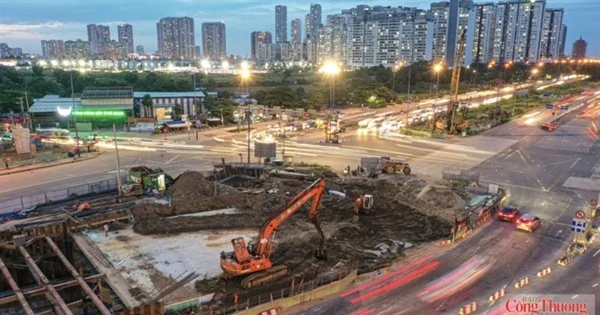
Ho Chi Minh City has approved three areas totalling more than 15.5 hectares in Binh Gia, Hoa Hoi and Chau Pha communes for mineral exploitation without auction, to supply materials for public investment projects, according to Báo Công thương.
Quick Skim
Demand for construction stone, sand and fill soil in the city remains high as road and infrastructure projects proceed, making a reliable supply of materials a key part of project implementation.
New mineral areas for transport projects
In Binh Gia commune, the designated basalt area covers 10.8 hectares. Its materials are expected to serve the renovation and expansion of National Highway 56, Provincial Road DT993, Road 995C and the Vung Tau – Binh Thuan coastal road.
The areas in Hoa Hoi and Chau Pha will serve projects connecting to the Bien Hoa – Vung Tau expressway, the upgrading and expansion of Provincial Road 994, and Ho Chi Minh City Ring Road 4.
Auctions and additional quarries
The city is also preparing to auction mining rights for six areas in Thuong Tan, Dau Tieng and Phu Giao communes, comprising five construction stone quarries and one clay quarry for bricks and tiles. The areas cover about 159.6 hectares, with an estimated construction stone resource of about 110 million cubic metres.
In the eastern area, construction sand mine No. 55 in Xuyen Moc commune, covering 7.15 hectares, has been designated as a non-auctioned area. The city has also recognised exploration results for the Nui Trok 109 construction stone mine in Chau Pha commune, with reserves exceeding 8.87 million m³ of construction stone along with fill soil.
New rules on mineral management
Ho Chi Minh City has issued new regulations, effective from 30 October 2026, on Group II minerals used as cement additives, Group III minerals used as common building materials, and Group IV minerals. For Group III mining serving certain projects, some investment and environmental procedures are simplified, alongside increased responsibility for mining organisations and post-mining inspections. The mechanism is limited to specific cases.
Where additional Group III minerals are discovered during Group IV exploitation, organisations can use existing documents and data for supplementary surveys without applying for a separate exploration licence.
Handling surplus materials
Surplus minerals no longer needed by the project named in a permit may be supplied to other construction projects. The specialised minerals agency must publish the information twice on the city’s electronic portal, at least five days apart; if no investors or contractors register interest within 10 days of the second disclosure, the licensed entity may supply other projects regardless of their source of capital.
Mining operations must still meet financial obligations and environmental protection requirements. Using closed mining areas to receive surplus construction materials must be based on geological and hydrological assessments, groundwater risks and measures to ensure the stability of the area.
Photo: Vietnam.vn