





Hyundai Atlas Mass Production Could Create 10 Trillion Won Robotics Value Chain
Hyundai Motor Group’s humanoid robot business could generate an annual value chain worth around 10 trillion won (US$7.2 billion) as the group prepares to mass-produce Boston Dynamics’ Atlas robot and...

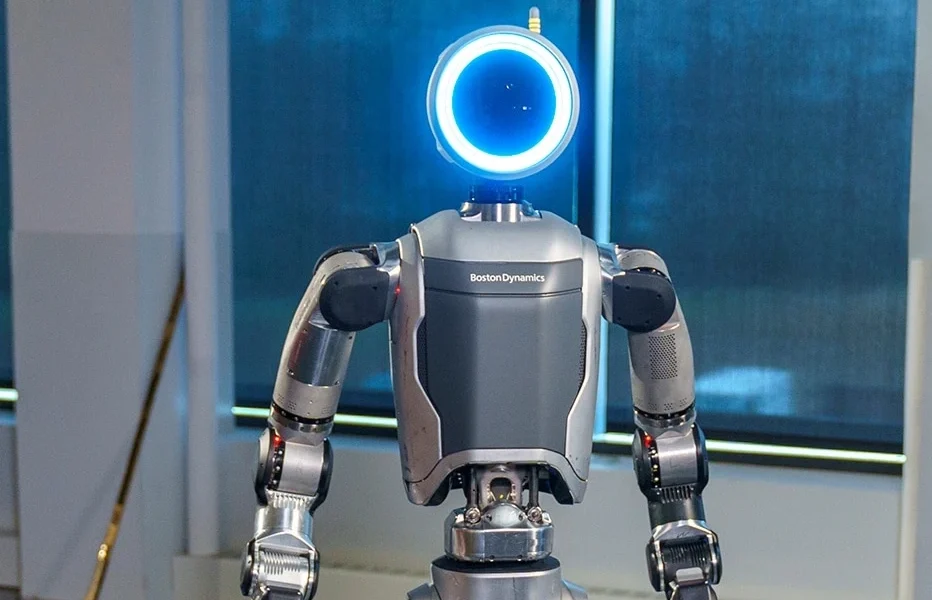
Hyundai Motor Group’s humanoid robot business could generate an annual value chain worth around 10 trillion won (US$7.2 billion) as the group prepares to mass-produce Boston Dynamics’ Atlas robot and deploy thousands of units across Hyundai and Kia factories.
Quick Skim
- Atlas Production Could Generate Up to 5.7 Trillion Won
- Hyundai Mobis Takes Key Role in Robot Actuators
- AutoEver Could Generate 1.6 Trillion Won From Software
- Logistics and Factory Automation Businesses Set to Benefit
- Robot Supply Chain Extends Beyond Hyundai
- Factory Deployment Could Deliver Major Savings
- Humanoid Robotics Moves Toward Industrial Scale
The group plans to establish production capacity in the United States for 30,000 Atlas units annually by 2028, while initial internal demand from Hyundai and Kia manufacturing facilities has already exceeded 25,000 units, according to industry sources cited by Aju Press.
The scale-up would move Atlas beyond technology development and pilot projects towards full industrial production, creating opportunities across robotics hardware, components, software, logistics and factory automation.
Atlas Production Could Generate Up to 5.7 Trillion Won
Hyundai and Kia are expected to account for the largest share of revenue from producing finished Atlas robots.
Industry estimates place the average selling price of Atlas at between 140 million and 190 million won per unit. At annual production of 30,000 robots, this could translate into 4.2 trillion to 5.7 trillion won in yearly revenue.
The estimates are based on projected production capacity rather than confirmed external sales, with Hyundai’s own manufacturing operations expected to provide substantial early demand.
Hyundai Mobis Takes Key Role in Robot Actuators
Hyundai Mobis is positioned to become an important supplier within the Atlas manufacturing chain after securing orders for the robot’s actuators.
Each Atlas unit requires 31 actuators, which control movement across the robot’s joints.
Industry estimates cited by Aju Press put each actuator at between US$800 and US$1,100, creating a potential annual revenue opportunity of around 1 trillion won for Hyundai Mobis if Atlas production reaches 30,000 units per year.
Actuators are among the most critical components in humanoid robotics, affecting movement precision, strength and overall mechanical performance.
AutoEver Could Generate 1.6 Trillion Won From Software
Hyundai AutoEver is expected to provide another major part of the robot ecosystem.
The company will support areas including data collection and management, system integration and smart-factory software associated with Atlas production and deployment.
Based on annual production of 30,000 robots, related revenue for Hyundai AutoEver is estimated at approximately 1.6 trillion won, with gross profit of around 194 billion won.
The role highlights how humanoid robotics is creating revenue opportunities beyond the physical robot itself, extending into the digital infrastructure required to operate robots at scale.
Logistics and Factory Automation Businesses Set to Benefit
Several other Hyundai Motor Group subsidiaries could benefit as Atlas production expands.
Hyundai Glovis is expected to manage component procurement and logistics for robot manufacturing, while Hyundai Wia is expanding its business around production and logistics automation.
Hyundai Rotem could also see greater overlap between humanoid robotics and its existing industrial robotics and smart-factory businesses.
Together, major Hyundai group companies could generate around 8 trillion won in annual revenue, with the wider supply chain potentially taking the total value of the Atlas ecosystem towards 10 trillion won.
Robot Supply Chain Extends Beyond Hyundai
The production ramp-up could also benefit South Korean suppliers outside Hyundai Motor Group.
Humanoid robots require large numbers of sensors, batteries, actuators, electronic components and other precision parts, creating opportunities throughout the domestic manufacturing supply chain.
As production volumes increase, suppliers capable of delivering these components consistently at automotive-scale volumes could become increasingly important to the economics of humanoid robotics.
The transition to tens of thousands of units annually would represent a significant shift from the relatively low-volume manufacturing that currently characterises much of the humanoid robotics industry.
Factory Deployment Could Deliver Major Savings
Hyundai’s business case for Atlas is not based solely on selling robots.
Industry estimates suggest Hyundai and Kia could save as much as 4.9 trillion won annually by deploying Atlas across their own manufacturing facilities through lower labour and production costs.
The figures indicate that internal factory deployment could generate substantial economic value even before large-scale external sales begin.
For Hyundai, this creates a vertically integrated model in which the group can manufacture robots, supply key components and software, manage logistics, and deploy the machines across its own factories.
Humanoid Robotics Moves Toward Industrial Scale
Hyundai’s 30,000-unit target signals how quickly humanoid robotics is moving from experimental development towards industrial-scale manufacturing.
If the production plan is achieved, Atlas could create a new robotics value chain spanning finished robots, actuators, software, logistics, smart factories and component manufacturing.
For South Korea’s manufacturing sector, the shift could establish humanoid robotics as a significant new industrial ecosystem while giving Hyundai an opportunity to apply its existing automotive manufacturing scale to Physical AI.