






Kansai Electric to Use AI to Forecast Output of Perovskite Solar Window Trial in Osaka
Kansai Electric Power will deploy AI forecasting on Panasonic’s perovskite solar window modules at Kansai University’s Takatsuki campus to assess performance under real conditions.

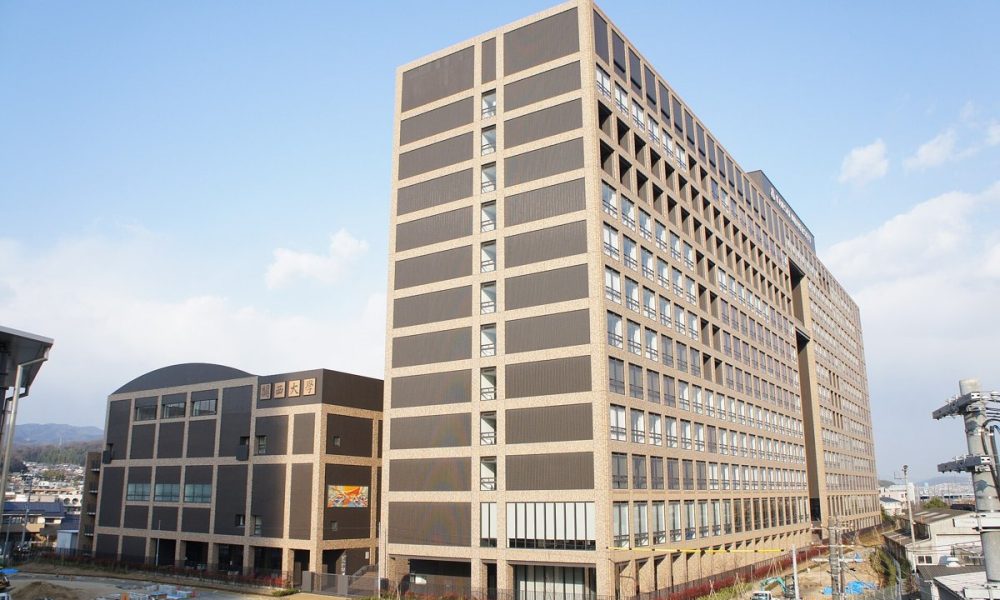
Kansai Electric Power has signed a basic agreement with Kansai University, Panasonic Holdings, Panasonic Environmental Engineering and Kanden Energy Solution to trial Panasonic’s glass-based perovskite solar cells in the windows of a working university building in Osaka prefecture, using AI to forecast their output.
Fourteen modules will be installed in the window frames of a building at Kansai University’s Takatsuki Muse Campus in Takatsuki. The partners will collect and analyse generation data under real building and weather conditions, and use the trial to assess installation and operating methods.
AI Forecasting With SenaSon
Kansai Electric will coordinate the project and use SenaSon, its AI-based energy management service, to forecast the modules’ output from weather and other conditions. It will then compare the forecasts with actual generation to assess their accuracy. The company did not give an accuracy target.
Kansai Electric began offering SenaSon nationwide in April 2023. The service uses AI forecasts of demand and generation to control distributed resources, such as batteries, electric vehicles and air-conditioning systems, in real time. The platform is also being used in an AI-led smart energy trial at Osaka Metropolitan University, where it is paired with a vanadium redox flow battery from Sumitomo Electric Industries.
Partner Roles
Panasonic Holdings will supply the modules and evaluate their performance, while Panasonic Environmental Engineering will install, operate and maintain them. Kanden Energy Solution will handle the electrical equipment, and Kansai University will provide the site.
The partners did not disclose the modules’ size, total capacity, transparency or efficiency. They also did not say whether the electricity will be fed into the grid or used on site.
Japan’s Perovskite Push
Panasonic has tested its glass-based perovskite technology in a building in Fujisawa with Mitsui Fudosan Residential and in office windows made by YKK AP. Full-scale mass production of its glass-based perovskite panels for building-integrated PV is scheduled to start in April 2029.
Japan aims to deploy around 20 GW of perovskite solar capacity by 2040, and its environment ministry plans to exclude conventional silicon panels from new subsidy programmes from fiscal 2027 to prioritise perovskite and other next-generation technologies. Other window trials include a perovskite pilot at Tokyo’s Telecom Center Building, while Ricoh plans to start producing perovskite cells in Japan by 2030.
Photo: Kirakirameister/Wikimedia Commons, CC BY-SA 3.0