
Port of Tauranga Trials New Zealand’s First All-Electric Straddle Carrier
Port of Tauranga is trialling a Kalmar all-electric straddle carrier in a project costing more than NZ$3.5 million, co-funded by EECA.

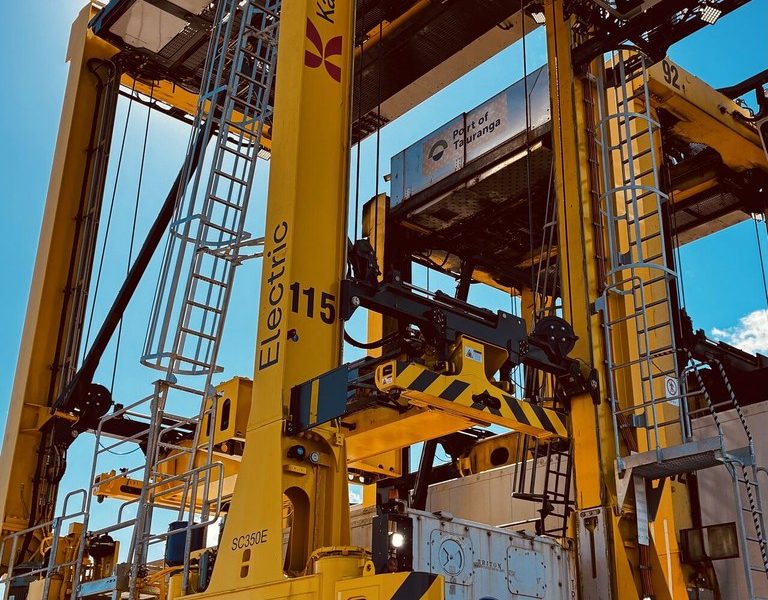
Port of Tauranga is trialling New Zealand’s first all-electric straddle carrier, a Kalmar machine co-funded through the Government’s Low Emission Transport Fund administered by EECA (Energy Efficiency and Conservation Authority).
The trial at New Zealand’s busiest port will see the port purchase a Kalmar electric straddle and install charging infrastructure in a project costing more than NZ$3.5 million. EECA will contribute NZ$447,000 to accelerate its implementation.
What the Trial Will Assess
The trial will evaluate operational impacts, charging times, driver amenability and training requirements, reliability, safety and maintenance requirements. Findings will be shared with other New Zealand ports that have straddle carrier fleets.
Port of Tauranga Chief Executive Leonard Sampson said the trial would enable the port to test emerging technology in the high-demand environment of New Zealand’s international hub port. “Diesel use in straddles is our largest source of carbon emissions, contributing around 54% of our Scope 1 emissions. Until now, we have only had the option of hybrid straddles as a lower emission alternative,” he said.
“We hope the trial will give us confidence in operational efficacy, emissions reduction and technology reliability. It de-risks the implementation of new technology currently untested in New Zealand,” Mr Sampson said.
Current Straddle Fleet
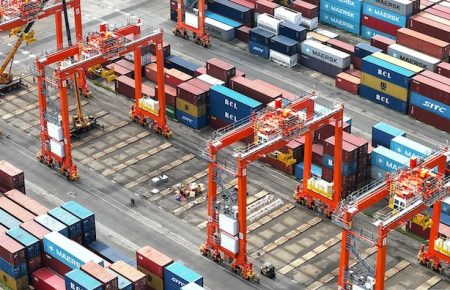
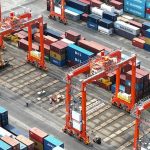
Port of Tauranga operates a fleet of 54 straddle carriers, around a third of the New Zealand port fleet. Seven are hybrid models, introduced since 2020 following a pilot, and are around 25% more fuel efficient than the port’s older diesel-electric models.
Emissions Reduction Potential
If successful, the trial could lead to the rollout of electric straddles in the port’s purchase and retirement programme. The port estimates a full rollout could see an absolute reduction in combined Scope 1 and 2 emissions of approximately 43% on today’s emissions.
EECA’s investment has come through round 15 of its Low Emission Transport Fund.
Source: Port of Tauranga.
Photo: TransportTalk (supplied)