





Singapore to Use AI-Enabled Bus Cameras to Detect Road Defects and Traffic Violations
Singapore’s Land Transport Authority (LTA) will progressively roll out an AI-powered video analytics system that uses existing cameras on public buses to detect traffic violations, road defects and...

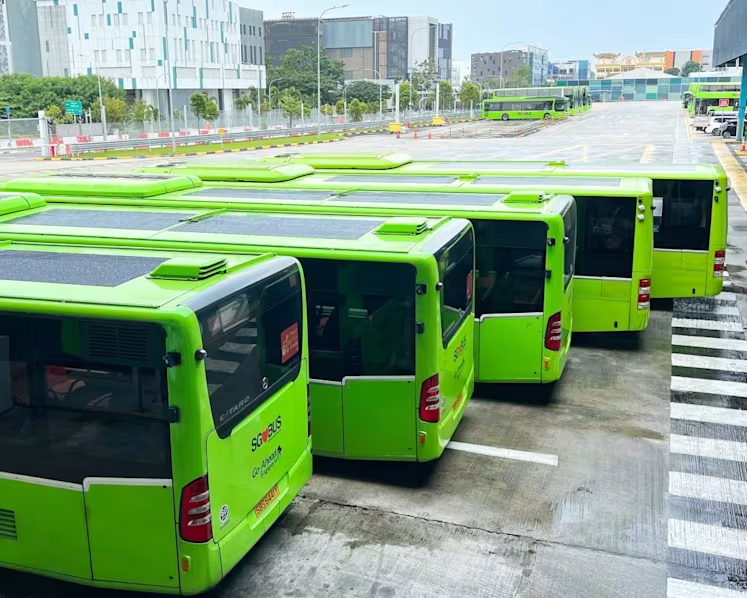
Singapore’s Land Transport Authority (LTA) will progressively roll out an AI-powered video analytics system that uses existing cameras on public buses to detect traffic violations, road defects and non-compliant road works.
Quick Skim
Deployment will begin in the fourth quarter of 2026, with the system expected to expand across all bus routes by 2030. Trials have achieved an average detection accuracy of around 90% across the scenarios tested.
AI Uses Existing Bus Cameras for Road Monitoring
The system analyses footage collected from cameras already installed on public buses.
It can identify motorists entering bus lanes illegally or parking illegally along roads, as well as detect infrastructure defects and road works that do not comply with requirements.
LTA said the technology will strengthen monitoring across Singapore’s bus network and support more timely enforcement or rectification when problems are detected.
Using buses as mobile monitoring platforms also allows road conditions to be observed across a large part of the transport network during normal daily operations.
Road Defects Can Be Identified Earlier
One of the system’s applications is detecting defects in road infrastructure.
By automatically analysing bus-camera footage, LTA can identify potential maintenance issues as buses travel along their regular routes.
Detected defects can then be reviewed and addressed by maintenance teams where necessary, supporting faster identification and rectification of road infrastructure issues.
The same platform can also detect non-compliant road works, expanding the use of AI beyond traffic enforcement into infrastructure monitoring.
Bus Lane Monitoring Supports Road Safety
The AI system will also identify vehicles that encroach into bus lanes.
Senior Minister of State for Transport and National Development Sun Xueling said reducing bus lane encroachments can help prevent situations where bus captains need to brake suddenly to avoid collisions.
The technology is intended to reduce some of the manual monitoring responsibilities currently handled by bus captains while improving LTA’s ability to identify potential safety risks across the road network.
Automated Safety Announcements to Expand
LTA is also introducing greater automation inside public buses.
A fully automated safety audio announcement system will be progressively deployed across the bus fleet from the end of 2027, alongside an upgrade to Singapore’s Bus Fleet Management System.
The feature has already been piloted on 11 bus services since August 2025.
The announcements remind passengers to hold hand grips and grab poles before buses begin moving and have been retained following positive feedback during the trial.
Technology Supports Wider Bus Safety Programme
The AI rollout forms part of wider efforts to improve safety across Singapore’s public bus network.
LTA and bus operators have also reviewed 54 bus services with journey times exceeding two hours to reduce driver fatigue.
Driving time has been shortened on 10 routes through measures including route adjustments, driver changes during journeys and converting continuous loop services into bi-directional routes.
Bus captains are also undergoing additional safety training. As of July 2026, 99% had completed the Bus Captain Drive Safe refresher programme, with full completion targeted by October.
AI Expands Into Transport Infrastructure Monitoring
The deployment shows how AI-based video analytics is being incorporated into Singapore’s transport operations beyond conventional surveillance.
By using cameras already moving throughout the road network, LTA can combine traffic enforcement, infrastructure inspection and safety monitoring within the same digital system.
The progressive rollout from late 2026 will provide Singapore with a larger automated monitoring network as AI becomes more integrated into the management and maintenance of public transport infrastructure.