


Asian Development Bank Pledges $30 Billion to ASEAN Development Priorities
The Asian Development Bank commits $30 billion to support Southeast Asia’s regional projects in power, water security, and digital infrastructure by 2030.

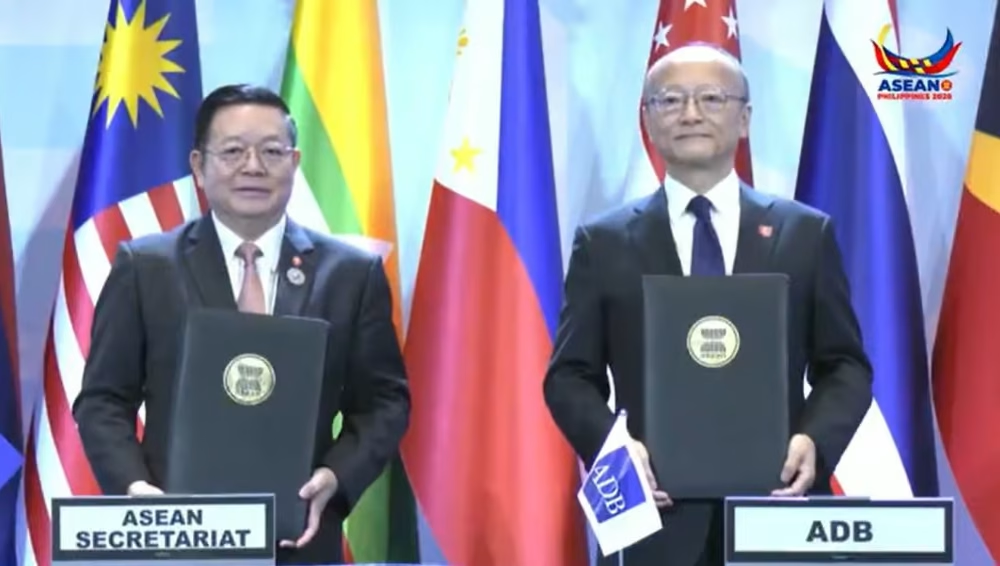
The Asian Development Bank (ADB) has committed to mobilising $30 billion towards Southeast Asia’s long-term development goals, focusing on key areas such as regional power networks, water security, and digital infrastructure. This commitment was formalised in a memorandum of understanding signed in Manila by ADB President Masato Kanda and ASEAN Secretary-General Kao Kim Hourn during the 28th ASEAN Economic Community Council Meeting.
Quick Skim
Memorandum Aligns ADB Initiatives With ASEAN Priorities
The memorandum institutionalises ADB’s alignment with ASEAN’s regional priorities, ensuring that the bank’s operations in Southeast Asia reflect the bloc’s development agenda. According to Masato Kanda, ASEAN’s priorities will direct ADB’s work across all member states, strengthening cooperation on projects aimed at economic growth and sustainability.
Kanda outlined ongoing ADB-supported efforts including capital market development, the ASEAN Power Grid, investments in the blue economy, and initiatives addressing water and food security alongside digital transformation.
Focused Investment in Water and Digital Infrastructure
Among the initiatives, the ASEAN Rivers Initiative is designed to attract up to $8 billion by 2030 to improve water and food security across the region. Complementing this, the ADB is advancing a digital economy programme that could allocate up to $5 billion by 2030 to bolster digital infrastructure, cybersecurity, artificial intelligence readiness, and cross-border digital systems.
This digital programme supports implementation of the ASEAN Digital Economy Framework Agreement, aiming to boost connectivity and data security within member economies.
Framework Includes Sustainability, Human Capital and Technical Assistance
The memorandum also establishes a framework covering several key domains: sustainability and resilience; economic growth and competitiveness; human capital development; knowledge exchange; and technical assistance. These components are critical to realising ASEAN’s development vision for 2045.
Context of Regional Economic Challenges and Opportunities
The partnership emerges amid persistent economic uncertainties in ASEAN, including supply-chain disruptions and the need to improve regional resilience. Kao Kim Hourn highlighted the significance of ASEAN’s combined gross domestic product, which exceeds $4.3 trillion, and a population approaching 700 million. These factors create both considerable opportunities and complex challenges for the region’s development trajectory.
Kao described the memorandum as a “shared commitment to translate ASEAN’s vision into tangible, people-centred outcomes toward realising ASEAN 2045: Our Shared Future.”
Photo: Daily Tribune