HD Hyundai Robotics Begins Sales of 1-Ton Payload Robot for Heavy-Duty Automation
HD Hyundai Robotics launched sales of the 1-ton-class HDT1000-33 robot, designed to automate heavy component handling in construction and industrial manufacturing.

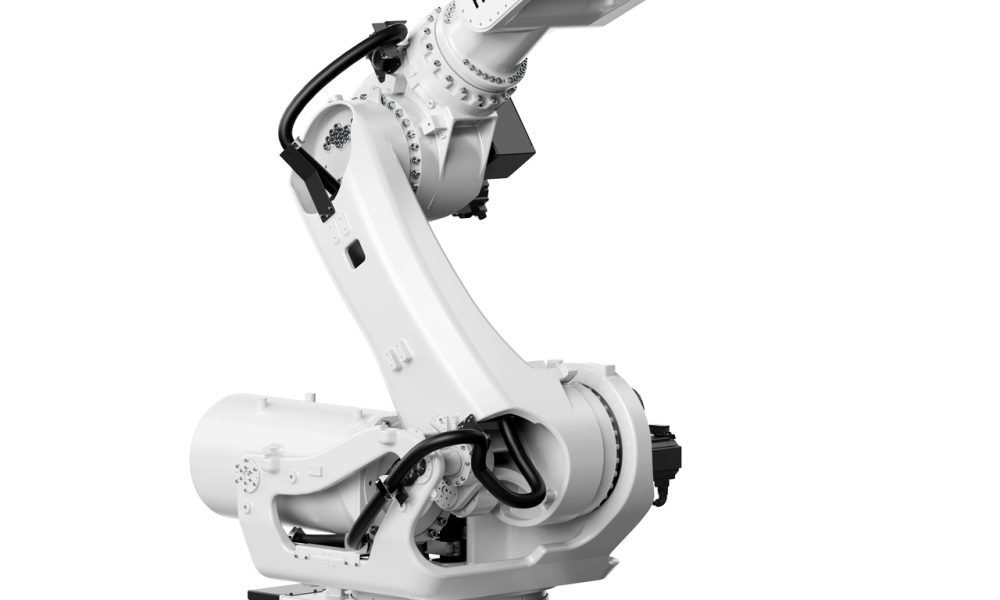
HD Hyundai Robotics has begun selling its self-developed 1-ton-class industrial robot, the HDT1000-33, aiming to support automation in handling large, heavy components across manufacturing sectors. The company held an event on Wednesday at Hankook R&D’s headquarters in Ansan, Gyeonggi Province, to mark the first sale. Attendees included HD Hyundai Robotics CEO Kim Wan-soo, Ansan Vice Mayor Heo Nam-seok, Hankook R&D CEO Park Beom-yeol and HD Hyundai Construction Equipment CEO Moon Jae-young.
Quick Skim
- HDT1000-33 Designed for Heavy Industrial Automation
- Initial Deployment Targets Construction Equipment Production
- Development Reflects Growing Demand for Large Payload Robots
- Workplace Safety Improved Through Automation
- Plans to Broaden Industry Applications
- Implications for Industrial Operations in Asia-Pacific
- Looking Ahead: Market Leadership and Technological Growth
HDT1000-33 Designed for Heavy Industrial Automation
The HDT1000-33 is a six-axis articulated robot with a payload capacity of up to 1 ton. It maintains positioning accuracy within 0.1 millimetre even after thousands of repeated movements.
Initial Deployment Targets Construction Equipment Production
The first units will be integrated into production lines manufacturing large construction machinery engines. Their tasks include loading heavy cylinder engine blocks into machining equipment and transferring finished components to subsequent stages. This deployment aims to address increasing demand for automation solutions that handle heavier, larger components as manufacturers shift towards modular production systems.
Development Reflects Growing Demand for Large Payload Robots
HD Hyundai Robotics began development of this 1-ton-class robot in February 2024 in response to expanding requirements for robots combining substantial payload capacity with operational precision. Modularised production trends in sectors handling large-scale components necessitate such solutions to maintain productivity and flexibility.
Workplace Safety Improved Through Automation
Automating the handling of heavy parts is expected to alleviate the physical burden on workers and reduce risk factors associated with serious industrial accidents. HD Hyundai Robotics emphasises that by substituting manual heavy-lifting tasks with robotic automation, improvements in workplace safety and operational reliability will follow.
Plans to Broaden Industry Applications
Beyond construction machinery, HD Hyundai Robotics intends to extend the HDT1000-33’s use to industries dealing with other heavy components, including shipbuilding equipment, large automotive parts, electric vehicle battery packs, and secondary batteries. This expansion aims to capture new automation markets where handling of massive, heavy loads is critical.
Implications for Industrial Operations in Asia-Pacific
The introduction of the HDT1000-33 marks a step towards enhanced automation of heavy-duty manufacturing processes in the Asia-Pacific region, which hosts large-scale production facilities in shipbuilding, automotive, and battery manufacturing. This development could optimise production efficiency by enabling mixed modular systems to integrate robots capable of moving large components with high precision. The reduction in manual heavy-lifting tasks also potentially lowers labour risks and improves factory safety standards.
Looking Ahead: Market Leadership and Technological Growth
According to CEO Kim Wan-soo, the company will prioritise the HDT1000-33 and physical artificial intelligence as core growth drivers. HD Hyundai Robotics projects this product to lead the heavy industrial robot market by automating tasks previously difficult to mechanise, thereby reducing workplace safety risks. The company’s continued innovation in large-scale robotics is expected to support broader industrial automation trends in manufacturing across the region.
Source: The Korea Herald. Photo: The Korea Herald.