



SK Innovation Tests Wartime Fuel Supply Resilience at Ulsan Complex
SK Innovation has carried out a joint civil-government-military fuel supply drill at its Ulsan Complex in South Korea, testing how petroleum products could be distributed to the military during...

SK Innovation has carried out a joint civil-government-military fuel supply drill at its Ulsan Complex in South Korea, testing how petroleum products could be distributed to the military during wartime or other major emergencies.
Quick Skim
The two-day exercise, held from 19 August 2026, involved the Republic of Korea Army, Navy, Air Force, Marine Corps and other related organisations under the supervision of the Joint Chiefs of Staff.
The drill formed part of South Korea’s Ulchi training exercise and was designed to strengthen coordination between private industry, government agencies and the military in maintaining stable fuel supplies during crisis situations.
Fuel Distribution Tested Across Multiple Transport Modes
During the exercise, SK Innovation tested fuel receiving and distribution procedures using tank trucks, railway tank cars and oil tankers.
The company also reviewed the operation of its emergency situation room, fuel shipping facilities and response procedures for incidents such as fires.
The exercise was intended to assess whether fuel could continue moving through different transport channels even if parts of the normal supply network were disrupted.
First Maritime Refueling Drill at Ulsan CLX
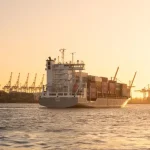
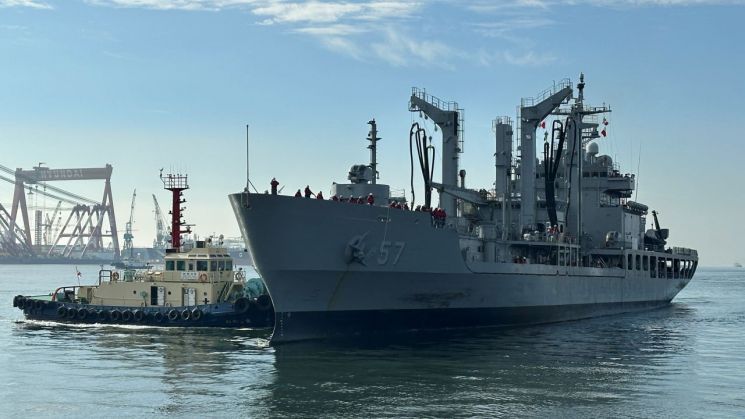
A key part of the exercise was SK Innovation’s first maritime refueling drill involving a Republic of Korea Navy logistics support ship directly receiving fuel from the Ulsan Complex sea pier.
The company expanded the exercise from land-based fuel distribution to maritime supply amid rising uncertainty in global energy supply chains, including disruptions linked to conflicts in the Middle East.
Testing the maritime route allowed SK Innovation and the military to assess an additional fuel supply option that could be used if conventional land-based distribution channels were disrupted.
Critical Infrastructure Prepared for Operational Disruptions
SK Innovation’s Ulsan Complex forms part of South Korea’s national critical infrastructure and plays a role in maintaining stable energy supplies.
Beyond physical disruptions, the company said its emergency response procedures also cover situations including cyberattacks, pipeline damage and other events that could interrupt fuel distribution.
The company is focusing on maintaining supply continuity while ensuring that affected operations can be recovered and returned to normal as quickly as possible following an incident.
Supply Chain Resilience Becomes Part of Energy Security
The exercise highlights the importance of logistics resilience for critical energy infrastructure.
Fuel supply depends not only on production capacity, but also on the availability of storage facilities, pipelines, road transport, rail systems and maritime infrastructure.
By testing multiple distribution channels, SK Innovation is strengthening its ability to maintain petroleum supply when individual parts of the logistics network are unavailable or damaged.
The company said it plans to continue working with government and military organisations to strengthen its emergency response capabilities and support South Korea’s energy security.