






Vietnam Manufacturing Maintains Growth as PMI Stays Above 50 in June
Vietnam’s manufacturing sector ended the first half of 2026 on a positive note, with continued growth in output and new orders despite ongoing supply-chain pressures and weaker employment conditions....

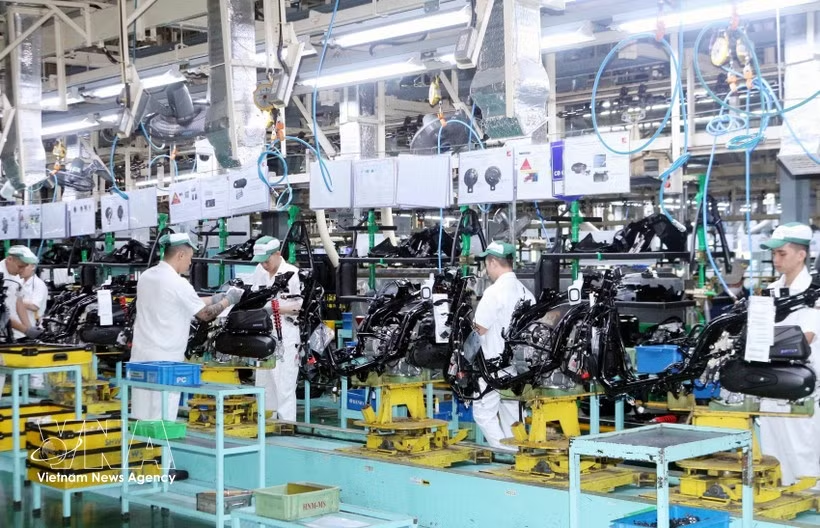
Vietnam’s manufacturing sector ended the first half of 2026 on a positive note, with continued growth in output and new orders despite ongoing supply-chain pressures and weaker employment conditions.
Quick Skim
The S&P Global Vietnam Manufacturing Purchasing Managers’ Index (PMI) reached 51.8 in June, down from 52.8 in May but remaining above the 50-point threshold that separates expansion from contraction.
The result marked another month of improving business conditions across Vietnam’s manufacturing sector as demand continued to support production activity.
New Orders Support Production Growth
Manufacturers recorded further increases in new orders during June, helping output expand for a 14th consecutive month.
Production growth also accelerated to its fastest pace since February, reflecting stronger demand conditions across the sector.
Companies increased purchasing activity during the month to support higher production requirements.
The continued rise in output and orders indicates that Vietnam’s manufacturing sector entered the second half of 2026 with underlying demand remaining relatively firm.
Supply-Chain Delays Continue
Despite improving production activity, manufacturers continued to face supply-chain pressure.
Companies increased purchases of raw materials and other production inputs, but delivery delays contributed to a sharp decline in input inventories during June.
Input costs also continued to increase due to material shortages and higher transportation expenses.
However, the rate of cost inflation eased compared with May and fell to its lowest level since the beginning of 2026.
The moderation provides some relief for manufacturers after stronger cost pressures earlier in the year.
Employment Remains a Weak Point
While production and new orders increased, manufacturing employment declined again during June.
Companies continued to reduce staffing levels despite rising workloads, indicating that manufacturers remain cautious about expanding their workforce.
S&P Global Market Intelligence Economics Director Andrew Harker identified employment as one of the weaker areas of the latest manufacturing data, even as broader demand and output conditions improved.
Business Confidence Improves
Manufacturers became more optimistic about future production during June.
Business confidence rose to a four-month high, supported by expectations for further growth in new orders, new product development and additional production capacity.
However, overall sentiment remained below levels recorded before recent geopolitical tensions in the Middle East.
External uncertainty, transportation costs and supply-chain conditions therefore remain important factors for manufacturers as they plan for the second half of the year.
Manufacturing Enters Second Half on Positive Footing
Vietnam’s manufacturing sector closed the first six months of 2026 with production and demand continuing to expand.
Although supply shortages, logistics costs and employment weakness remain challenges, continued growth in new orders and output provides a relatively positive foundation for the second half of the year.
S&P Global expects the manufacturing sector to remain in expansion territory as global operating conditions gradually stabilise.