





South Korea Manufacturing Strengthens in July as Chip and Auto Orders Rise
South Korea’s manufacturing sector gained momentum in July 2026, supported by stronger demand for semiconductors and automobiles as both production and new orders accelerated at the start of the...

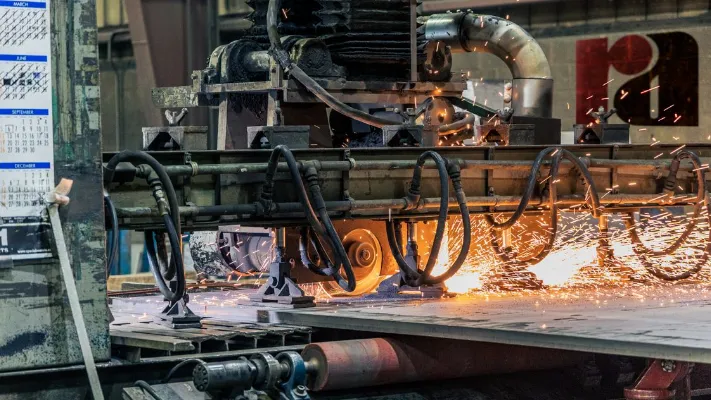
South Korea’s manufacturing sector gained momentum in July 2026, supported by stronger demand for semiconductors and automobiles as both production and new orders accelerated at the start of the second half.
Quick Skim
The seasonally adjusted South Korea Manufacturing Purchasing Managers’ Index (PMI) rose to 53.1 in July from 52.1 in June, according to the latest S&P Global survey. The reading was above the survey’s long-term average and represented one of the strongest improvements in manufacturing conditions recorded over the past four years.
A PMI reading above 50 indicates expansion.
Semiconductor and Automotive Demand Lifts Production
Manufacturing output increased at a stronger pace in July as companies reported higher orders for semiconductors and automobiles.
New orders expanded for an eighth consecutive month, supported by new product launches and stronger customer demand. A temporary easing of geopolitical tensions in the Middle East earlier in the month also helped improve demand conditions.
The stronger order environment encouraged manufacturers to increase production volumes as South Korea’s major export-oriented industries entered the second half of 2026 with stronger momentum.
Export Orders Return to Growth
Export sales also improved during July after declining for the previous three months.
New export orders returned to expansion at their fastest pace since April 2021, reflecting stronger international demand for South Korean manufactured goods.
The improvement is particularly important for South Korea’s manufacturing economy, where semiconductors, electronics, vehicles and industrial equipment account for a significant share of overseas trade.
Manufacturers responded to stronger demand by increasing purchasing activity for an eighth consecutive month.
Companies also continued building inventories to protect operations against possible future price increases and supply-chain disruptions.
Manufacturers Increase Hiring
Employment increased during July as manufacturers responded to higher production requirements, although the rate of job creation remained modest.
Backlogs of unfinished work also increased for a seventh consecutive month, indicating continued pressure on factory capacity. However, the pace of backlog accumulation eased compared with previous months.
Supplier delivery delays remained another challenge.
Manufacturers continued to report longer lead times, with ongoing disruption linked partly to the conflict in the Middle East affecting global supply chains.
Input Costs Remain Elevated
Manufacturing input prices increased sharply again in July.
Companies reported higher raw material costs, while an unfavourable exchange rate increased the cost of imported production inputs.
However, the rate of input price inflation slowed compared with previous months and reached its weakest level since before the outbreak of the Middle East conflict.
The easing in cost pressure allowed manufacturers to raise their own selling prices at a slower rate, with factory gate inflation falling to a four-month low.
S&P Global Market Intelligence economist Usamah Bhatti said operating conditions strengthened as the second half began, particularly across the semiconductor and automotive sectors.
Manufacturers Remain Optimistic
Business confidence continued to improve in July.
Manufacturers remained optimistic about production over the coming 12 months, extending a period of positive expectations to a full year.
Companies expect continued growth in customer orders alongside new product launches across the semiconductor and automotive industries.
While geopolitical uncertainty and input costs remain risks, July’s stronger PMI indicates that South Korea’s manufacturing sector entered the second half of 2026 with improving demand, production and export conditions.
Continued momentum in semiconductors and automotive manufacturing is expected to remain an important driver of the country’s industrial performance.