






Thailand Urged to Accelerate Smart Grid Development as Clean Power Shapes Investment Decisions
Thailand’s business leaders are calling for faster smart-grid development and more open electricity-market rules, warning that delays in providing clean and reliable power could weaken the country’s...

Thailand’s business leaders are calling for faster smart-grid development and more open electricity-market rules, warning that delays in providing clean and reliable power could weaken the country’s ability to attract factories, data centres and other energy-intensive investments.
Quick Skim
- Smart Grid Becomes an Industrial Competitiveness Issue
- Businesses Call for Third-Party Grid Access
- Approval Times Remain a Barrier
- Smart Grids Could Generate THB30 Billion in Value
- Clean Electricity Becomes an Investment Requirement
- Data Centres Change Electricity Demand
- EV Charging Adds New Grid Loads
- Thailand Faces Pressure to Move Faster
Executives from the energy, industrial-estate and property sectors said access to competitively priced renewable electricity has become an increasingly important consideration for international investors.
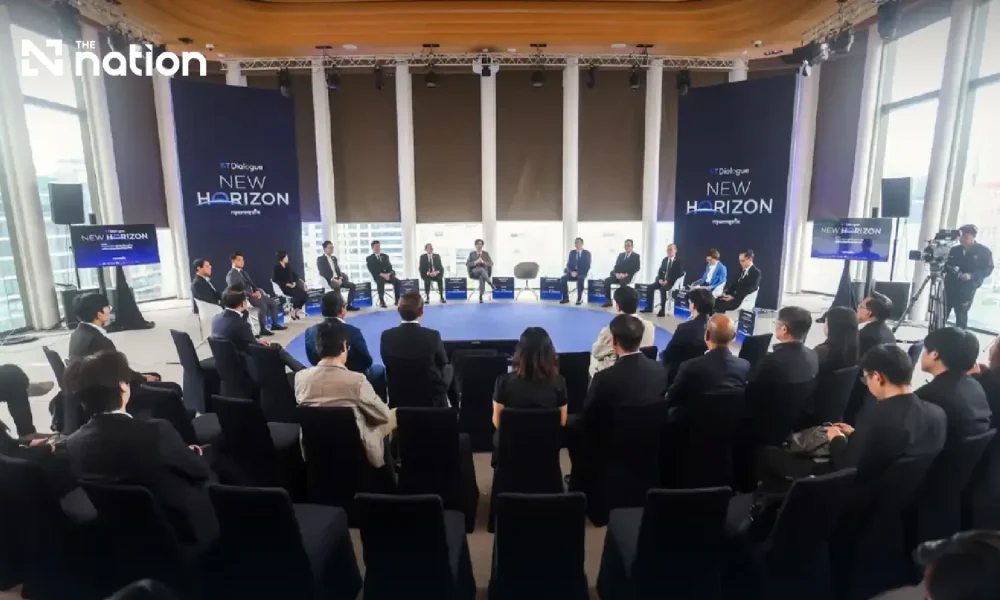
The proposals were discussed at the KT Dialogue New Horizon Chapter 2: Smart Grid — Transforming the Renewable-Energy Network of the Future forum on August 28, 2026.
Smart Grid Becomes an Industrial Competitiveness Issue
For manufacturers, power reliability remains critical to production.
Nopadej Karnasuta, President for Thailand, Malaysia and Energy & Industrial Solutions Business at B.Grimm Power, said even short fluctuations in electricity supply can damage machinery or interrupt industrial operations.
B.Grimm has developed a smart transmission network extending around 220 km, providing experience in managing electricity supply across industrial environments.
The company is calling for several changes to accelerate Thailand’s smart-grid development, including a shared energy-data system between public and private operators and greater access to the national electricity network.

Businesses Call for Third-Party Grid Access
One of the key proposals is the introduction of Third Party Access (TPA), which would allow independent electricity producers and users to access the grid.
The model could make it easier for industrial companies to purchase renewable electricity directly from producers rather than relying entirely on existing electricity-market structures.
Business leaders also want industrial estates to be allowed to develop more integrated local energy systems.
These could combine rooftop solar, floating solar, ground-mounted solar and peer-to-peer electricity trading within industrial zones.
Industrial estates have also been proposed as regulatory sandboxes where new electricity-market models could be tested before being expanded nationally.
Approval Times Remain a Barrier
Industry representatives said slow approval processes continue to limit energy investment.
Nopadej said some energy-related approvals can take as long as six years, while a new industrial facility may require only three to six months to construct.
Businesses are therefore calling for faster permitting and greater flexibility around private electricity infrastructure.
Proposals include allowing private power lines to cross public areas within industrial estates and enabling floating-solar projects to supply electricity to multiple customers.
Faster approvals could become increasingly important as industrial investors compare Thailand with other manufacturing locations offering easier access to renewable energy.
Smart Grids Could Generate THB30 Billion in Value
B.Grimm estimates that wider smart-grid development could create more than THB30 billion in economic value annually.
Improved grid efficiency could reduce transmission losses and maintenance costs while extending the operating life of electrical equipment.
Nopadej estimated these improvements could generate around THB28 billion in annual savings, given that industry represents approximately 30% of Thailand’s GDP.
An energy ecosystem incorporating battery storage and more open electricity trading could generate an additional THB10 billion annually.
Improved system efficiency could also reduce electricity charges by around 20.3 satang per unit.
Clean Electricity Becomes an Investment Requirement
WHA Utilities and Power CEO Akarin Prathuangsit said the factors determining international investment have changed.
Labour costs and investment incentives remain important, but investors are increasingly considering whether industrial locations can provide reliable and competitively priced clean electricity.
Global net-zero commitments are also placing pressure on supply chains.
Manufacturers unable to lower emissions through renewable electricity could increase the Scope 3 emissions reported by their international customers, potentially affecting future contracts.
Akarin warned that investment lost to better-prepared markets may be difficult to recover later.
He proposed using industrial estates as energy sandboxes that could aggregate electricity demand and facilitate power trading between companies within the same location.
Data Centres Change Electricity Demand
Thailand’s growing data-centre sector is creating another requirement for grid modernisation.
Unlike some industrial facilities, data centres require large amounts of electricity 24 hours a day, placing continuous demand on the power network.
Energy Absolute CEO Chatrapon Sripratum said Thailand’s future electricity system needs to provide three things: affordable power, clean power and reliable power.
Thailand has advantages including an established transmission network, strong solar resources and available land for renewable generation.
However, intermittent solar output means battery storage will become increasingly important for maintaining grid stability.
Chatrapon said battery technology has now reached commercially viable levels, making storage increasingly practical as renewable generation expands.
EV Charging Adds New Grid Loads
Electric vehicles are also changing how electricity demand is distributed.
Large charging locations can create concentrated loads on the grid, requiring smarter management of generation, storage and consumption.
A modern smart grid therefore needs to coordinate both hardware and software so electricity supply can respond to changing demand patterns.
For industrial users, this also means being able to verify where electricity originates as sustainability requirements become more closely linked to trade and investment.
Thailand Faces Pressure to Move Faster
The debate around Thailand’s smart grid reflects the growing connection between energy infrastructure and industrial competitiveness.
Factories, semiconductor facilities, data centres and other advanced industries increasingly require not only large amounts of electricity, but also reliable access to renewable power.
Thailand’s private sector is therefore pushing for faster approvals, more flexible grid access, battery storage and industrial-estate pilot programmes to accelerate the transition.
As regional economies compete for new industrial investment, the ability to provide clean, reliable and affordable electricity is becoming a central part of Thailand’s manufacturing and infrastructure strategy.