




AI Data Centre Boom Puts Shipowners in Competition for Marine Engines
The rapid expansion of AI data centres is creating a new source of demand for large engine manufacturers, putting shipowners and technology infrastructure developers in competition for some of the...

The rapid expansion of AI data centres is creating a new source of demand for large engine manufacturers, putting shipowners and technology infrastructure developers in competition for some of the same power-generation equipment.
Quick Skim
HD Hyundai Heavy Industries has secured its largest-ever power-generation engine contract, signing a KRW956 billion (US$676 million) agreement with US energy infrastructure developer Corban Energy Group.
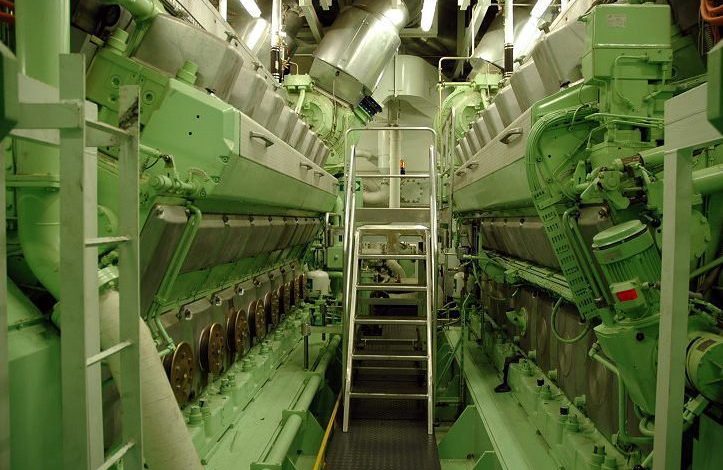
The deal will supply around 1,000 MW of generating capacity for AI data centres in the United States using HD Hyundai’s 9.6 MW HiMSEN medium-speed engines, which were originally developed primarily for marine propulsion and onboard power generation.
AI Data Centres Create New Demand for Marine Engines
The latest agreement follows another US data-centre engine contract worth KRW627.1 billion secured by HD Hyundai in April.
Together, the two contracts mean the company has booked around KRW1.6 trillion in US data-centre power equipment orders within four months.
Data-centre developers are increasingly looking at medium-speed engines as alternatives to conventional gas turbines, where long delivery lead times have become a constraint.
Medium-speed engines can be deployed comparatively quickly and combined in multiple units to provide hundreds of megawatts of power for large computing facilities.
The development is opening a significant new market for companies traditionally focused on marine equipment.
Engine Availability Tightens for Shipbuilding
The increase in demand from AI infrastructure comes as shipyards are already facing pressure around engine availability.
Splash reported that supply is particularly tight for dual-fuel low-speed main engines, while pressure is also emerging across auxiliary diesel engines, generator sets and turbochargers.
These are areas where maritime demand increasingly overlaps with equipment requirements for data centres and other critical infrastructure.
Adam Kent, managing director of Maritime Strategies International, said engine availability is already affecting some shipyards, mainly by pushing vessel delivery schedules further into the future rather than preventing new orders altogether.
New and reactivated shipyards may face greater pressure because they have less-established positions within engine manufacturers’ production queues.
Manufacturers Expand Production Capacity
Major engine and equipment manufacturers are increasing capacity in response to demand from both the maritime and energy sectors.
Wärtsilä has announced production expansions equivalent to around 65% of its 2025 capacity, citing demand from marine and energy customers.
Rolls-Royce is more than doubling its US production capacity for mtu Series 4000 generator sets compared with 2024 levels as data-centre demand increases.
Turbocharger manufacturer Accelleron also delivered a record 8,000 TPX44 units for data-centre and critical infrastructure applications last year, more than three times the previous annual level.
The expansion demonstrates how demand from AI infrastructure is spreading into industrial equipment markets that traditionally served shipping, power generation and other heavy industries.
Korean Shipbuilders Target Floating Data Centres
South Korea’s major shipbuilders are also exploring AI infrastructure beyond supplying engines.
Samsung Heavy Industries and HD Hyundai are developing concepts for floating data centres, which would house computing infrastructure on offshore platforms or vessels.
Floating facilities could reduce dependence on expensive land while also using seawater as part of their cooling systems.
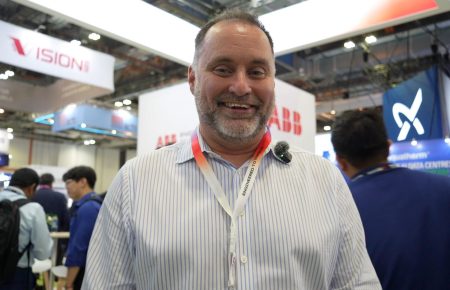
Samsung Heavy Industries has received approval in principle from classification societies for floating data-centre concepts and is working with AI server manufacturer Supermicro and technology company ABB.
It has also signed a design and production agreement with US data-centre developer Mousterian.
HD Hyundai has created a dedicated organisation for the sector and partnered with Schneider Electric to develop integrated power and cooling infrastructure.
Hanwha Ocean is also reviewing opportunities in the market, meaning all three of South Korea’s major shipbuilders are now exploring data-centre-related projects.
AI Infrastructure Creates New Market for Maritime Suppliers
Global investment in AI data-centre infrastructure could reach US$3 trillion by 2030, according to Moody’s figures cited by Splash.
Future floating data centres could range from around 50 MW to 500 MW, with longer-term concepts potentially connecting directly to offshore wind farms or floating small modular reactors.
For marine equipment manufacturers, this creates a new customer base beyond conventional shipbuilding.
However, it also means shipowners may increasingly compete with technology and energy infrastructure developers for engines, generators and related equipment.
As AI infrastructure investment accelerates, the overlap between maritime equipment and land-based power generation is likely to place greater pressure on manufacturing capacity and delivery schedules across parts of the marine supply chain.