




Floating Data Centres Open New Market for Asia’s Shipbuilding and Marine Industries
Floating data centres are emerging as a new opportunity for Asia’s shipbuilding and marine engineering industries as rapid growth in artificial intelligence increases demand for computing...

Floating data centres are emerging as a new opportunity for Asia’s shipbuilding and marine engineering industries as rapid growth in artificial intelligence increases demand for computing infrastructure while land, power and cooling constraints limit conventional data centre development.
Quick Skim
Projects are now progressing across Japan, South Korea and Singapore, involving companies including NYK Line, Mitsui O.S.K. Lines, Samsung Heavy Industries, HD Korea Shipbuilding & Offshore Engineering and Seatrium.
The development is creating a potential new market where shipbuilding, offshore engineering and digital infrastructure increasingly overlap.
AI Demand Pushes Data Centres Offshore
The rapid expansion of generative AI and cloud computing is increasing demand for data centres worldwide.
However, conventional land-based facilities face challenges including limited land availability, electricity supply constraints, cooling requirements, rising construction costs and longer development timelines.
Floating data centres offer an alternative by locating computing infrastructure on barges, floating platforms or converted vessels.
Offshore locations can provide access to seawater for cooling while reducing the amount of land required for construction.
The concept also creates opportunities to apply technologies already used across shipbuilding and offshore engineering, including floating structures, marine power systems, cooling equipment and vessel conversion.
NYK Begins Floating Data Centre Trial in Yokohama
In Japan, NYK Line and its partners began operating a floating data centre demonstration at Yokohama Port in March 2026.
The project involves NYK, NTT Facilities, Eurus Energy Holdings, MUFG Bank and the City of Yokohama.
The demonstration is installed on a floating facility at Osanbashi Pier and aims to operate using 100% renewable energy.
The companies are examining whether floating facilities can address challenges associated with increasing power consumption, decarbonisation, construction costs and disaster resilience.
NYK and its partners have since developed a broader port-based floating data centre concept, positioning ports as potential locations for future digital infrastructure.
MOL Looks to Convert Existing Ships
Mitsui O.S.K. Lines is taking a different approach.
MOL, Hitachi and Hitachi Systems signed an agreement in March to study the development and commercialisation of floating data centres created by converting existing vessels.
The companies are evaluating demand, technical specifications and operating procedures, with potential operations targeted from 2027 or later.
Japan is expected to be the initial focus, alongside markets including Malaysia and the United States.
Using existing vessels could reduce the need for new hull construction while offering shorter development timelines and greater flexibility in where data centre capacity is deployed.
MOL will contribute expertise in vessel conversion, port coordination, mooring and marine maintenance, while Hitachi will focus on data centre design, IT infrastructure and operations.
South Korean Shipbuilders Enter the Market
South Korea’s major shipbuilders are also moving into floating data centre development.
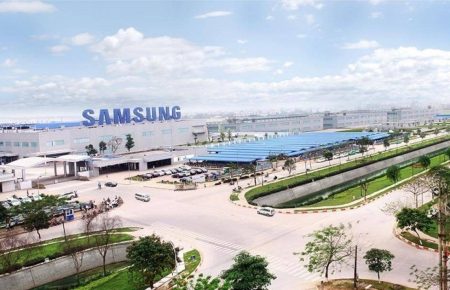
Samsung Heavy Industries is developing its own floating data centre concept and has been building partnerships with shipowners, AI server companies and infrastructure providers.
The company has developed a 50 MW floating data centre design and is targeting commercialisation by the second quarter of 2028.
Samsung Heavy Industries has also secured an engineering contract for a US floating data centre project, moving its concept closer to commercial deployment.
Meanwhile, HD Korea Shipbuilding & Offshore Engineering is working with Schneider Electric to develop power and cooling infrastructure designed specifically for floating data centres.
The collaboration will combine HD Hyundai’s shipbuilding and offshore engineering capabilities with Schneider Electric’s expertise in data centre power and energy management.
Singapore’s Seatrium Develops 30 MW Floating Concept
Singapore-based Seatrium is also advancing floating data centre technology.
Bureau Veritas granted Approval in Principle in July to Seatrium’s 30 MW Floating Data Center concept.
The design uses a jetty-moored, non-propelled barge containing six independent 5 MW “Data-in-a-Box” modules.
Each module combines IT equipment, power distribution, cooling systems and supporting infrastructure.
The concept also uses seawater cooling, reducing dependence on freshwater resources typically required by land-based facilities.
Seatrium is additionally developing a larger 100 MW concept using the same modular approach.
New Market Emerges for Maritime Engineering
The growth of floating data centre projects represents a new potential market for shipbuilders and marine equipment suppliers.
Unlike conventional vessels, floating data centres require expertise spanning marine structures, electrical generation and distribution, cooling, mooring, safety systems, maintenance and digital infrastructure.
Shipyards already have experience integrating complex power and utility systems into offshore platforms and vessels, providing capabilities that can be adapted to floating computing infrastructure.
Shipping companies can also contribute knowledge around vessel conversion, marine operations and port requirements.
As AI infrastructure investment continues to expand, floating data centres could therefore create additional demand beyond traditional shipbuilding markets.
The growing number of projects in Japan, South Korea and Singapore shows that Asia’s maritime industry is beginning to position offshore engineering capabilities as part of the next generation of digital infrastructure.