






Thailand Upgrades Southern Power Grid to Strengthen Energy Security and ASEAN Connectivity
Thailand is upgrading power infrastructure in its southern region to improve grid stability, support rising electricity demand and strengthen cross-border energy links with Malaysia and the wider...

Thailand is upgrading power infrastructure in its southern region to improve grid stability, support rising electricity demand and strengthen cross-border energy links with Malaysia and the wider ASEAN power network.
Quick Skim
- Khlong Ngae Strengthens Thailand-Malaysia Power Link
- Grid Stability Technology Added in Songkhla
- Southern Grid Prepares for Rising Demand
- TTM Expands Beyond Traditional Energy Infrastructure
- Carbon Capture and Biomethane Projects Under Development
- Energy Infrastructure Supports ASEAN Power Integration
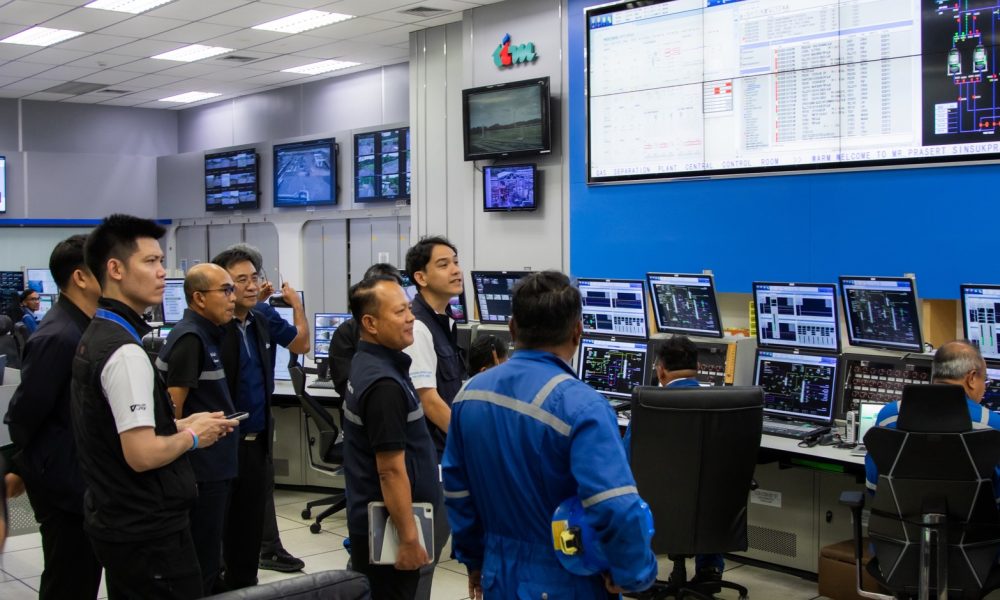
The Ministry of Energy inspected key infrastructure in Songkhla on September 1, including the Khlong Ngae high-voltage substation operated by the Electricity Generating Authority of Thailand and facilities operated by Trans Thai-Malaysia (Thailand), or TTM.
The southern grid is becoming increasingly important as economic activity, industry and tourism expand while Thailand develops stronger energy connections with neighbouring countries.
Khlong Ngae Strengthens Thailand-Malaysia Power Link
The Khlong Ngae high-voltage direct-current station in Songkhla acts as a major transmission hub connecting Thailand’s central and southern power systems.
It also supports electricity trading between Thailand and Malaysia, which has been operating since 2002.
The cross-border connection allows both countries to exchange electricity and provide emergency reserve capacity when required, improving the resilience and flexibility of their power systems.
The link also forms part of the wider Lao PDR-Thailand-Malaysia-Singapore Power Integration Project, an important step towards developing the ASEAN Power Grid.
Grid Stability Technology Added in Songkhla
Thailand is installing a STATCOM system at the Khlong Ngae substation to improve transmission stability.
The site is one of five locations nationwide receiving the technology as the country modernises its electricity network.
STATCOM systems help regulate voltage and maintain grid stability, particularly as electricity networks incorporate larger amounts of variable renewable generation.
The upgrade is expected to support Thailand’s clean-energy transition, including government plans to increase electricity generated from household rooftop solar systems.
Southern Grid Prepares for Rising Demand
Energy officials said infrastructure in southern Thailand must be able to support growing electricity demand while maintaining continuity of supply.
The region has growing activity across industry, tourism and cross-border trade, making reliable energy infrastructure increasingly important to economic development.
Thailand is therefore focusing on grid reliability, technology upgrades and stronger energy transmission infrastructure to support future economic growth.
The government also sees potential for Thailand to expand its regional electricity connections further towards Myanmar, Laos and Vietnam as ASEAN energy integration progresses.
TTM Expands Beyond Traditional Energy Infrastructure
Trans Thai-Malaysia, which operates energy infrastructure in Chana district, is also expanding its role as the energy sector changes.
The company is shifting from being primarily an infrastructure provider towards what it describes as a “value creator”, using existing energy assets to develop new businesses.
Its current projects include a 5.2 MW solar farm, aimed at increasing the share of clean energy within its operations.
TTM is also pursuing a gas-separation plant value-add project designed to increase utilisation of existing infrastructure and develop higher-value products.
Carbon Capture and Biomethane Projects Under Development
TTM is developing additional projects linked to lower-carbon energy.
Its CYCLOCAP pilot project aims to capture and reuse carbon dioxide generated during industrial processes.
The company is also studying opportunities in biomethane, which could provide another lower-carbon energy source as Thailand moves towards a more diversified energy mix.
These projects form part of efforts to maximise the value of existing infrastructure while preparing for changes in energy technology and emissions requirements.
Energy Infrastructure Supports ASEAN Power Integration
Thailand’s southern grid upgrades highlight the growing importance of energy infrastructure as Southeast Asia moves towards greater cross-border electricity trading.
The Khlong Ngae connection already links Thailand and Malaysia and supports the four-country power integration project involving Laos, Thailand, Malaysia and Singapore.
Further grid modernisation could allow larger volumes of renewable electricity to move between countries while giving national systems greater flexibility during periods of high demand or supply disruption.
For Thailand, upgrading transmission infrastructure, introducing grid-stabilisation technologies and developing cleaner energy projects are becoming increasingly important to both energy security and long-term industrial competitiveness.